What happens when you put one of the most famous bands of all time, one of the most unique countries on the planet, and one of the most undeniable spirits into a week-long press trip? One hell of an adventure.
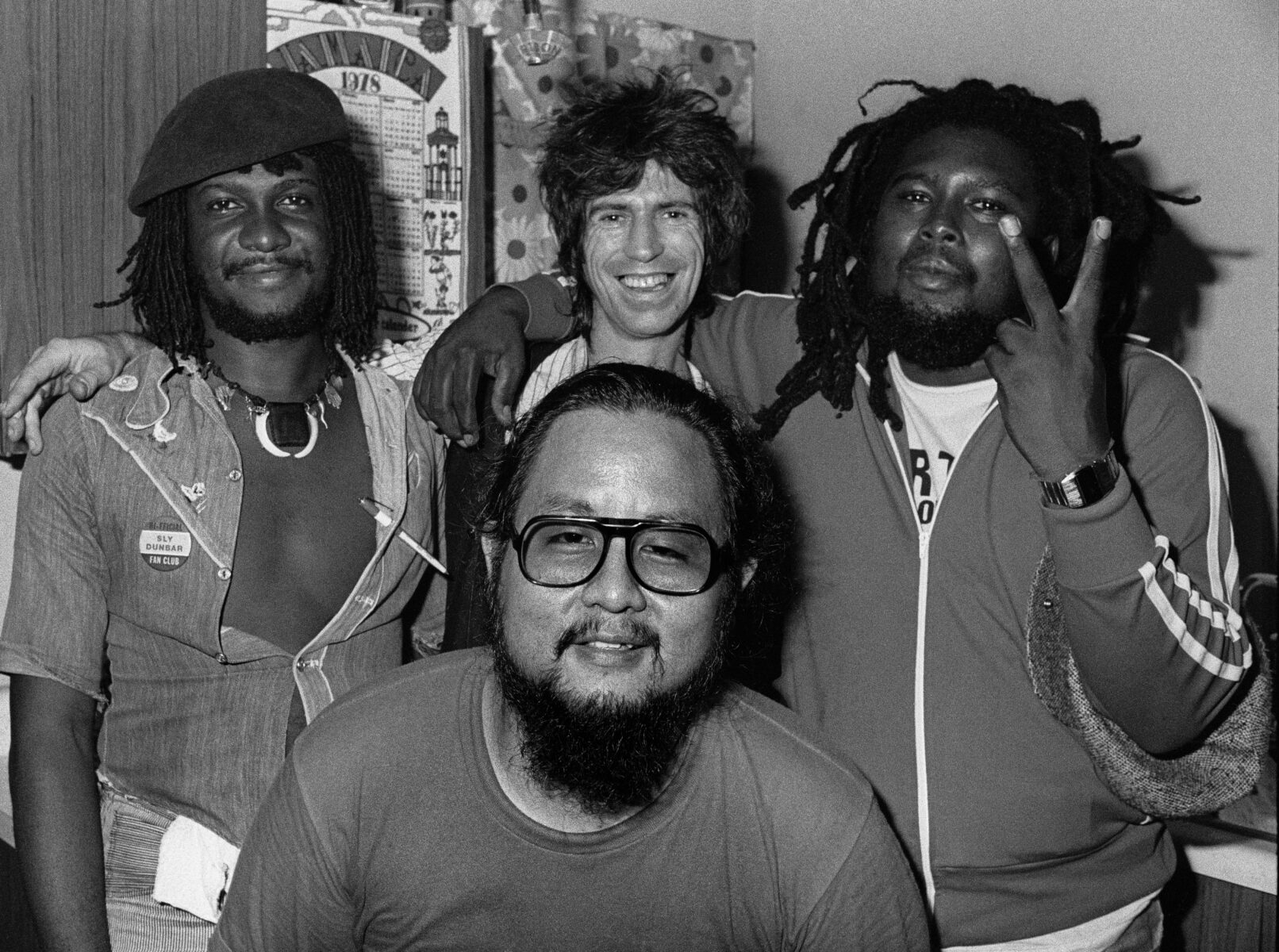
There are few global musical movements – if any – that hold the pride and singularity of reggae. First emerging in the late 1960s as a progression of ska and rocksteady, the style is immediately distinct through its amiable tone, leisurely tempo, 4/4 time signature and off-beat rhythmic strumming. Simple but undeniable, timeless while typified by a golden era. In the legendary Bob Marley, there is one overawing, celestial being whose legacy is etched into the very foundations of popular music. But whatever the encompassing impact of the man is, reggae is far bigger than Marley alone. It’s utterly emblematic of the country it originated in, a nation whose cultural weight far outscales its modest literal size. Jamaica.
From Paul Simon to Sinéad O’Connor, plenty of renowned musicians have, across the past 60 years, spent time in Jamaica to grow as people and as artists. None, however, more synonymously than The Rolling Stones. In the early 70s, amid run ins with the law and the taxman getting in the way of some good old fashioned evasion, Mick Jagger, Keith Richards and co took a stop gap before embarking on a North America tour to pitstop in Kingston to record their 11th studio album, Goat’s Head Soup.
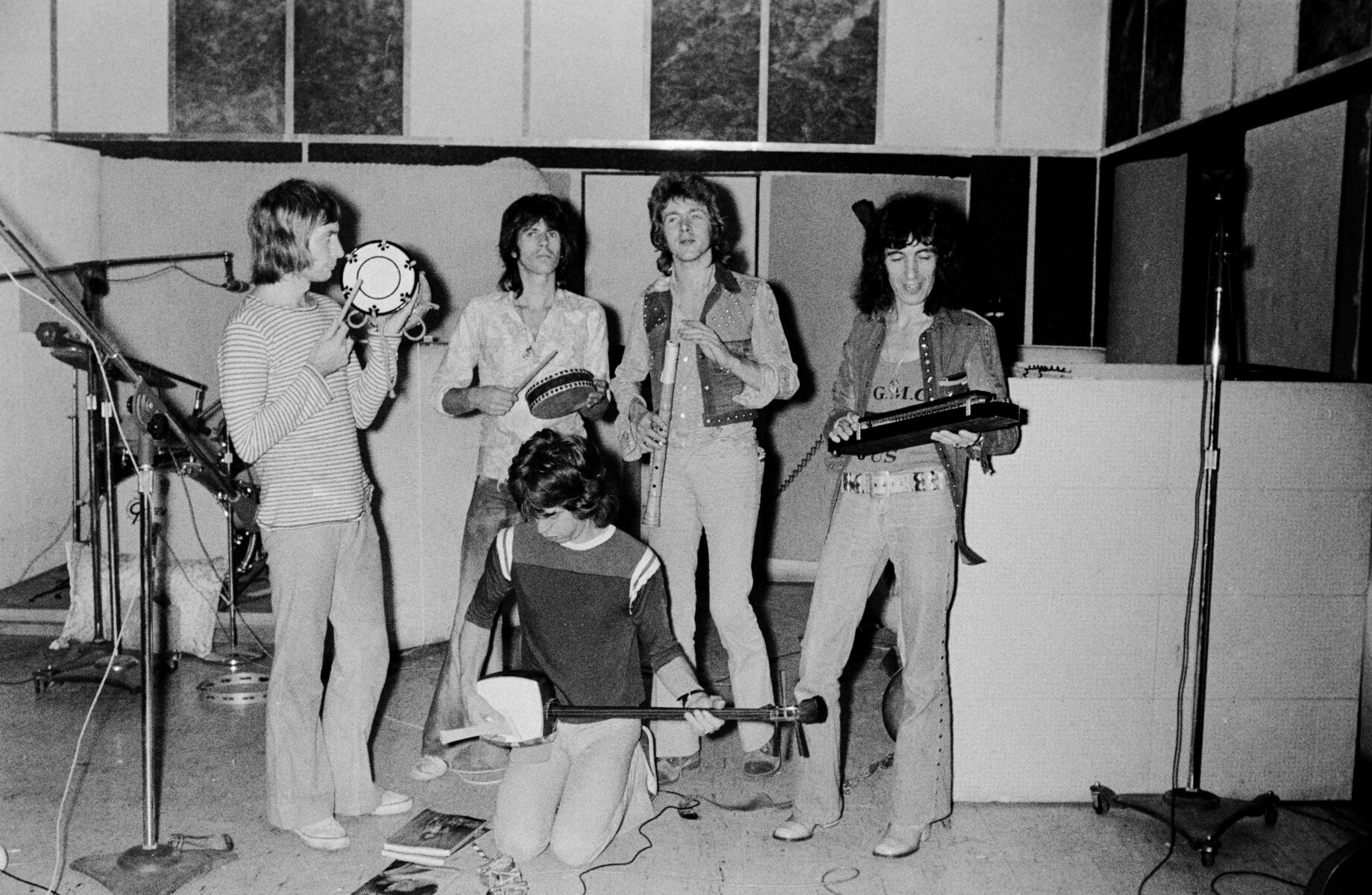
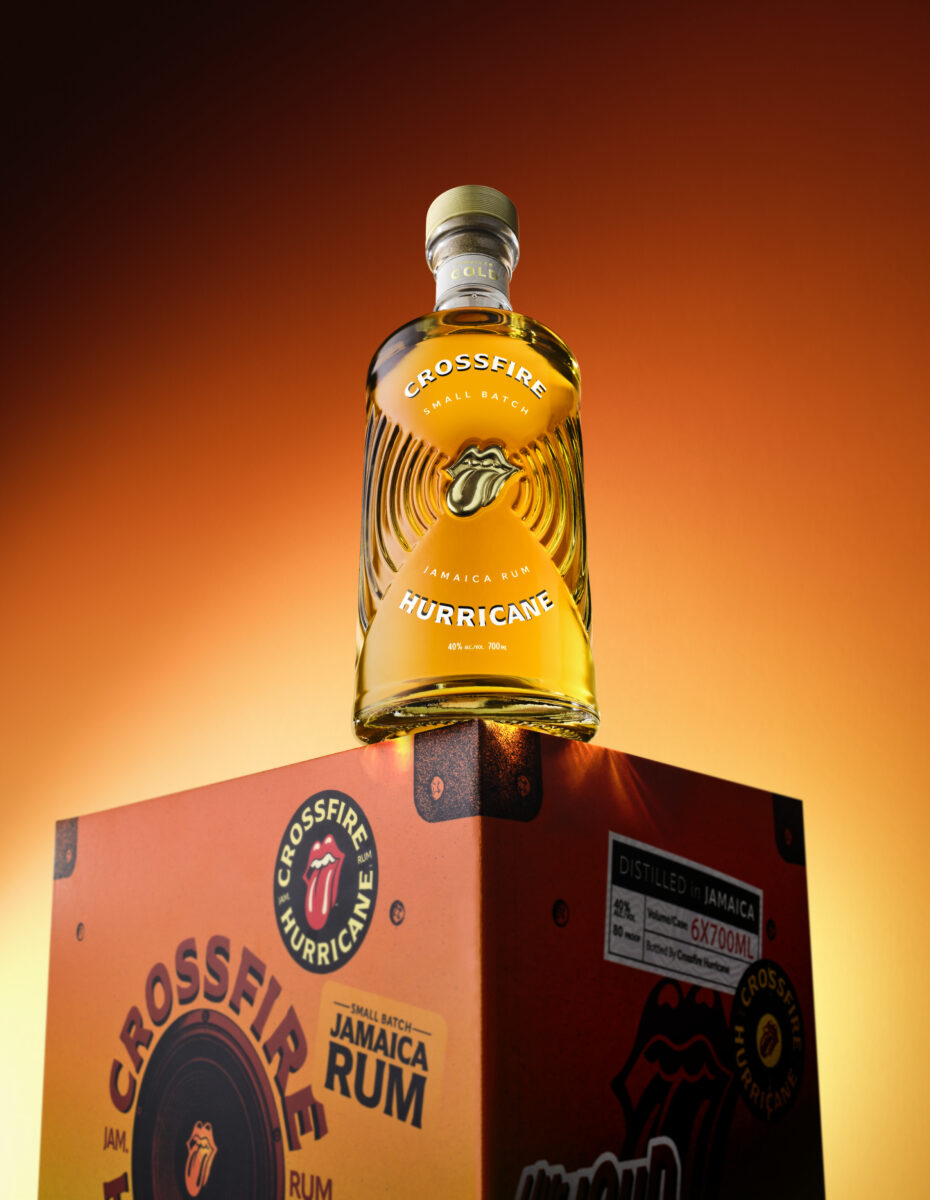
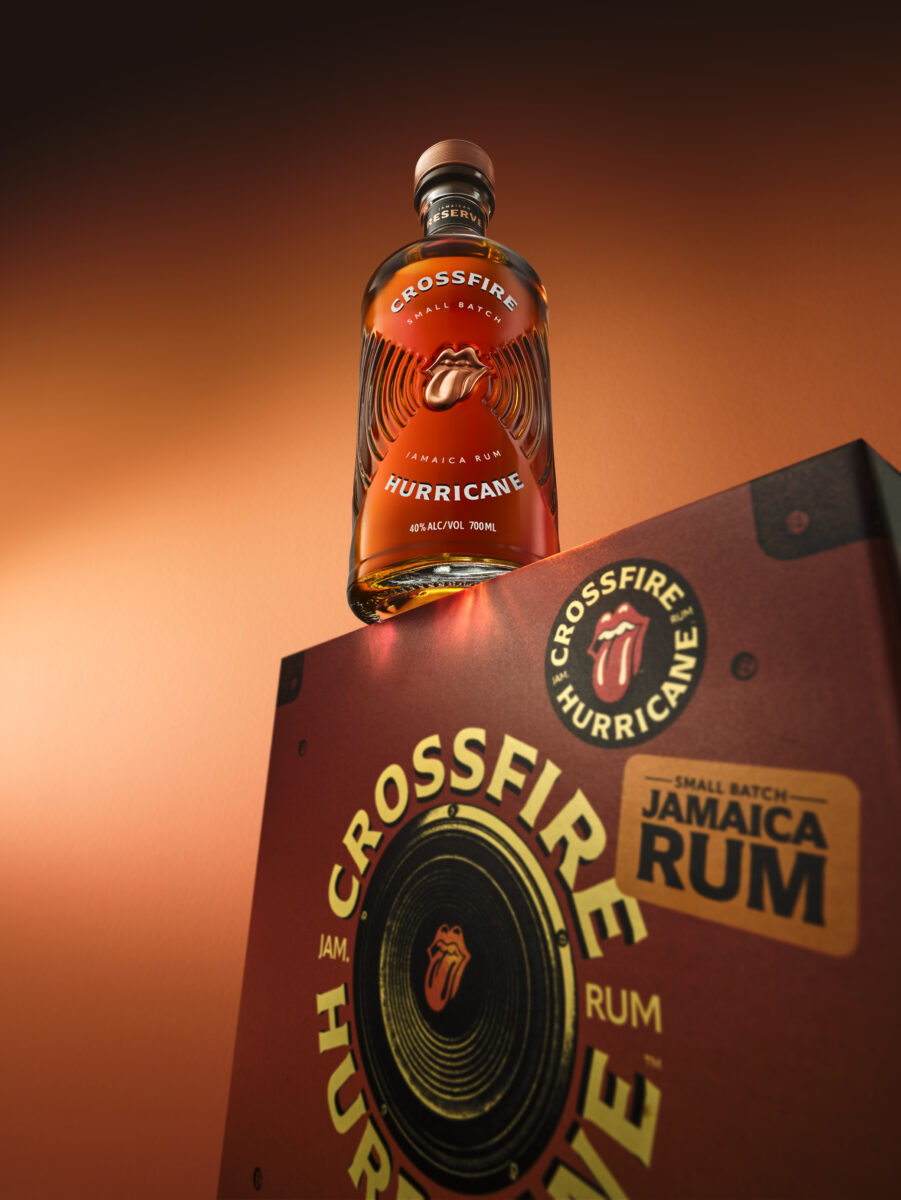
The record oozes reggae ideals without sounding pastiche, an acknowledgement rather than an influence, a laidback, thoughtful work that is widely regarded as one of the most underrated albums in the band’s 25-album canon. In the years that followed its release, The Stones’ relationship with the island only grew: from Richards buying a house in the hills above Ocho Rios to the Stones covering Eric Donaldson’s seminal classic “Cherry Oh Baby” on their 1976 album, Black And Blue. More recently, the bond between the band and the island has been personified by the birth of Crossfire Hurricane, a Jamaican rum co-founded and co-owned by The Stones.
We live in an era where every public figure with a Wikipedia page is attempting to invade the spirits industry. Most of these ventures are artificial, empty and irritating. But Crossfire Hurricane doesn’t feel like just another celebrity venture for capital gain. Since the brand’s inception in 2023, they’ve nestled within the Jamaican rum industry by cultivating authenticity.
First and foremost, the aim is to celebrate Jamaica – working with Ian Burrell, the world’s leading ambassador for Jamaican rum (more on him later), Crossfire became the first of its kind to blend concoctions from different distilleries around the nation – using rum from four of Jamaica’s six distilleries in Hampden Estate, Long Pond, Worthy Park and Clarendon – and bottling it up into one succinct, distinct product. And then sell it at Tesco.
Alright, enough of the context. We all know what we’re here for. I – the whitest Irish-Brummie you’re likely to come across outside a boozer on a summer’s day in East London – am being flown out by Crossfire Hurricane to see firsthand what the fuss is all about. To drink, to eat, to dance, to be merry. And surely to meet Keith Richards (spoiler, that doesn’t happen).
When I organised my July activities earlier in the year, my sense of adventure far superseded my bodily and emotional capacity. A week prior, I was getting psyched out in the Croatian wilderness. Barely 35 hours ago, I was dancing to “Common People” and acting as a sleeper cell for Aperol in Madrid. At least I’m going to a different airport.
Heathrow is jam-packed. Summer holidays, I guess. Why doesn’t Terminal 3 have Wetherspoons? I have three hours to kill, no airport pint, and nowhere to sit but a small, encumbered Pret. Still, I have an iced Americano and watch time pass as I stare at emails piling up in my positively terrifying inbox.
Flying Premium Economy on Virgin Atlantic is a delightful experience, I must say. I really am enjoying this flirtation with the nicer things in life. I’m sitting next to a bloke – who turns out to be a part of the press party – doing some avid research ahead of our trip to the island. He’s reading a Stones book for the first few hours of the flight, before diving into the visual media. He opts for Cool Runnings, Jon Turteltaub’s uplifting sports adventure about Jamaican sprinters turned bob-sleighers. I half-watch along without earphones, very much aware of the story having been the proud owner of the DVD as a kid. As the film reaches its rousing conclusion and the screen turns black, I catch the reflection of the man next to me wiping a single tear from his eye. I have to admit, I’m welling up myself, and I can’t even hear it.
The flight otherwise is without incident, and we arrive in Montego Bay in the mid-evening. Now, I recently invented a new word that feels the most adept way to define my actions in the next turn of events. Aggnorant, I’ve coined it. Somewhere between ignorant and arrogant. I think it’s genius, personally. Others have – quite vehemently – disagreed.
I didn’t fill in my Visa application. We’ve been met by a Jamaica tourism board worker who is guiding us through the airport. There are lots of angry locals who, understandably, aren’t enjoying us queue-skipping. My inability to follow simple instructions adds fuel to the fire. The tourism board bloke looks ready to leave me and head home when I tell him I’ve forgotten to fill out the form online. Sorry again, pal.
I am ushered to one side to fill in a physical slip. A bloke comes and stands next to me, clearly guilty of the same crime of insolence. We share a little smirk, as if we’re waiting outside the headmaster’s office in school.
It takes a while, but eventually I am allowed through. It’s late in the evening, and we’ve got a two-hour car journey ahead. We stop off at a petrol station, and I get a Red Stripe. Eventually we arrive at our home for the next three nights, the Jamaica Inn. I immediately collapse into bed, beyond all comprehension of exhaustion.
After a patchy sleep of vivid dreams (that always seem to revolve around deadlines in some capacity; I don’t know what that says about me), I’m up, enjoying the room coffee (10/10) and surveying my new surroundings. Jamaica Inn is one of the country’s most renowned hotels – with the likes of Marilyn Monroe, Winston Churchill and Megan Markle all frequenters of the establishment since it opened its doors in 1950. It’s easy to see why: located on a serene beachfront, it’s quite literally a little slice of paradise. The views, the staff, the energy… unbelievable. Perhaps the best hotel I’ve ever stayed at. Way beyond my pay grade.
I’ve got the morning to myself, and have a revitalising breakfast of fruits and (more) coffee before heading straight into the sea for a swim. It’s divine, warm, and very salty. I shower and get ready, introduced properly to the wider press party, a handful of journos from either side of the Atlantic.
First up, we’re heading into the hills of St. Ann for a visit to a very special restaurant that last year was named in North America’s 50 Best Restaurant List, the only vegan establishment on the list. It’s an hour or so drive, up a very steep, winding path that feels quite precarious, but our jovial bus driver is cultured in these terrains. The restaurant sits at the summit, completely hidden away from society in a treehouse-like cove, attached to the two married co-owners Lisa and Chris’ humble abode.
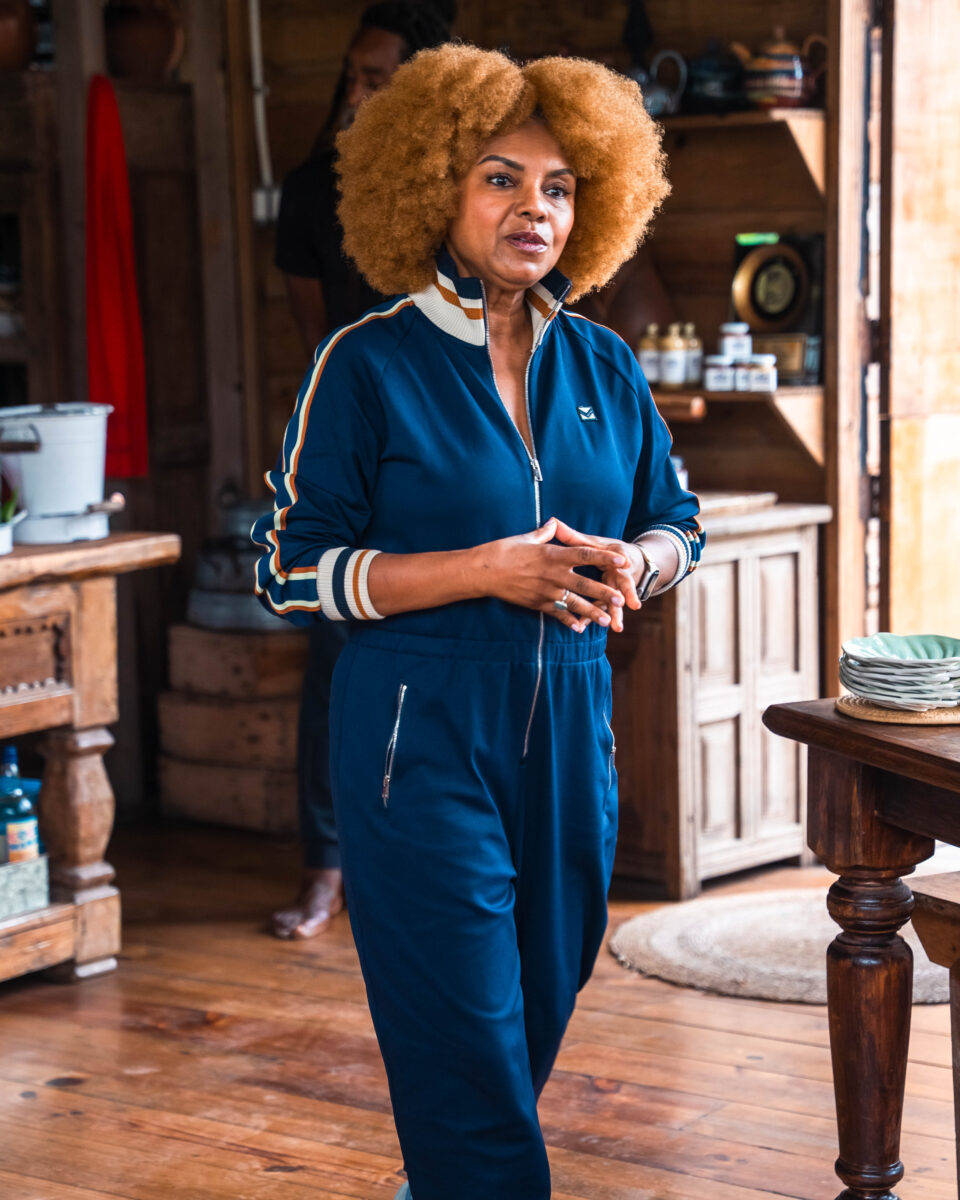
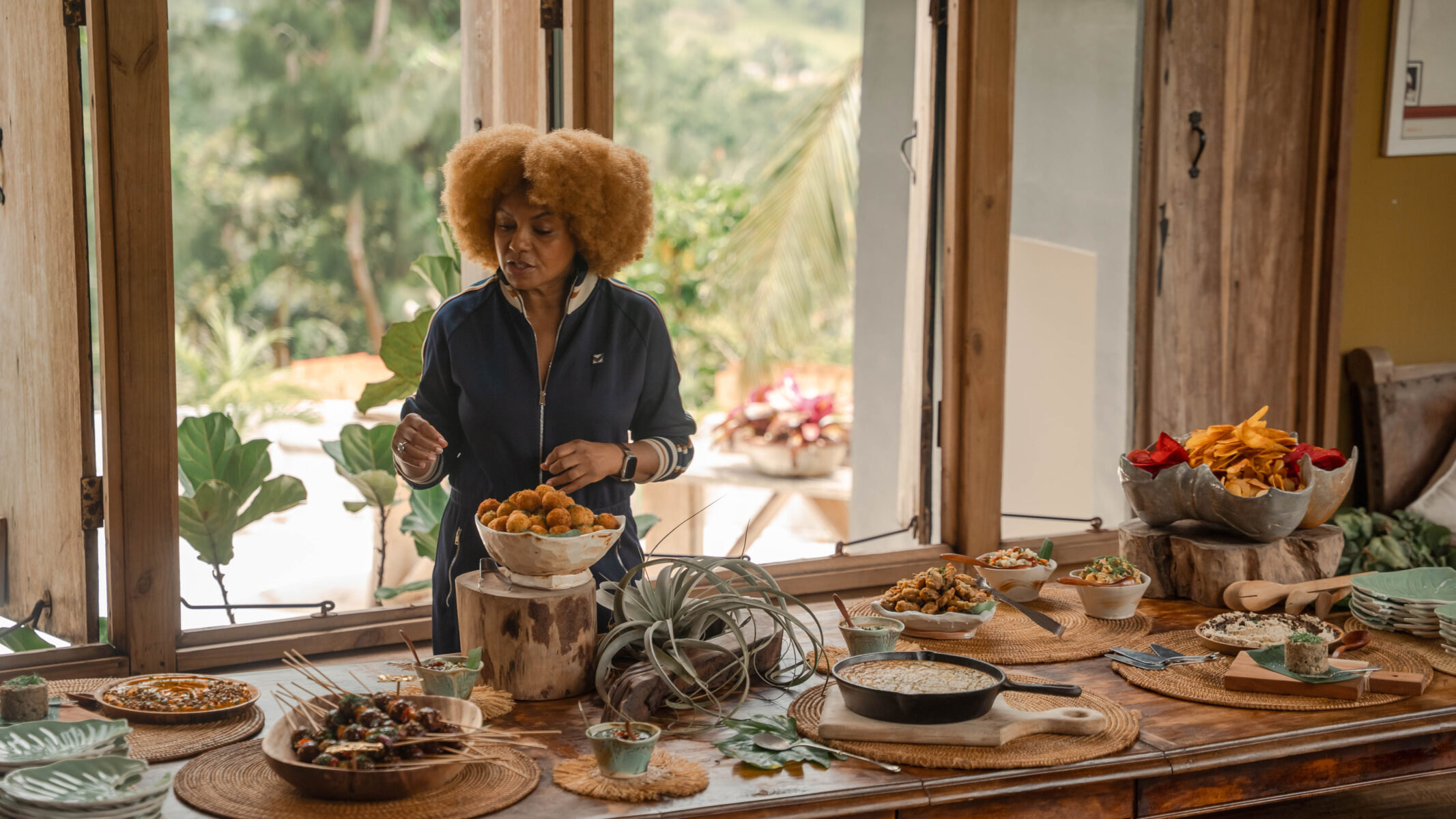
Stush and Bush is less a restaurant and more an experience, a way of life. There’s no set menu; instead, what is available to eat is dictated by what is in harvest on the large on-site farm. We are welcomed by the lovely couple and their several large, very friendly dogs. Also a refreshing cocktail, the first of a handful of Crossfire Hurricane liquid delights designed by Jamaican rum ambassador, drinks wizard and all-round top bloke Ian Burrell – who has joined us on the trip for a few days alongside brand partner Vincent Gillet and writer and historian David Katz – for this meal especially.
The food is mind-bogglingly good. Revolving around a mezze’d amalgamation of dishes – plantain chips, nut-based cheese and dips, a sort of pizza, meatballs with no meat, et al – that leave you at first speechless before musing aloud, “How is this vegan?”
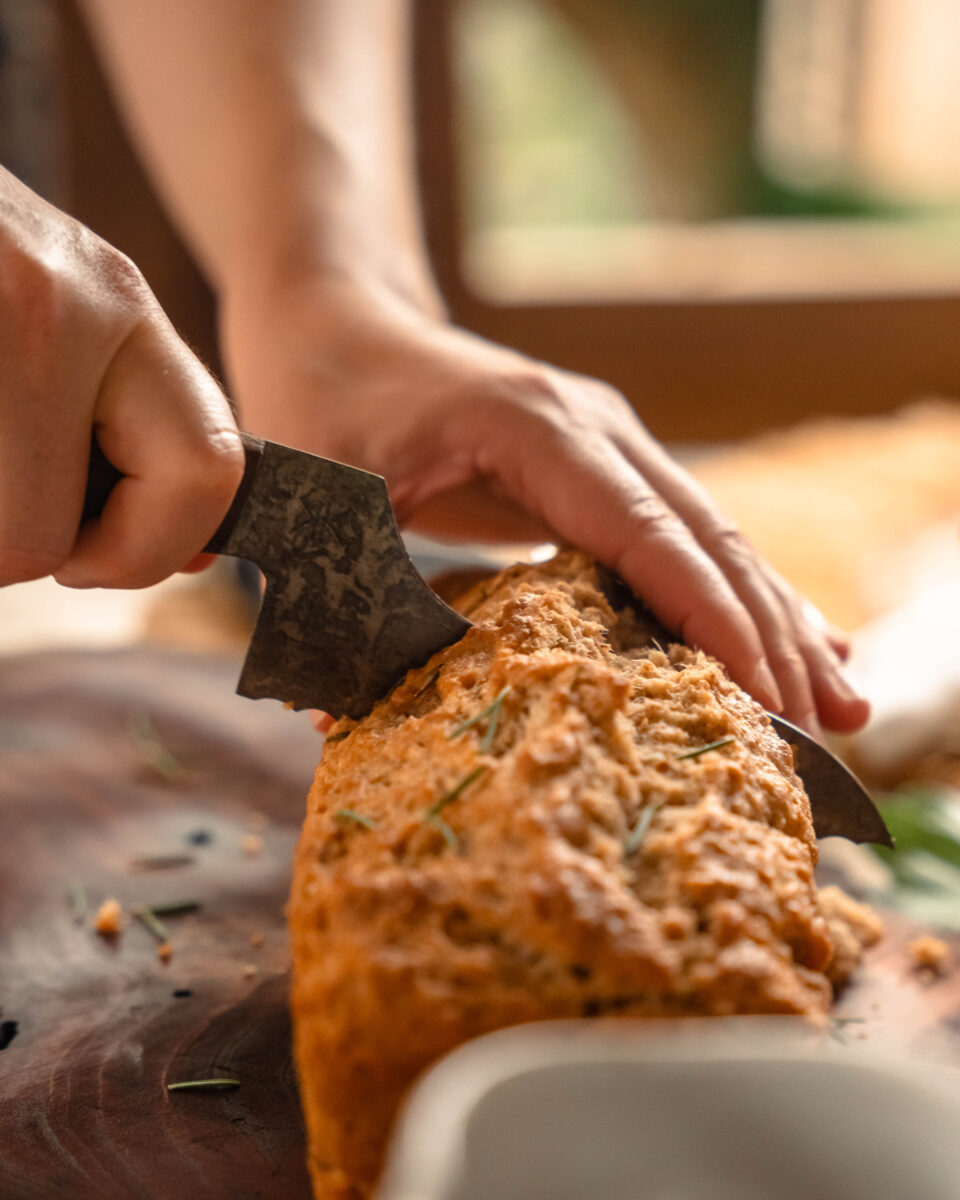
After eating (plenty), Chris takes us on a tour of the farm, allowing the group to sample all sorts of fruits and herbs, and even introducing us to a couple of the cutest puppies you’re likely to find in the Caribbean. It’s an impressively constructed location, showcasing the pair’s self-sustaining culinary philosophy, further augmenting the unique dining experience – one that is not quite over. Post-tour, Lisa has whipped up another couple of courses. I’m still full from the mezze, but I find a second wind and munch down some rosemary and red stripe bread, soup, and a kale salad.
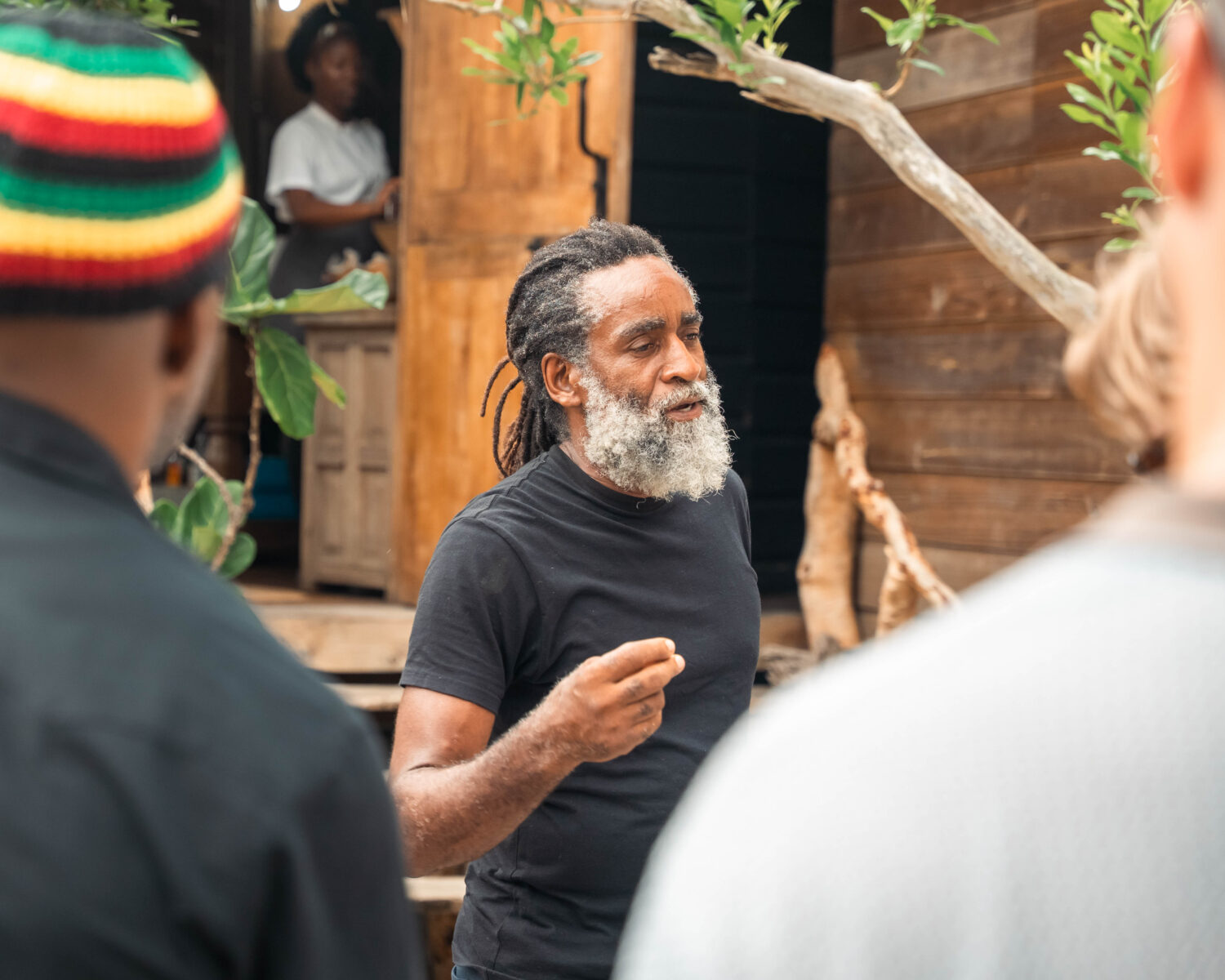
Borderline food coma, we say our goodbyes to our new friends Chris and Lisa and waddle back onto the minibus. It’s at this point that my phone decides to quite literally give up. I’ve only had it for about six months – a panic buy from CEX after accidentally violently dropping my previous device the day before a press trip – but immediately there’s an ominous lack of activity when I go through the normal recovery procedures. Guess I’m off grid for the next three days then. I probably should be stressed, but actually a weight feels lifted.
It’s now early evening, and we’re heading back out for (MORE) food and a once-in-a-lifetime musical performance. A short drive takes us to Miss T’s Kitchen, an authentic Jamaican restaurant run by the eponymous, gregariously welcoming owner. Getting stuck into some more Crossfire Hurricane cocktails, my appetite finds a third wind.
Here, though, disaster strikes. If you’ve been keeping up with my endeavours of late, you’ll know I’ve been a proud performative pescatarian since the start of the year. A set starter is brought over, some kind of salad. Maybe I’ve had too much rum, maybe it’s the sun, maybe I just subconsciously had enough vegan food for one day… but I wolf down this salad without much thought. As I finish eating and comment to the table how tasty it was, everyone looks at me, bemused. The dish had shredded chicken in it. I let you a visceral groan. Back to day one then, I guess. Sorry Moby.
I shake off my guilt for a live performance from a reformed Wingless Angels, the Rastafari reggae legends best known for their Keith Richards-executive-produced self-titled debut album from 1997. Their iconic leader, Justin Hinds, sadly died two decades ago, but a revamped group now sits in front of us, consisting of original members and younger stand-ins. Wayne Jobson and Brian Jobson, co-producers of the group as well as founding members of the equally legendary collective Native, are also here.
Wingless Angels deliver a performance of some of their classic tracks before welcoming questions from the press party. I pose: who are the next big names in reggae music (boring, I know, but everyone else was just staring at their feet and someone had to step up)? The Wingless Angels let out a slight grin. They don’t name any; they feel that the golden generation has been and gone.
It’s a notion I can appreciate but don’t entirely agree with. The last 15 years have seen the likes of Protoje, Chronixx and YG Marley proving themselves to be more than adept at modernising and progressing the genre. But these are lineaged musicians, savants of their style, shaking their instruments as if a body part rather than percussive equipment, harmonising with each other so beautifully. So is it a genre stuck in the past? Or an irreplaceable snapshot of time that can’t be outdone?
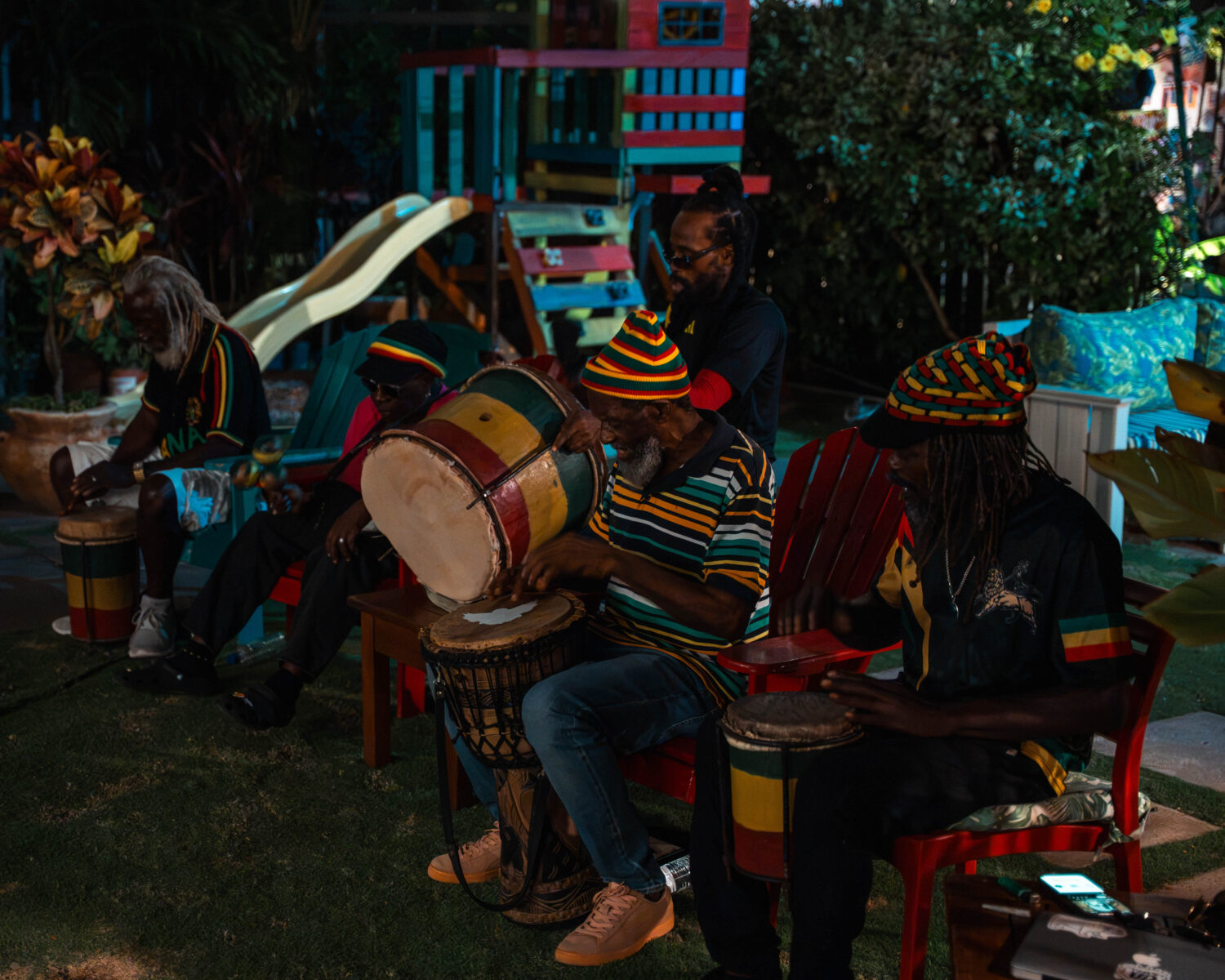
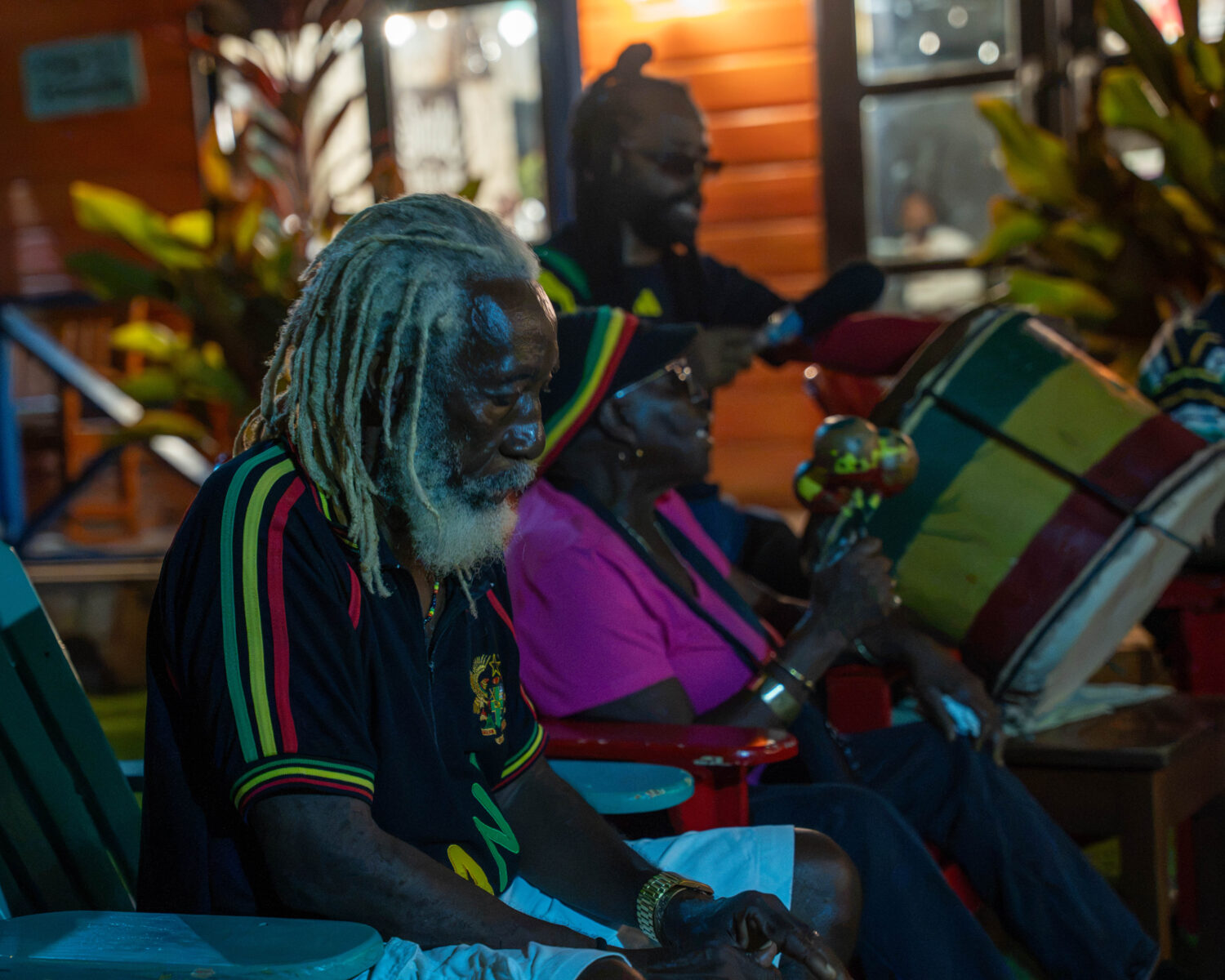
After the performance and intriguing conversation with the Angels, we’re back to Jamaica Inn for a nightcap. A handful of journos and Ian remain, and we’re drinking both the two types of Crossfire – the ‘reserve’ and the ‘gold’. The former is dense, hearty and darker, while the latter is more palatable, better for cocktails. Both go down a treat. We finish the night on the beach, lying on deck chairs, chatting about anything and everything and reminiscing on the day we’ve shared.
The next day begins groggily. I’m still phoneless. I miss breakfast, and the first activity is a rum tasting. It’s before midday. When in Jamaica, I guess.
The session is led by Ian, who looks a lot fresher than us journalists, and boasts a quite impressive array of hats. He leads us on a liquid exploration of the intricacies of the nation’s different palettes, diving into the importance of Crossfire Hurricane adapting rum from the four distilleries – Hampden Estate, Long Pond, Worthy Park and Clarendon – in its products. It goes down surprisingly well given the time and my ever-so-slightly ropey condition.
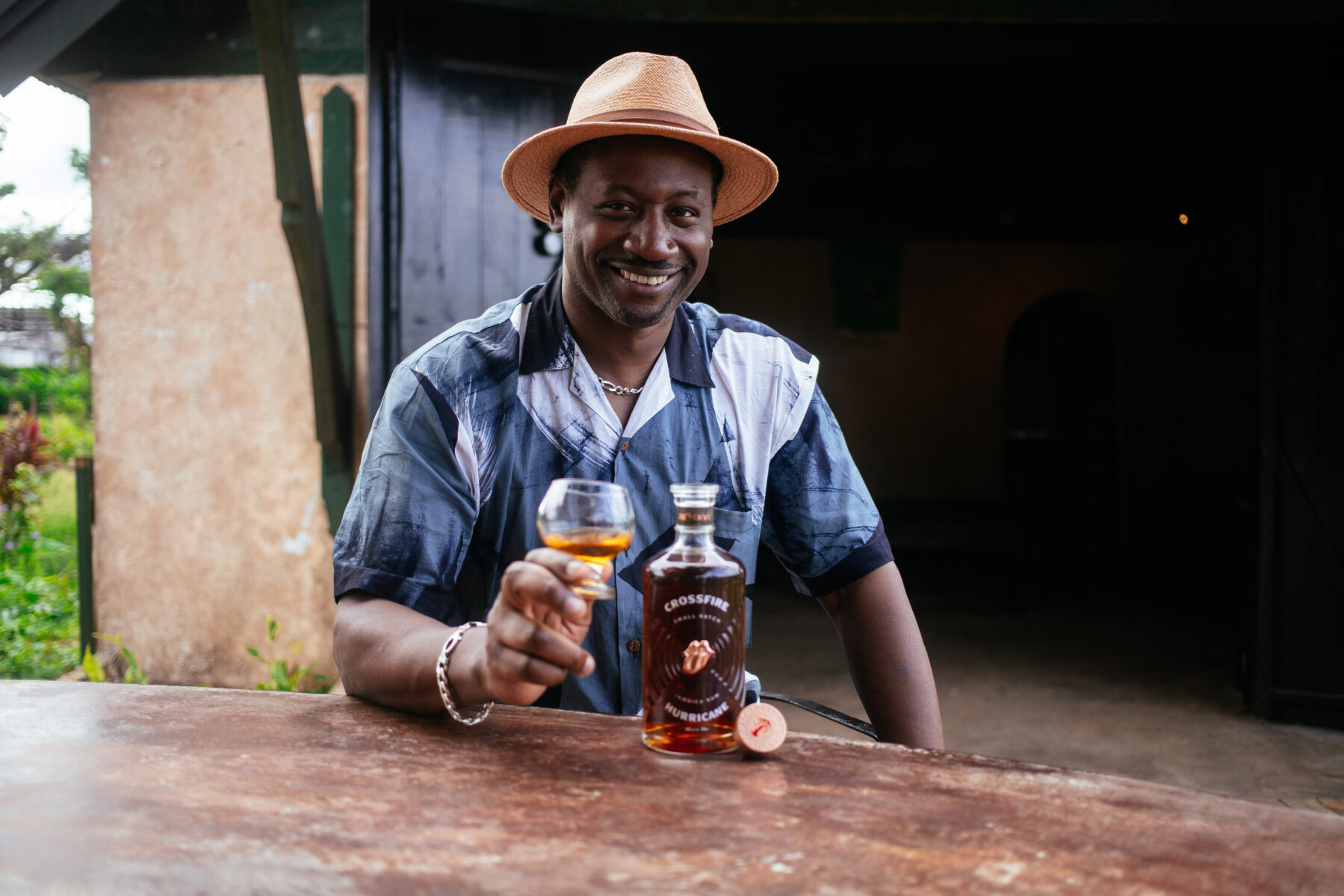
We’re heading now to one of the distilleries, Worthy Park, for a tour of the factory. It’s a lengthy journey, but the setting is gorgeous as we drive south, inland. After a few hours, we arrive and are greeted by the kind staff and a friendly cocktail.
We’re taken on a tour of how the rum is made – very interesting stuff – but I am slightly distracted. England are in the semi-final of the World Cup. I’m also (still) phoneless, so badgering others for score updates. We finish the tour with another tasting (including one drip that tastes like Baileys but rum and better) and lock into the last 20 minutes of the game. The 20 minutes that ruined the hopes of a nation. At least there’s plenty of rum to wash away the sorrows.
A nap-fuelled journey back and a quick freshen-up later, and we’re meeting up again for our last night as a group. We’re having dinner on the beach at the Jamaica Inn, and are joined by some fascinating guests. Herbie Miller, who is the Director of the Jamaica Music Museum in Kingston, has had a long involvement with reggae. A friend of Bob Marley and the Wailers in the 60s, Herbie later became Wailers member Pete Tosh’s manager, and negotiated his signing to Rolling Stones Records. As we tuck into a delicious dinner and some more Hurricane Crossfire cocktails, Herbie speaks at length about his love of jazz, his relationship with the Stones, and the significance of rum to the Jamaican people, from its dark history with the slave trade to its modern reclaiming.
Another special guest has already been mentioned earlier – the man whose immortal single “Cherry Oh Baby” was covered by the Stones in their 1976 album Black and Blue. Eric Donaldson is a quiet, beaming presence. He leaves the dinner early, but not without an a capella rendition of the legendary song. The whole table is silent, watching on in awe at the incredible moment.
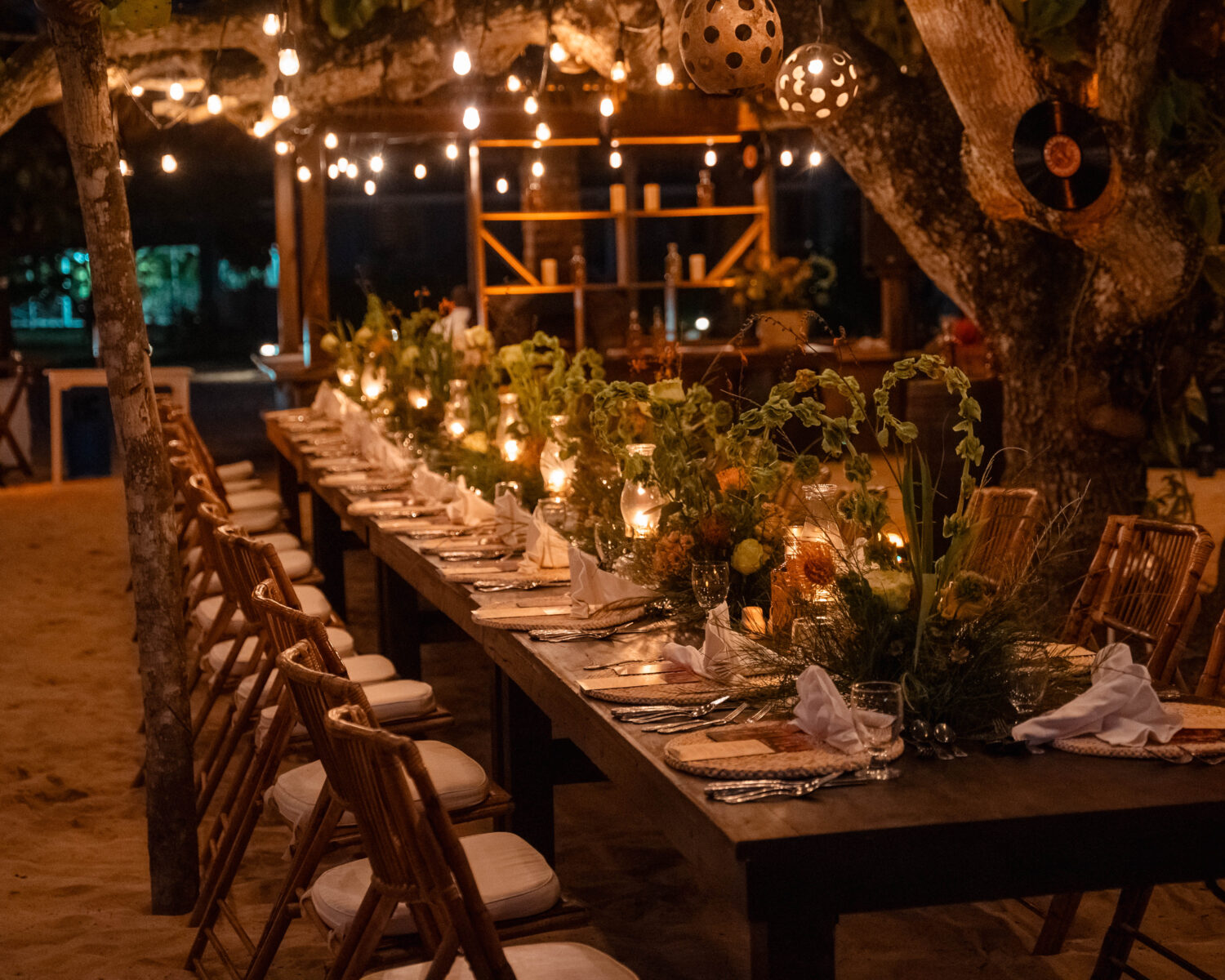
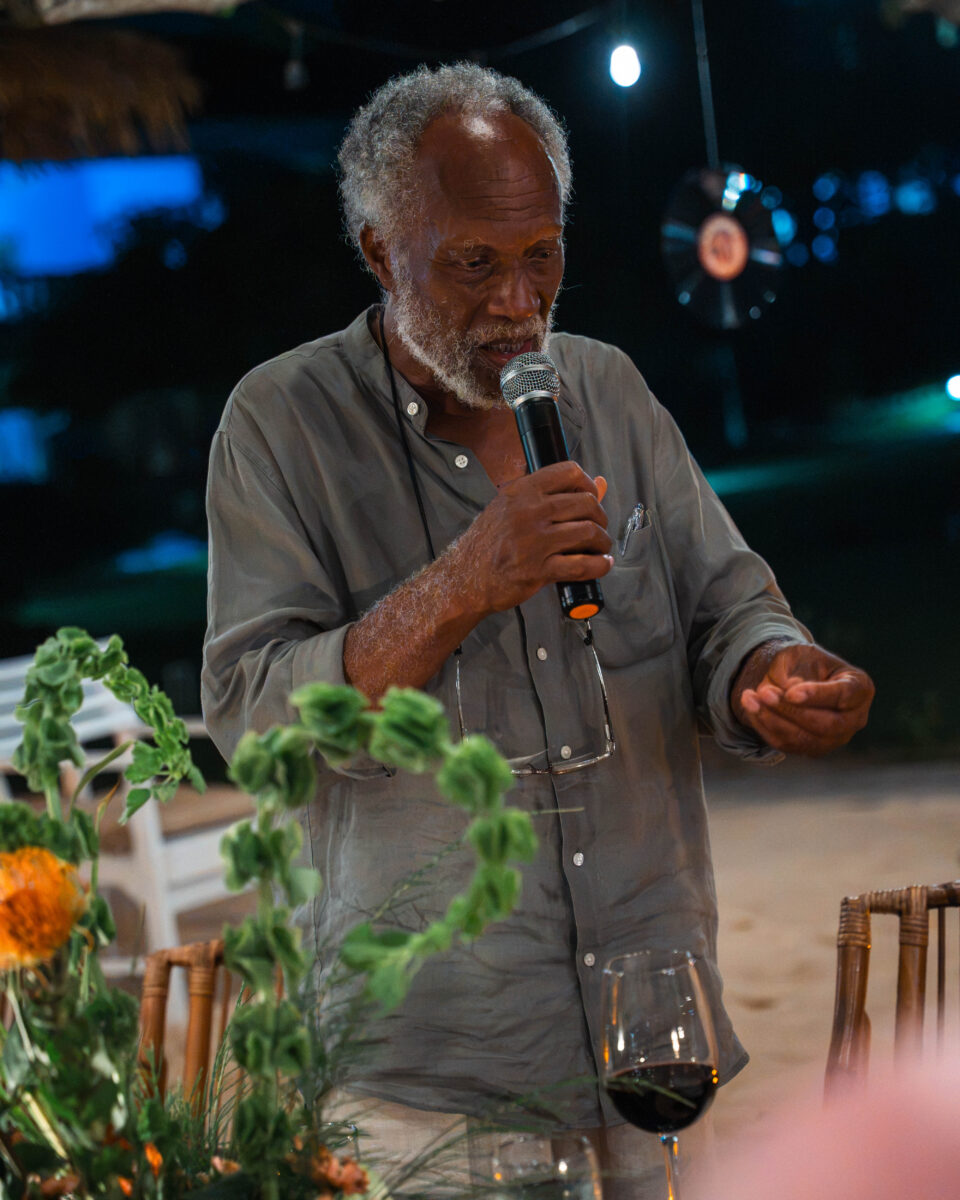
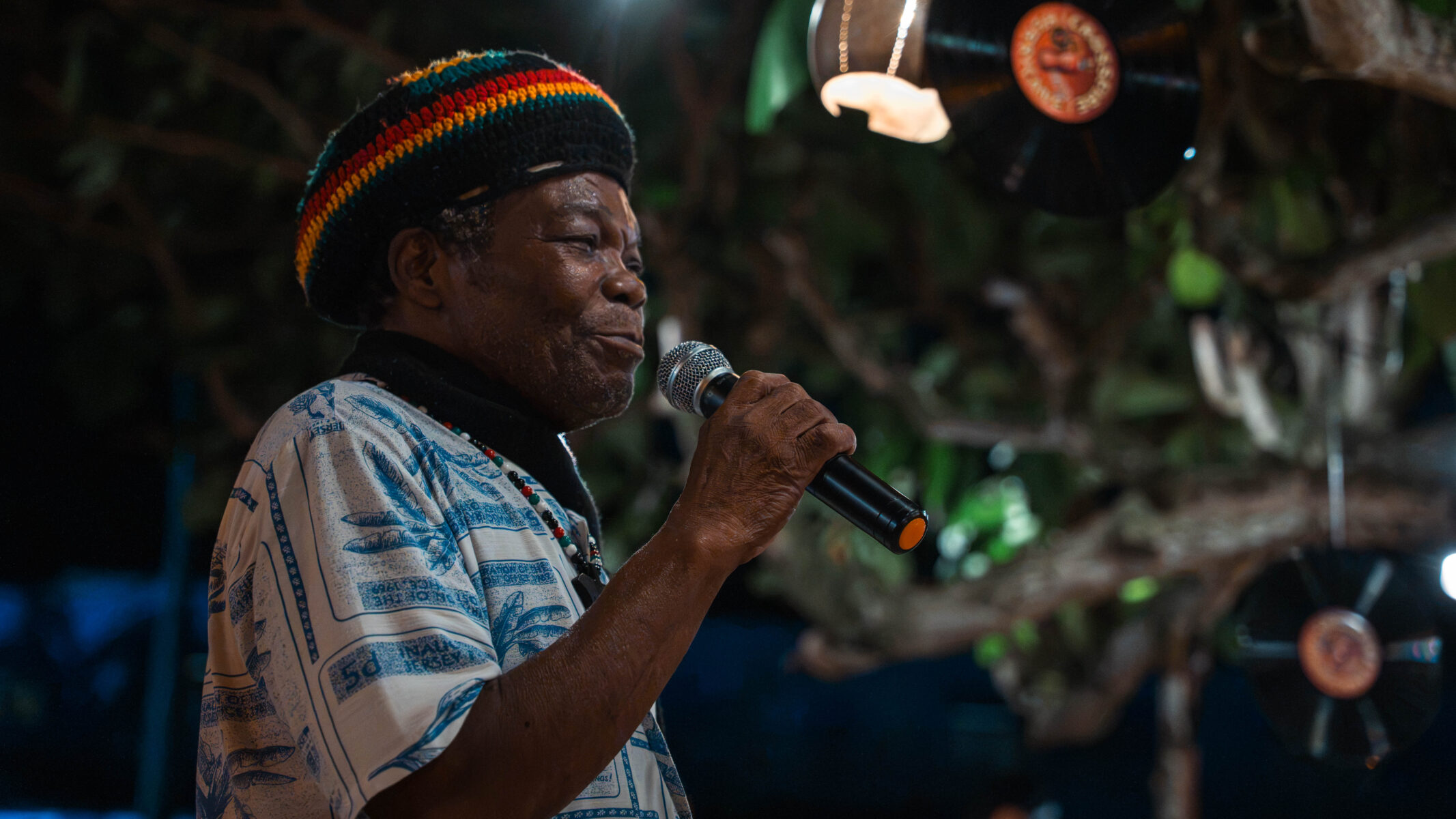
Merriment and cocktails continue into the late evening, before a handful of us once again take a bottle and sit on the beach into the early hours. A perfect last evening on the island.
The next day is spent eating the freshest fruit I’ve ever consumed, lounging on the beach and drinking a few swansong cocktails ahead of our departure in the late afternoon. We say our goodbyes to our kind hosts and ride back to Montego Bay airport. I can’t sleep on the flight, so instead, I think.
My trip to Ocho Rios was brief but enlightening. The Rolling Stones legacy breathes through the island, and through Crossfire Hurricane. Reggae is such a unique and significant genre. So much goodness has come – and continues to come – from Jamaica, quite mind-blowing given its size. The locals are fiercely proud of where they are from, yet open, warm and welcoming. Perhaps we Brits could learn a thing or two from them.
Words – Ben Tibbits
Photography – Chazzy Newlook


