In search of authentic festival culture, writer Amber Rawlings ventures into the forests of Lithuania for Yaga Gathering. It promises trance and transformation. She does get that, just not in the way she expected.

No matter how altruistic and well-intentioned something is, there’s no guarantee that you’ll actually enjoy it. In this case, that something is Yaga Gathering, a trance festival that takes place in the forests of Lithuania. Earlier this month, I went along for the ride. I was meant to stay four nights. I did just one.
Yaga Gathering started back in 2003, with punters making the hour journey down from Vilnius for trance music and a smorgasbord of healing activities — the festival’s name alludes to spiritual rebirth. When it began, there were around 250 attendees. Now it’s closer to 5000. With that they’ve got merch, food vendors selling cosmopolitan shit like tacos, and bigger names on the line-up — the likes of French producer Fantastic Twins and… Claywoman? She’s a character from actor Michael Cavadias that would make a great bit part on The Mighty Boosh. When she popped up on my feed just a few days before I left for Lithuania, my stomach dropped.
Yaga Gathering has grown, but its draw remains the same — it’s genuinely countercultural. In an increasingly corporate festival landscape, Yaga continues to operate without any big sponsors, financed entirely by ticket sales. It’s the antidote, like Balter for the Baltics… and there’s a Michelin-starred chef hosting a dinner. They had me by the throat. I packed my bag and headed to Luton Airport.
Bag singular, yes. It’s a rucksack that’s bursting at the seams because I’m incapable of packing a sensible amount. Numerous bikinis (it wouldn’t be countercultural to check the weather forecast) are wedged into the outer pockets, mingling with all the surfaces I encounter on my way to the depths of the Baltics. Namely, there’s the Luton Airport Express, whose ad campaign is an insult to So Solid Crew’s legacy. Through security, straight to Luton’s subpar equivalent of a Wetherspoons for some wine and an obligatory stalk of the other journalists on the trip.
I step off the plane. Replacing that usual gust of hot air is the realization that it’s about ten degrees colder and monumentally grey. Hope is wavering, but it’s still there. I go through passport control and make eye contact with one of the other journalists, though we both pretend not to notice. And there at arrivals stands my transfer to Yaga, a woman that’s quite possibly younger than myself and more of a punter than a professional taxi driver. I ask her if she likes trance. Her response is a grave but enthusiastic nod.
Fucking hell, she really does. We zoom down the motorway while our transfer blasts high BPM trance. The only moment of respite is a quick pitstop at a service station, where the others bulk-buy cigarettes as if preparing for siege. I stay in the car, half because I’ve already lapsed into being non-verbal and half because the child locks are on. I’m trapped, which feels foreshadowing.
The dread is mounting, but I am enthralled by what’s out the window — looming trees unlike anything you’ve seen in the UK and wooden farmsteads in the vein of Christina’s World which eventually give way to burnt out, post-apocalyptic ones. Marta, one of the representatives for Yaga, later tells us that it was one of these that housed an orgy a few years prior. It’s food for thought.
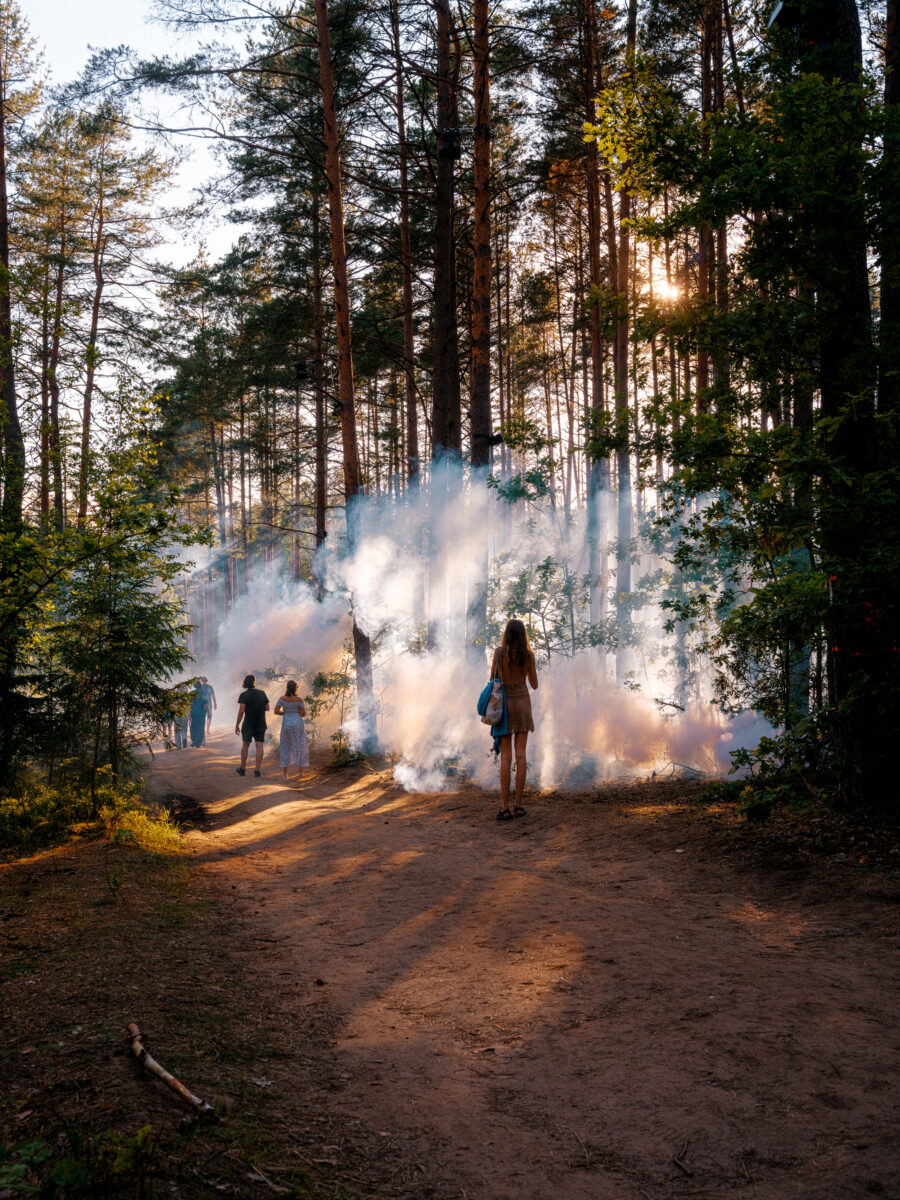
One sharp left at the tiny sign for Yaga and we’re in the Dzukija forests, speeding down mud tracks, flying in and out of deep chasms. Brits would call them potholes — we are just in the woods. The trance music suddenly feels more intense, but simultaneously more fitting. “Jesus Christ,” mutters one of the other journalists. “I’m really scared,” I reply.
The tents, we’ve been told, are ready and waiting. You must be piecing this together for yourself now, but I’ll go ahead and say it anyway: the “chasms” at Yaga Gathering come in many iterations. Most of all, there’s a deep chasm between expectation and reality. Throw in my well-meaning naivety and it’s not so much a chasm as an earth-shattering abyss. The tents are, of course, not there. Not in the form of the modest yurt I’d expected anyway. They are still in their bags and require assembly. I will be doing the assembly. I am a fool.
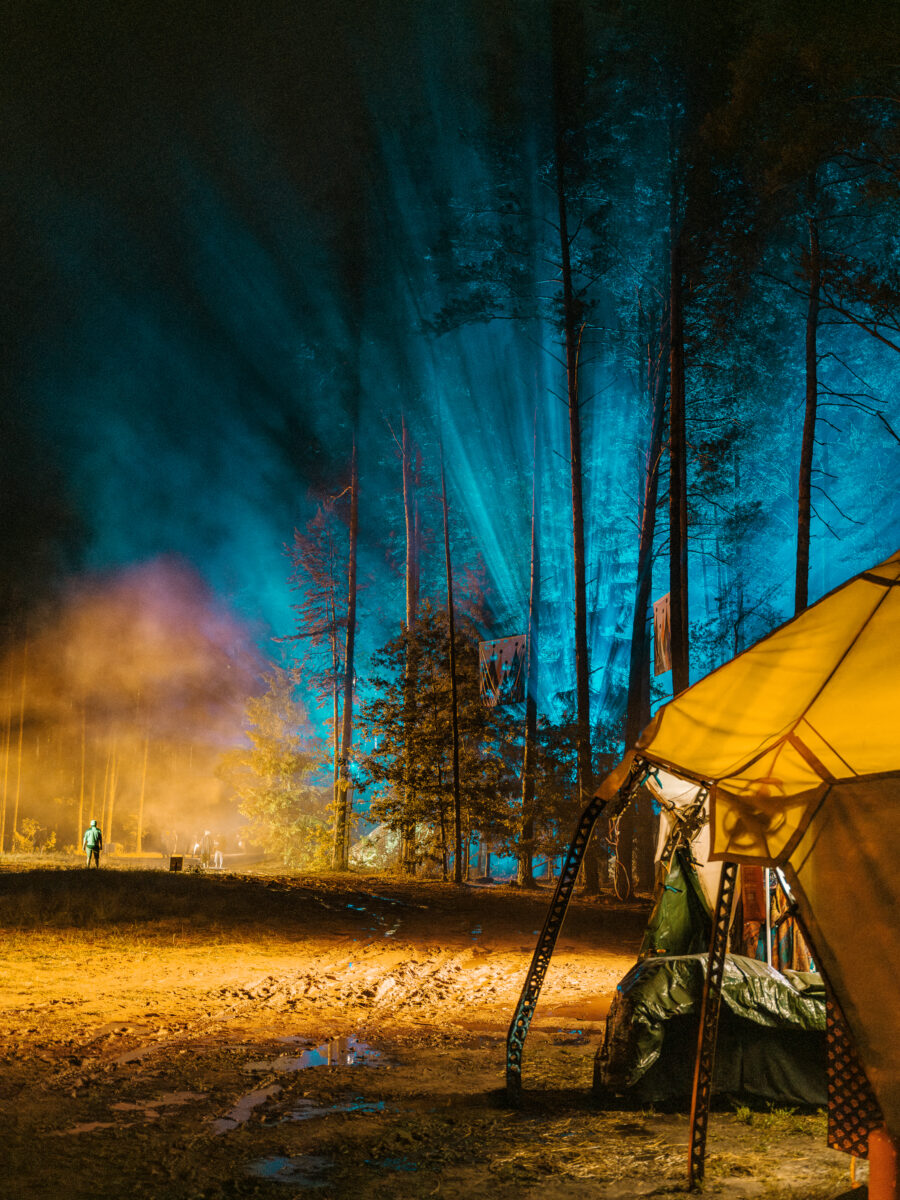
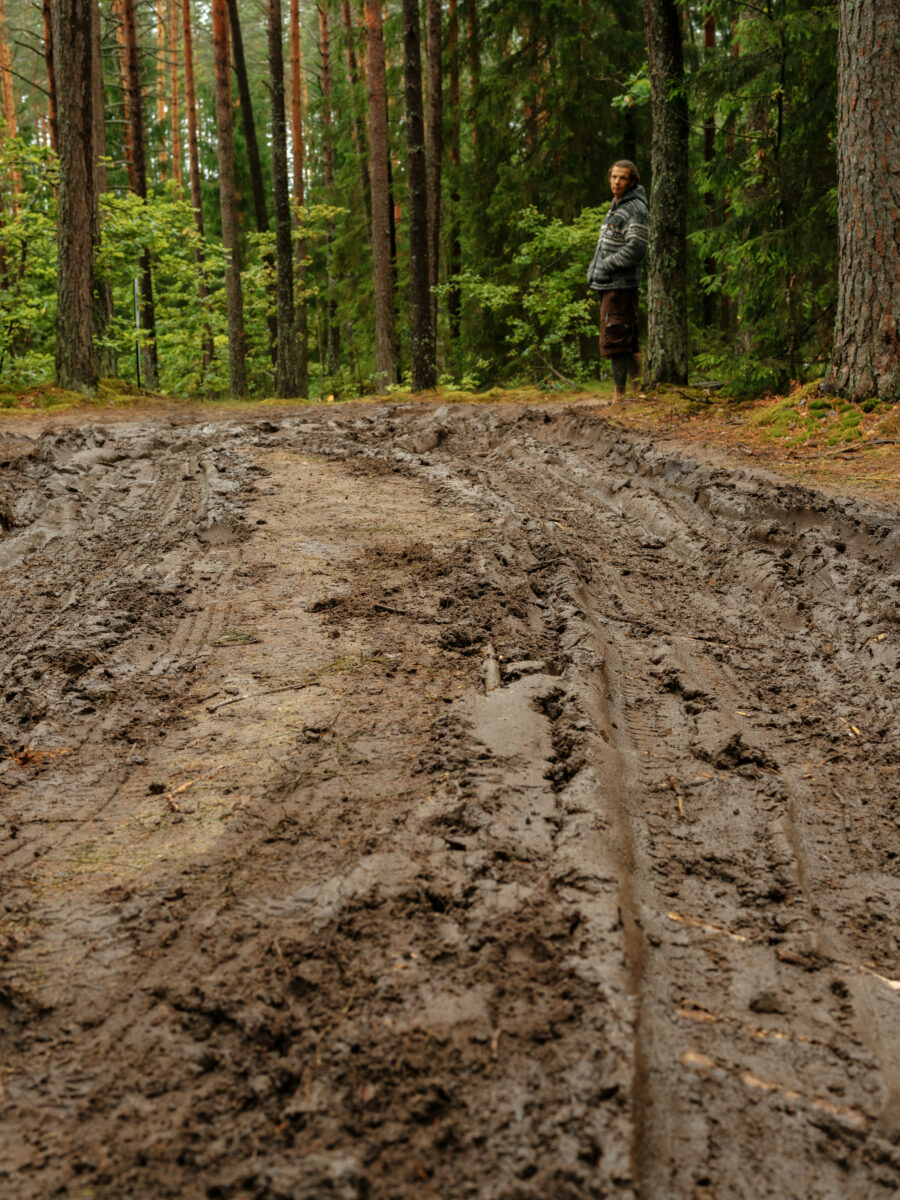
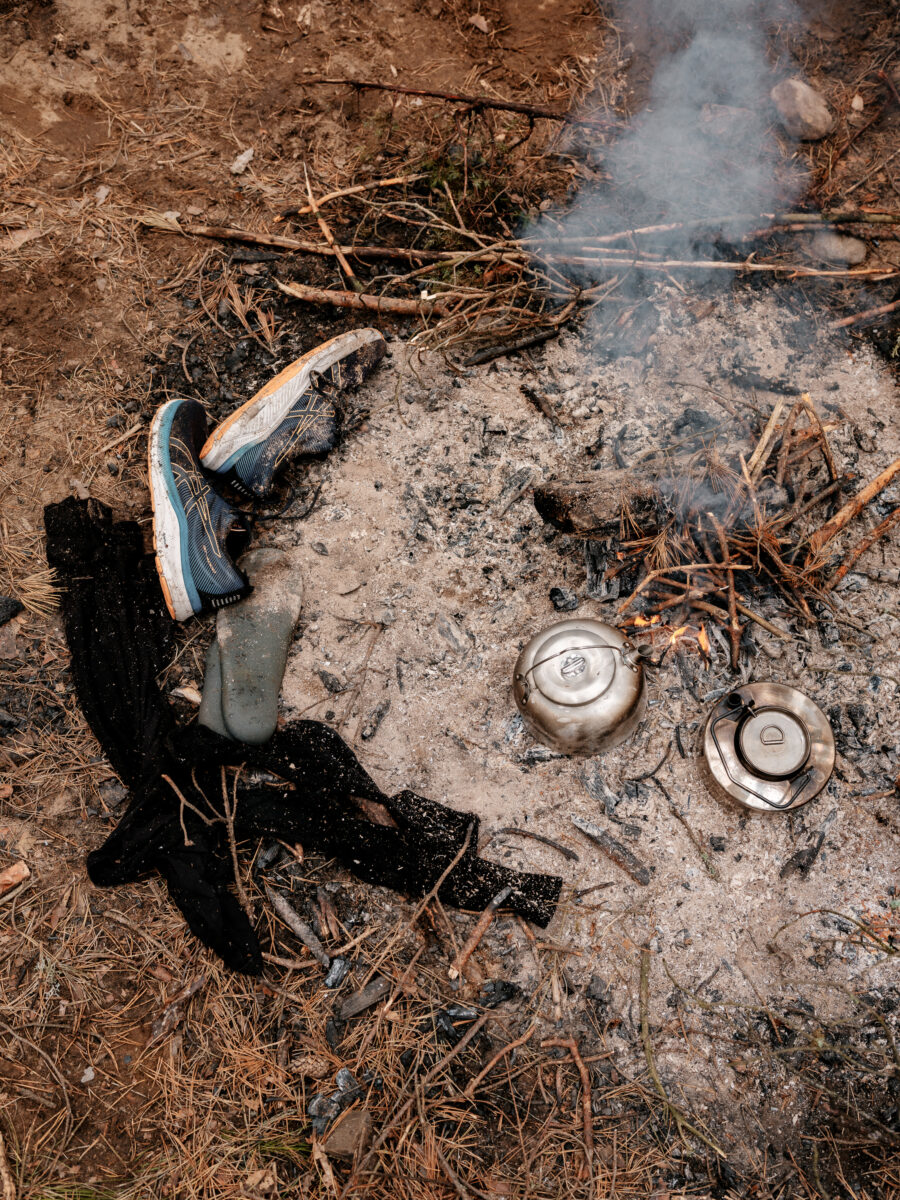
Musical festivals are rife with choices. At one point will I pivot from spirits to beer? Shall I go to Charli xcx’s set or Doechii’s? At Yaga, the biggest I had to make pertained to where I should pitch my tent. Atop the root of a tree, or forgo the “extra protection” of the haphazardly hung, slack bit of blue tarp above us? I opted for the root, which I’d later come to regret because I also went without the sleeping mat — it was home to a family of slugs, and I was already too tired to fight them for it.
Ahead of our tour of the festival, I pop in my tent to arrange all the weather-inappropriate things I have packed. I’m not sure what I was thinking when I packed not one but three summer dresses, but the situation is so dire that Mindaugas (another of the representatives for Yaga) lends me his rain mac. It’s absolutely huge – practically ankle-length – and I look like an idiot. It probably serves me right.
I’m in a state of disarray and so is Yaga Gathering, but in the festival world that’s a rarity. And despite whether it’s to your personal tastes, it’s a coveted quality. Unless you’re willing to have a stall that exclusively sells Red Bull or watch PinkPantheress metres away from a gaggle of influencers on a press trip for Free People, it’s hard to be a festival. Though you’d be forgiven for thinking otherwise given the never-ending Instagram coverage of festivals at Brockwell Park, in 2024 alone, a huge 72 UK festivals were cancelled.
It’s the same in this neck of the woods. Late last year, it was announced that Granatos, Lithuania’s biggest festival, would no longer take place. Elsewhere in the Baltics, it’s more overtly political: in March, Serbia’s EXIT announced that they were being withheld funding after aligning themselves with ongoing anti-corruption protests. In short? Yaga’s chaotic survival in the Lithuanian forest is all the more remarkable.
Though I might have been planning my escape, the festival-goers and organisers were clearly proud of Yaga. I even “got it” when Marta gave us a tour… kind of. While we ate lunch, Marta told us about the Valley Stage. It overlooks Spengla Lake, where punters take a dip when it’s not atrocious weather. It’s also Yaga’s biggest, hosting the highest BPM and, as Marta puts it, the most “intense” music. Not too intense for the baby I see wandering over, though — no headphones, naturally.
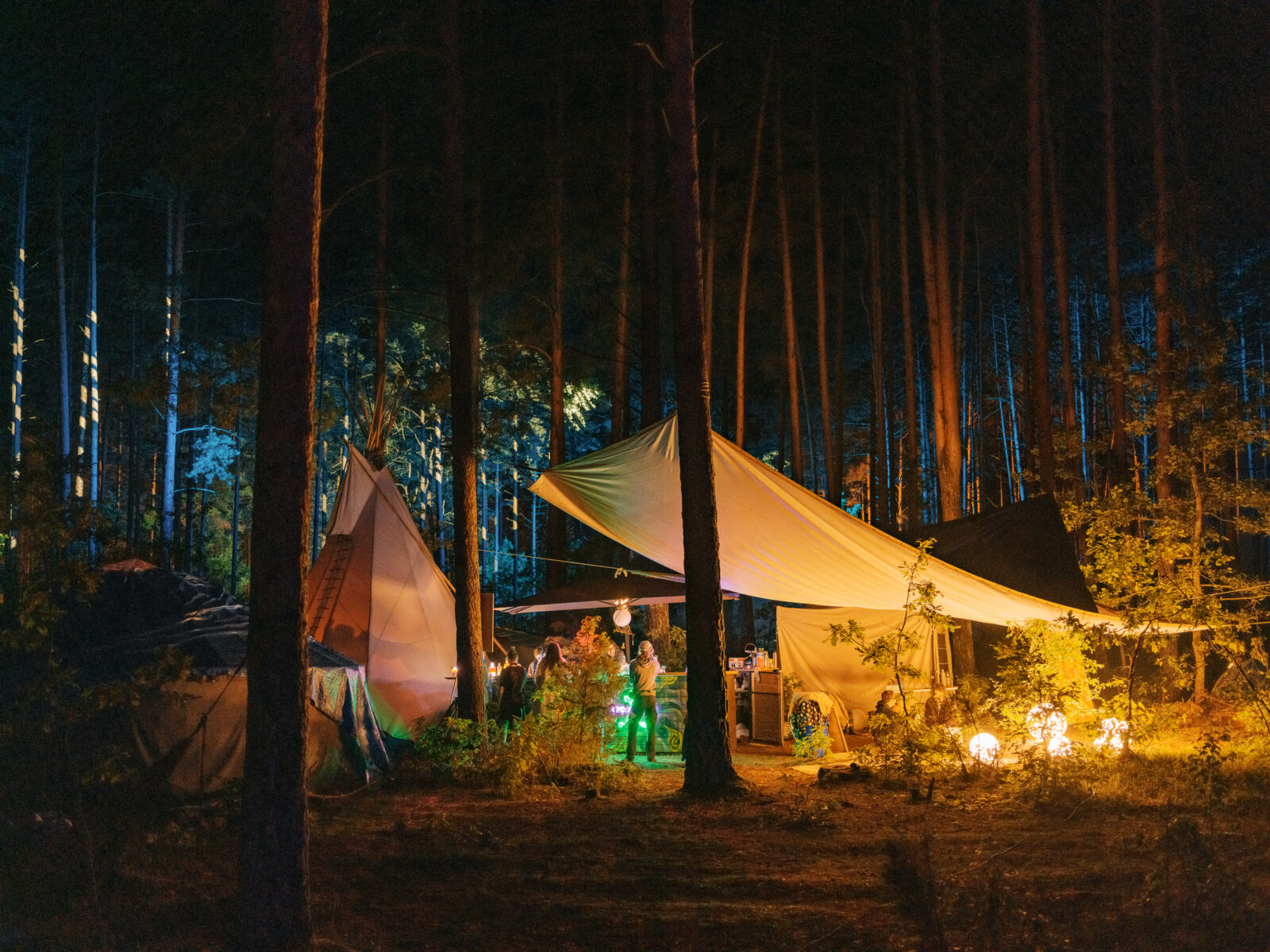
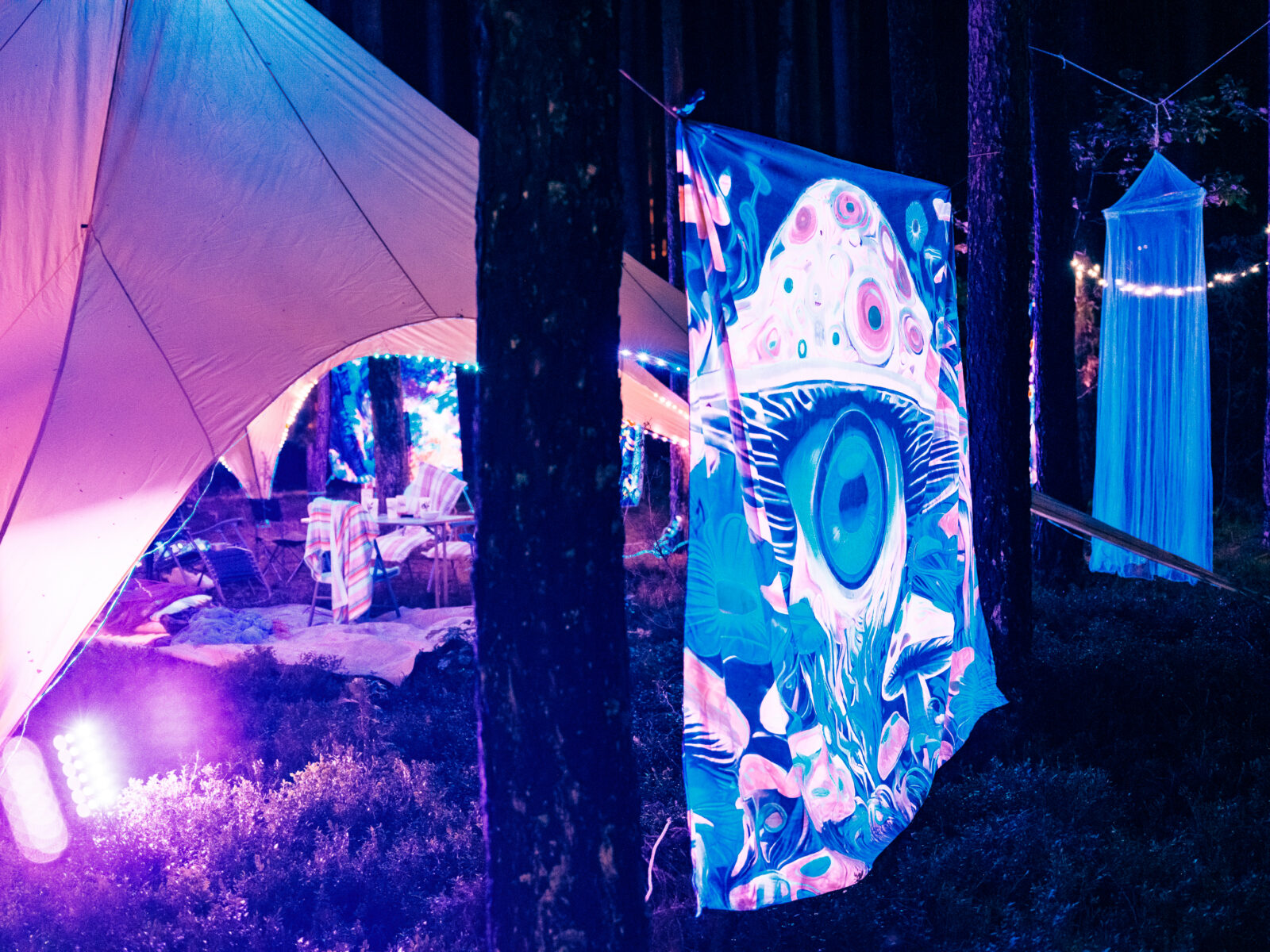
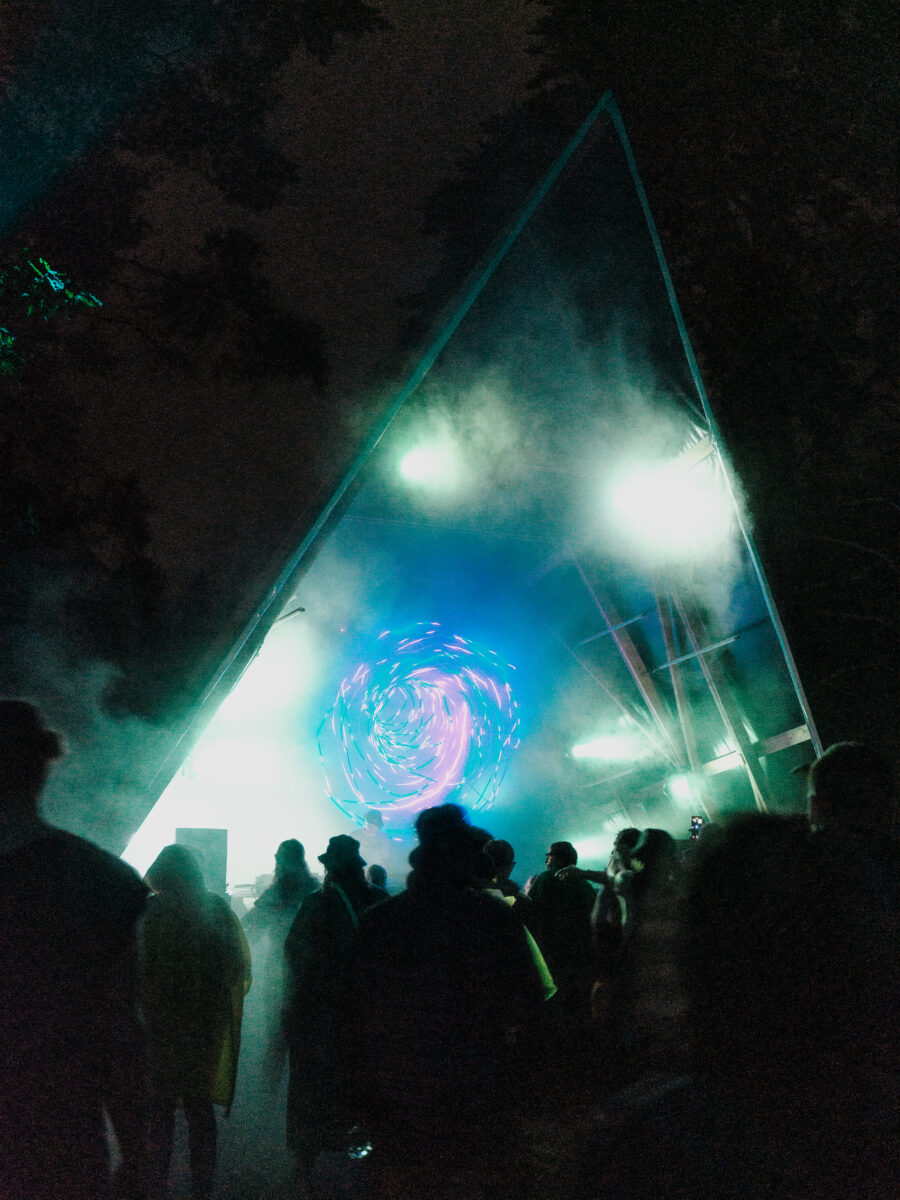
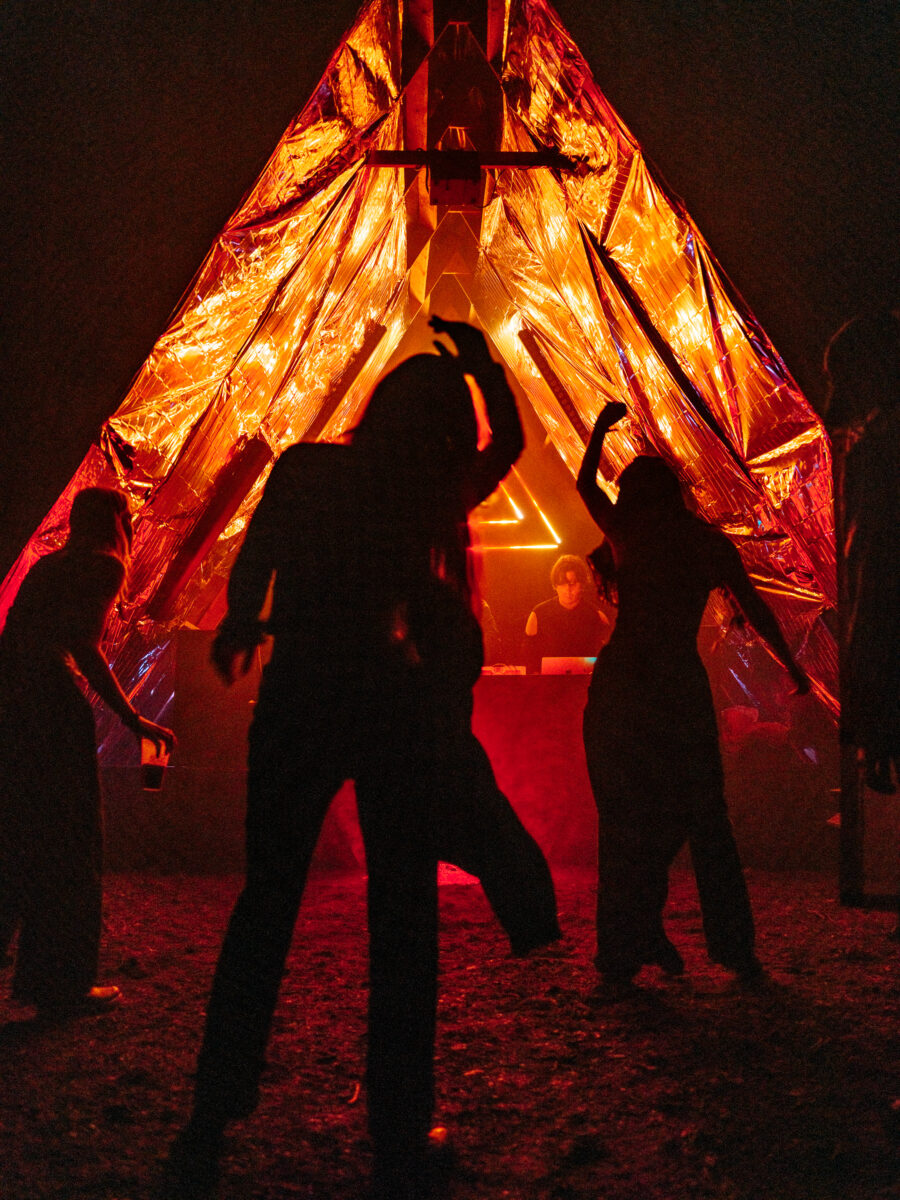
The Valley Stage is a small but mighty wooden structure that pumps the music out. You’d look at it and say “bit Midsommar” before realising everything here is, making your observation fairly redundant. When the sun sets, the Valley Stage becomes all the more intense thanks to the light vortex (I swear I wasn’t tripping) which hangs above the DJ. On Friday, that was Polygonia, one of the biggest acts on 2025’s line-up.
Next on the tour is the Pinegrove Stage. The singular beer I’ve had (gulped down as a means of self-preservation) is definitely helping, but it’s genuinely a highlight. Vast tendrils of purple cloth hang from the tree canopy and hammocks which take the form of huge nets stretch from tree to tree. It’s like Wear M Out for adults with dreadlocks. There’s also a tent where you can have a “relaxing chai”, which Marta is particularly passionate about. I’d probably enjoy that, to be fair, but my pride won’t let me. When I check the photo I took in the chai tent later, a father and son are staring straight into the lens. It’s unsettling — and perhaps cursed.
Then it’s the market. Think food vans, something called “sand therapy”, and stalls selling crystal-adorned necklaces and ponchos. We are also shown the media room, which will become a hub of technology for the journalists and photographers in attendance. At present, it’s an empty tent with the WiFi password scrawled on a bit of masking tape. The tour comes to its conclusion with Marta gesturing vaguely toward various forest tracks, suggesting that exciting things might happen down paths that look like absolutely nothing. “This jam jar means there might be a healing event around here,” she says. I don’t stay long enough to find out if they materialise, but I suspect that’s not the point. The possibility is enough.
Depending on your inclination, we are now either free, or left to fend for ourselves in the Lithuanian wilderness. Either way, a few more beers can now be drunk without having to feign interest over meaningful debris. We do just that.
I will admit that from this point on things are blurred. Whether that’s the result of a few too many beers or because I’ve tried to block it out, it went something like this… More journalism chatter, particularly about AI, which we’re all obligated to be furious about. Toilet break which involves trudging through sludgy mud with the potential to reach ankle-height. It’s the usual festival setup — going for a wee involves making direct eye contact with the ghosts of shit past and present. Back to the bar, where we are lucky enough to have secured seating that’s covered from the torrential rain. I post an Instagram story of said torrential rain. People message to ask where on earth I am.
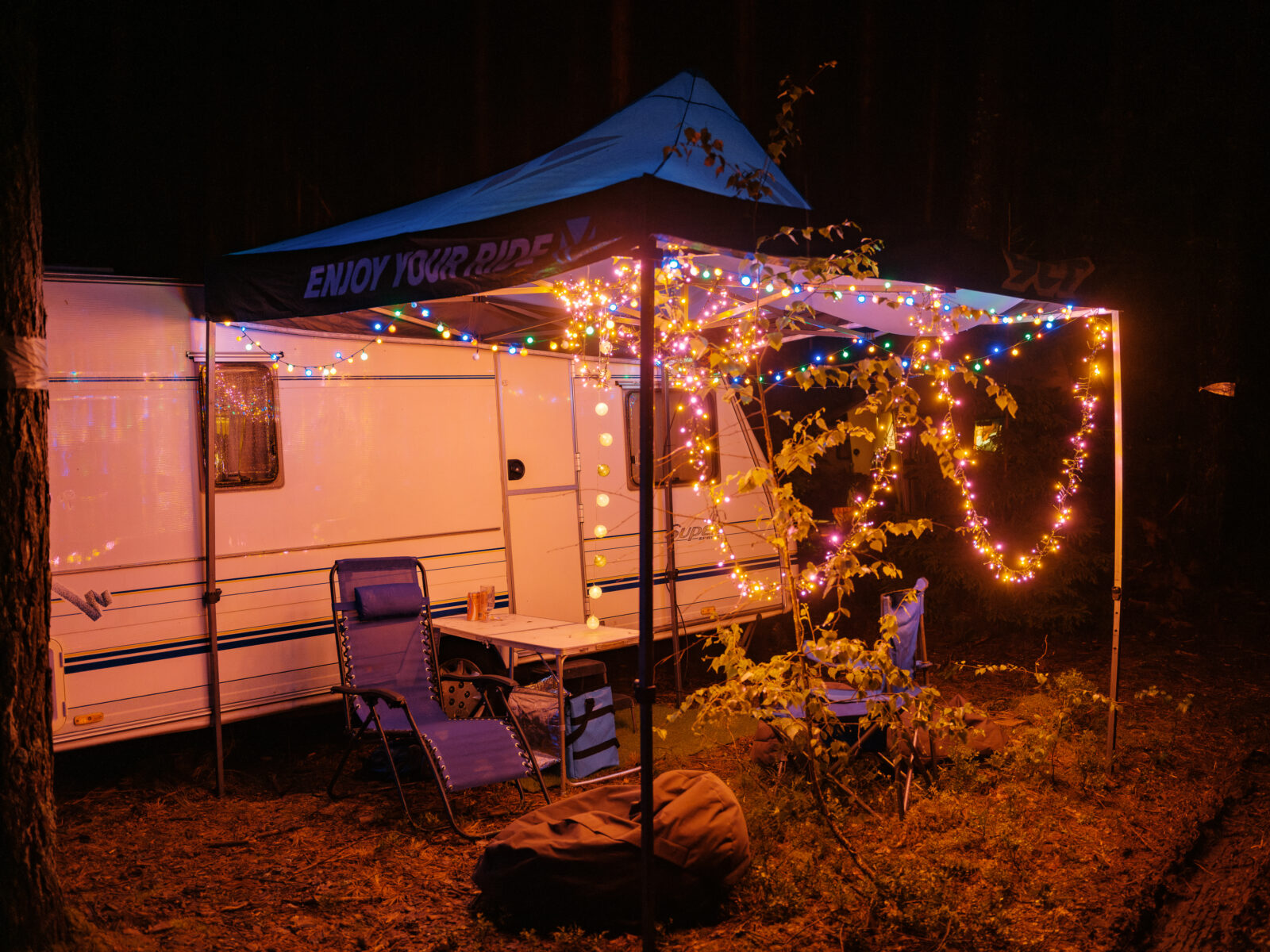
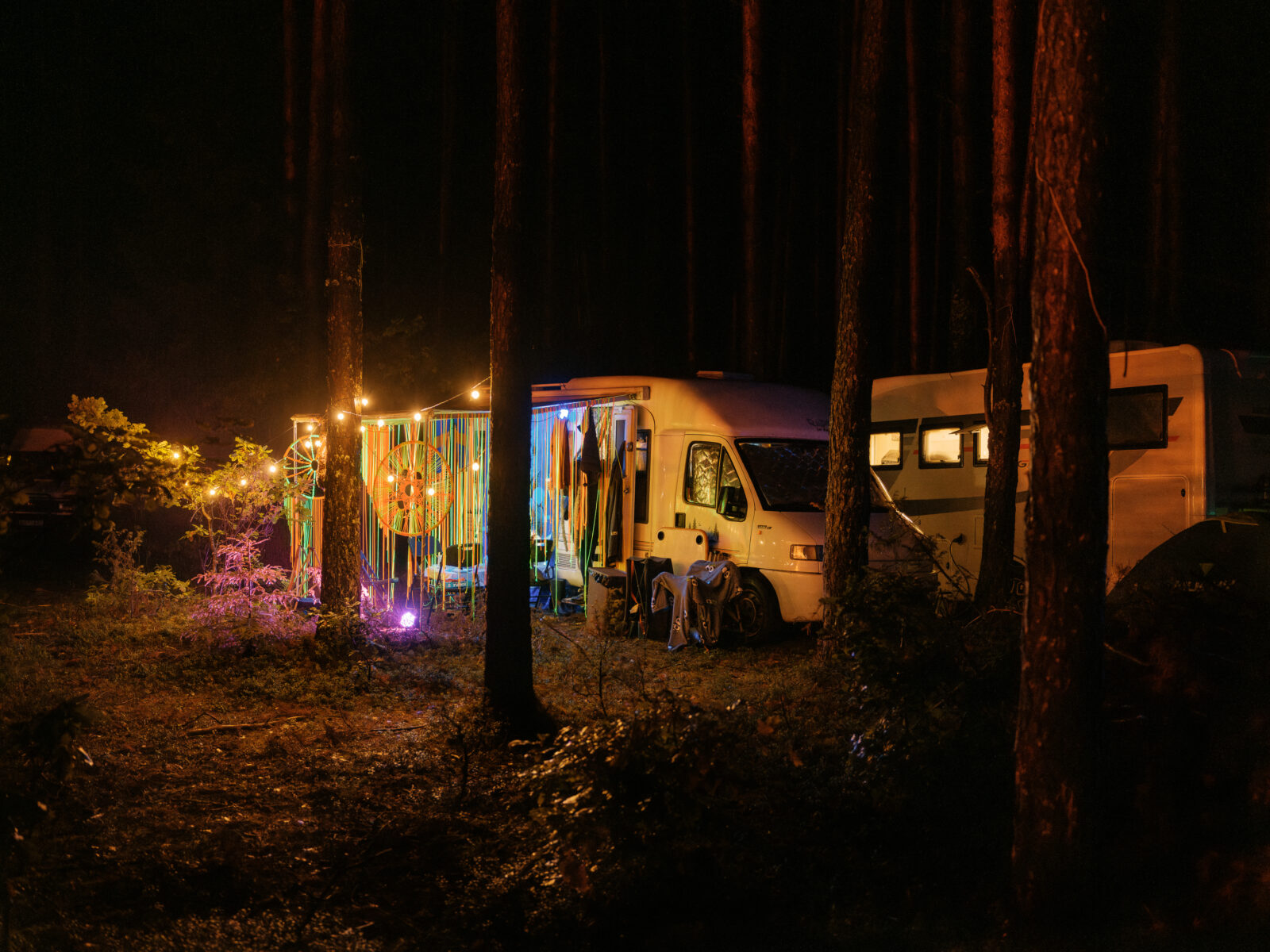
At some point we meet three other Brits, one of whom is Jacques Adda, an artist on the line-up. Despite the fact they obviously lap up this malarkey, they’re a beacon of hope. They let slip that they’re staying in an RV. I am clearly seething with jealousy, so they backtrack, insisting it was a ballache to arrange. I think they are a little scared of me. I am a woman on a mission — to get out of Yaga.
The most humiliating part of the night comes shortly after I realise that a beer jacket won’t be enough. I need another layer. There’s talk of one of the representatives procuring me a jacket, but I’m doubtful it will come to fruition. If the tents are anything to go by, I may have to make it myself or something. I beeline for the merch stand only to find that the only hoody left is the one on display. I try bargaining with the lady working there, but it’s a firm no. I even desperately flash my media pass. She tells me that “everyone is equal here.” I wonder if she’d keep that schtick up if I was in hospital with hypothermia.
Back to our camp so one of the journalists can lend me something to wear (it’s Sergio Tacchini — nice), then a quick hello to the guys who’ve just got in from Paris. Again, it’s a bit blurry, but I’m pretty sure I warn the most cosmopolitan-looking one that “everything is fucked.” It’s all getting a bit Shutter Island. Another beacon of hope comes in the form of Mindaugas’ therapy border collie, which he invites us to meet over at the “staff campsite”. Big yes from me. I might need a service animal after this, so it’s something of a test drive.
With a dog to stroke and a genuinely scintillating tour of one of Mindaugas’ mates’ RV taking place, it seems like everything is looking up. Just as my gracious host is pouring me a drink, the woman from the merch stand (Yaga’s chief equality operator) emerges from the treeline and swiftly tells me to get out of her partner’s vehicle.
With the staff campsite no longer a safe space, we head to the Pinegrove Stage for Jacques Adda’s set while I pester Mindaugas about whether he’s done ayahuasca on the way. Recalling what happened next is even more of a challenge. We definitely took full advantage of the hammocks for a while. I made a group of Lithuanian twenty-somethings guess what various British slang meant. Another man made me try loads of these food powders he’d concocted. They’re apparently “going to change the world”. My camera roll reveals that I spent a good portion of my time watching an impassioned bongo performance. There’s also a lengthy video of someone juggling some neon balls. Judging by my call log, my head hit the pillow (a towel I’ve rolled up) in the early hours.
I awake a surprisingly restful six hours later, my body positioned in a way that signifies the tree root has won. I feel… okay. I’ll definitely be timing my emergence from the tent to avoid my comrades, but I feel better than expected. I pop some flip-flops and cycling shorts on (everything from yesterday is ruined) and go to hit the shower.
It’s a shame. I can wholeheartedly say that as I unzipped my tent, I had every intention of seeing Yaga through. But something clicked when my nigh-on bare foot plunged into the mud. Maybe it was when I went to get water and was told I needed a refillable bottle? Or when I saw the guys I’d taught what “peng” meant and they sniggered at me? It doesn’t really matter. Next thing I knew, I’d shoved my wet belongings back into the Arc’teryx, cried to someone at the information point and hightailed it out of there. When I arrive at a hotel in Vilnius, I’m so disheveled that the guy on reception asks if I performed at the festival.
Yaga Gathering definitely wasn’t for me and I’m not alone in that. While researching for this piece, I found someone else’s 2015 write-up titled ‘Send helicopters’: Yaga Festival. It’s since been deleted, but it paints a familiar picture. Still, in a landscape where festivals are increasingly sanitised, places like this matter. In Sanskrit, “yaga” means sacrifice — deliberate abandonment in pursuit of transformation. Perhaps the discomfort is the point. While I was doing The Great Escape: Baltics Edition, thousands of others were having the transformative experience the festival promises. I do wonder if a few of the barefoot lot contracted some kind of forest-dwelling disease, but I guess that’s not my problem. And hey, I’ve got a good chapter for the memoir.
Words – Amber Rawlings
Photography – Aleksandr Krasavcev


