Can’t get over Apple TV+’s latest trippy hit? Neither can we. Sitting down with Wonderland, the Polish actor chats working on Breaking Bad creator Vince Gilligan’s first series since Better Call Saul, moral compasses and AI.
What would you be willing to give in exchange for eternal happiness? Your career, all your material goods, your sense of self, your morals? What about every single memory you’ve ever experienced? Those are just some of the questions that might linger after a binge session of Pluribus on Apple TV+, the new series from Emmy Award-winning creator and producer Vince Gilligan, of Breaking Bad and Better Call Saul fame.
Set primarily in Albuquerque, New Mexico, the show follows the life of novelist Carol Sturka, played by the brilliant Rhea Seehorn – a performance that has already earned her a Golden Globe Award for Best Actress in a Television Series (Drama) and a Critics’ Choice Television Award in the same category. Pluribus sees Sturka attempting to navigate a new reality after discovering she is one of just 13 people immune to a virus that has overtaken the world, transforming the population into a blissfully happy, eerily passive hive mind.
The virus is alien in origin but, for those who succumb to it, deeply accommodating, a people-pleasing force with no questions asked. And for those immune to it, too: the Others, as this new supergroup is called, become entirely passive to their wishes. A Picasso in your living room? Sorted. A five-storey flat in Vegas? Easy. What about an atom bomb – fancy that?
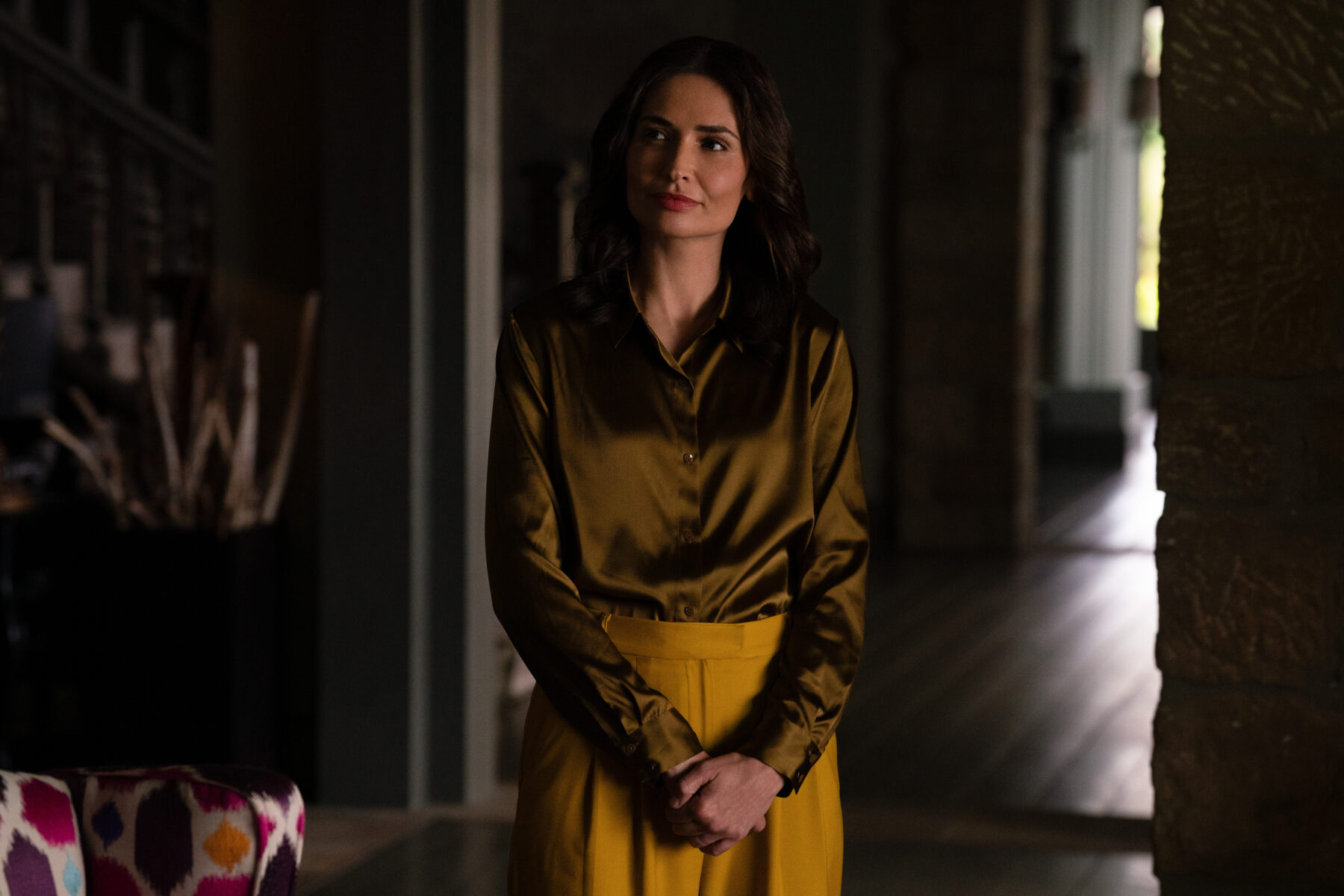
Pluribus is for the fans of Severance and Black Mirror, a show that quietly interrogates our own moral compass and modern behaviours while transporting audiences to a parallel, deeply unsettling reality. At its core is a cast of powerhouses: Seehorn leading the charge, supported by Karolina Wydra, who plays Zosia, Carol’s chaperone and her bridge to the Others. Sitting down with Wonderland, Wydra unpacks season one’s deliberately open-ended finale, that’s left fans with more questions than answers, working with Gilligan, and the uncomfortable questions the series has prompted her to ask herself.
Hi Karolina, thanks so much for chatting with us. How are you? How’s life treating you lately?
Hi! I’m doing pretty great, thank you for asking. Life has been truly wonderful lately. Watching the success of Pluribus has been such a special experience. I’m incredibly grateful that so many people love Pluribus and feel very fortunate to be part of such an unbelievable show.
Massive congratulations on the phenomenon that is Pluribus, we’re big fans. When did you first hear about the project, and do you remember your initial reaction to the script?
That’s so great to hear. Thank you for being fans of the show. I have a wild story of how I found out about the show and how I came to audition for it. It was very important to me to be a stay-at-home mom for my boys, so I took a break from acting for a bit. When I was ready to return to acting, I wasn’t sure how I would get back into it, because I didn’t have representation. Out of nowhere, an email came through from my commercial agency that I used to work with about a request for a self-tape. For years, I asked my team to get me an audition with Vince Gilligan, but it never happened. Since Breaking Bad, it had always been a dream of mine to work with him. So, when I saw his name and that it was for Apple, I was hesitant to audition because I was scared that the dream would be over if nothing happened for me. Such a silly thing. But the other voice inside me told me to go for it, as I have nothing to lose. My audition was the grenade scene from episode three. I didn’t receive the script until I tested for the show. When I read the pilot, right away, I was sucked into it and blown away by the journey that the story takes you on. Meeting Zosia, who she is, the new world was exhilarating to read. You think you’re reading one thing and then it changes, taking you on this wild ride. Vince is such a visionary and master storyteller.
Pluribus revolves around an event that’s wildly removed from anything we’ve experienced in real life. What was your process for grounding Zosia and making her feel real within such an unfamiliar world?
I had so much fun creating Zosia. At the beginning, I was nervous because of who she is, and I wasn’t sure how I was going to tackle this role. She’s very different from anything I’ve ever played before. So, I had a lot of conversations with Vince about his thoughts on this new world and how he envisioned “the others”. The way they behave and interact within this new world. A lot of meditation went into it, to enter that state of being, of deeply feeling connected with the world. It happens when you meditate a lot, and your brain gets silent. You truly feel this unconditional love and union with the world. It was a really beautiful experience for me. I did a lot of body relaxation to be in my body and present on set. Zosia doesn’t experience anger, anxiety, or nerves – she’s unflappable, but not a robot. I also love doing dream work to tap into the subconscious of the character. That’s some of my favourite work. It was delightful to create Zosia – she’s so serene and constant.
What was the biggest challenge in stepping into Zosia’s shoes? And what about her felt most compelling or irresistible to you as an actor?
I think the biggest challenge for me was not being able to mirror Rhea’s emotions as we naturally do as humans and as actors. There’s action and reaction in every scene, right? When someone gets angry you start to get angry – you react and emote. I couldn’t go on that journey with her. Doing the body work helped me to stay calm in my body, and I was able to hold space for Carol’s feelings, played by the brilliant Rhea Seehorn. I was so lucky to have her as my scene partner. She’s incredibly generous with her talent. When I would struggle, she was right there for me. I am a very empathetic person, so when I see someone hurting it affects me tremendously. Being unflappable and constant in those high emotional moments really challenged me. I had to trust in Vince that what I was doing worked to tell the story. After being in her shoes for 10 months, I became a lot calmer in my personal life. It was so exciting to play with her and push myself into new territory. It’s one of my favourite things about acting – being pushed to places of discomfort and growth.

The show is incredibly intense. Did it feel that way while filming, too? And how did you sustain that level of tension over such a long shoot?
I love that that was your reaction. My favourite thing about the show is hearing what people take away from it, what they experience. The journey that it takes them on, what it brings up for them, the themes, the feelings. I feel our show forces you to lean in and listen. You can’t be on your phone scrolling because you will miss so much. People stop me to tell me how they have group chats about the show. I love hearing about the different ways the show has touched someone. Shooting the show didn’t feel intense to me – it was exhilarating. It was a lot of incredible hours of shooting; it felt like pure joy and fun. Vince, our writers, and our directors were all top-notch and always showed up with such brilliant ideas. Every day was an opportunity to play and unlock something new, something more interesting that maybe didn’t come to me during my process.
Did you ever catch yourself imagining what you would do if you were in Carol’s shoes?
That’s a great question. I think I would be a reluctant hero, like Carol is… It’s pretty scary what she goes through. It’s all horrifying – losing a partner, then watching the world completely transform. You think you might be the only one until you find out there are 13 other people like you on the planet. Then you ask to meet them, only to find out that they don’t want anything to do with you. The loneliness she experiences is utterly terrifying. I would most definitely drink my way through it as well for a while. I’d grieve, gather myself, and try to find a way to put the world back together again.
Did you build a backstory for Zosia beyond what’s on the page, or did you prefer to discover her as the story unfolded? Were you ever curious to know who she was before the joining?
I’m very curious who Zosia was before joining. I didn’t do any backstory on her, which is something I usually do to deepen my connection to the character and to understand their past – what makes them tick, what makes them who they are, why they do what they do today. I didn’t ask because I didn’t want to colour my performance of who she is in this new world. My focus was on who Zosia is today. Maybe one day I will ask Vince who he thinks she was prior to joining. I love her introduction to the series as we meet her covered in dirt in Morocco. I find it very intriguing.
How was it working with Vince Gilligan on this project? Did he arrive with a very defined vision of who Zosia was, or did the character evolve collaboratively as you went along?
Vince is truly one of a kind. Not only is he an incredible storyteller and a phenomenal director, but also a truly magnificent human being. Working with him was a very special experience. Whenever any of us had an idea, Vince would listen and make sure we were heard. He creates a very beautiful and safe environment where you want to do your best and then some. I just admire him so much. When we met, and I heard his vision for Zosia, I went off and started my process. On set we collaborated to find the sweet spot where she lived. There were a couple of times during different camera setups or angles, I looked like I might have a secret, so we had to adjust what I was doing to tell the right story. It was a very collaborative set.

We loved the ending of season one, even if it left us with far more questions than answers. Can you shed any light at all on where season two might be headed?
I have the same questions as you do, and I know nothing of what’s to come. And just as you are, I’m dying to find out what Vince has in store for season two. I’m certain it’ll be unexpected and original with that dark Vince Gilligan sense of humour that we love so much.
At its core, Pluribus asks some pretty uncomfortable questions about humanity. Which of those lingered with you the most after filming?
Yeah, a few for sure. Fear of conformity and losing our individuality. AI terrifies me to no end. It’s something that can keep me up at night. The isolation from one another is because technology is taking over. The pandemic forced us to hide out more, and I don’t think we recovered, but we need each other to thrive. Being removed from that intimate connection that only truly happens when we are in physical presence is vital to our well-being, in my opinion. I can talk forever about the things that the show has brought up for me, but I’ll spare you here. I wrote a text to Vince to say thank you for creating a show that makes people think and not numb out. You can’t scroll on your phone while watching the show because you will miss out on all the little nuances and important information. We need more art in the world that makes us focus right now. Original content that brings us together to talk.


