Rising filmmaker Julia Jackman is making waves by way of otherworldly whimsy; her latest project, Emma Corrin and Charli xcx-starring queer romance drama, 100 Nights of Hero. She talks comedy, casting, and the collective power of crafting a feminist fable.

Writer-director Julia Jackman is in the throes of a horrible winter bug. “I’m feeling a little dead inside, but very excited to rejoin the world,” she says, joining me a couple of weeks after the Closing Night Gala at the 2025 BFI London Film Festival. It’s tough for the filmmaker to shake off self-doubts. “Despite the insane cast, it is such a scrappy indie film in lots of ways, I felt like, ‘God, what is it doing in Royal Festival Hall?’”
Jackman holds a strong track record with LFF, though, having written and directed numerous short films. Her first, Emma, Change The Locks, won a New Talent Award at the BFI’s Future Film Festival in 2017. Pigs, her latest short, received a premiere, and so did her debut feature, Bonus Track. Clearly, it’s not her first rodeo, but getting to screen her second feature was still surreal, at that scale. “I was happy to be there, you know, it’s always hard for directors to watch their own stuff.”
During this exchange, Jackman took to the stage to introduce the film. Cheers, whistles, and thunderous applause from the entirety of her encouraging cast and crew mates. At the rear stalls of the auditorium, Josh O’Connor casually sneaking past my row should not have come as a surprise. He, of course, has a role in Bonus Track, a 2023 gay schoolboy coming-of-age rom-com based on an original story of his. Jackman gleams at the mention of his name, “he came to support. He’s very, very sweet.”
Sweet-natured is the name of Jackman’s game, hence the obvious adoration from her applauding peers. It’s a testament to her pleasant character and imaginative spirit that, coming off the back of two heavyweight horror campaigns, Longlegs’ Maika Monroe and Nosferatu’s Emma Corrin so comfortably trade fright for flirtation, like night and day.
Primarily shot at the gorgeous Knebworth House, 100 Nights of Hero champions Jackman as one of the most exuberant voices in modern independent cinema. Based on the graphic novel by Isabel Greenberg, which itself was based on a Middle Eastern folktale, it chronicles a profound relationship of romance and solidarity between beautiful, obedient Cherry (Monroe) and her sharp-witted maid Hero (Corrin). Together, through the magic of storytelling, they must fend off the masculine seductions of visitor Manfred (Nicholas Galitzine), a test of fidelity put onto Cherry by her neglectful husband (Amir El-Masry).
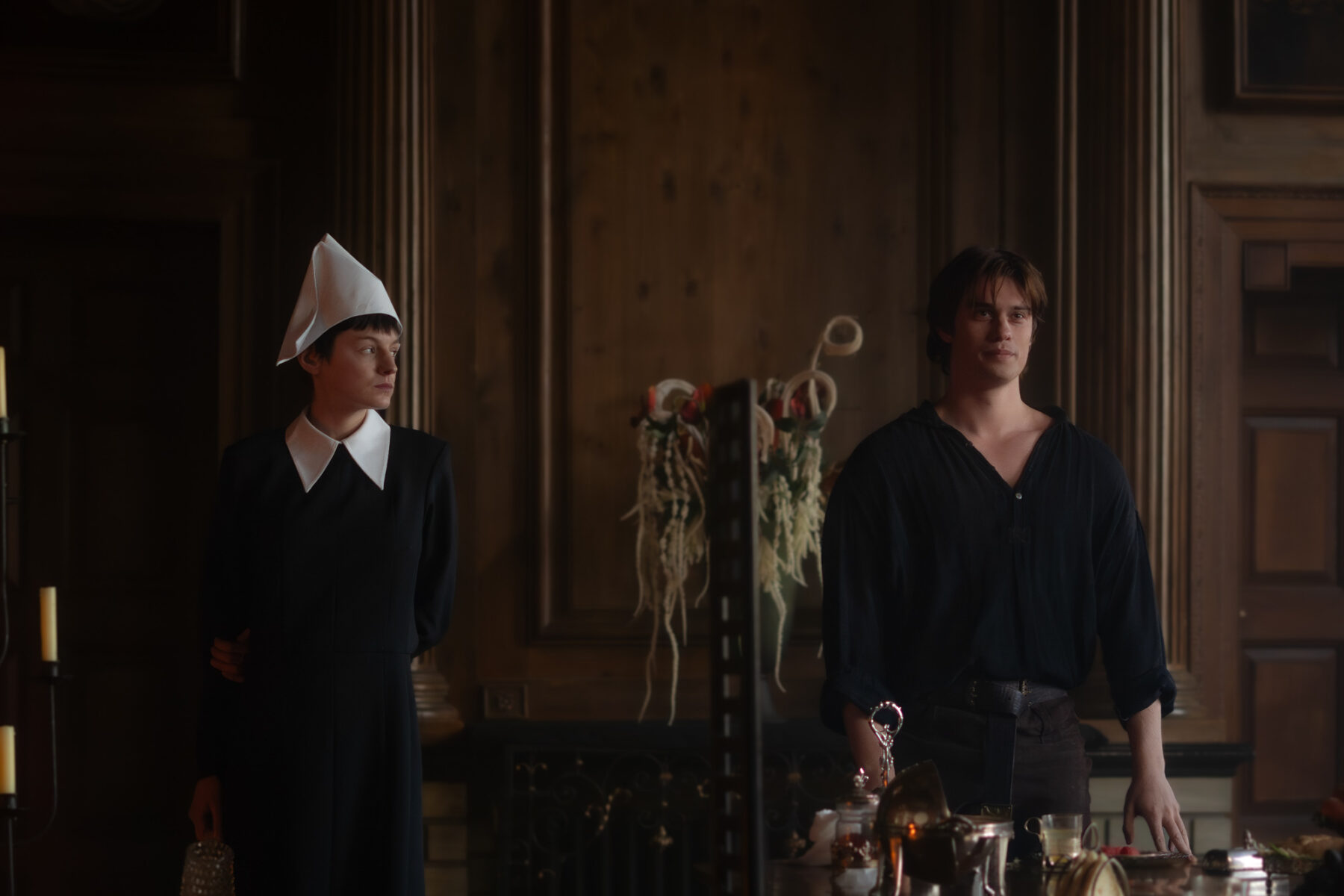
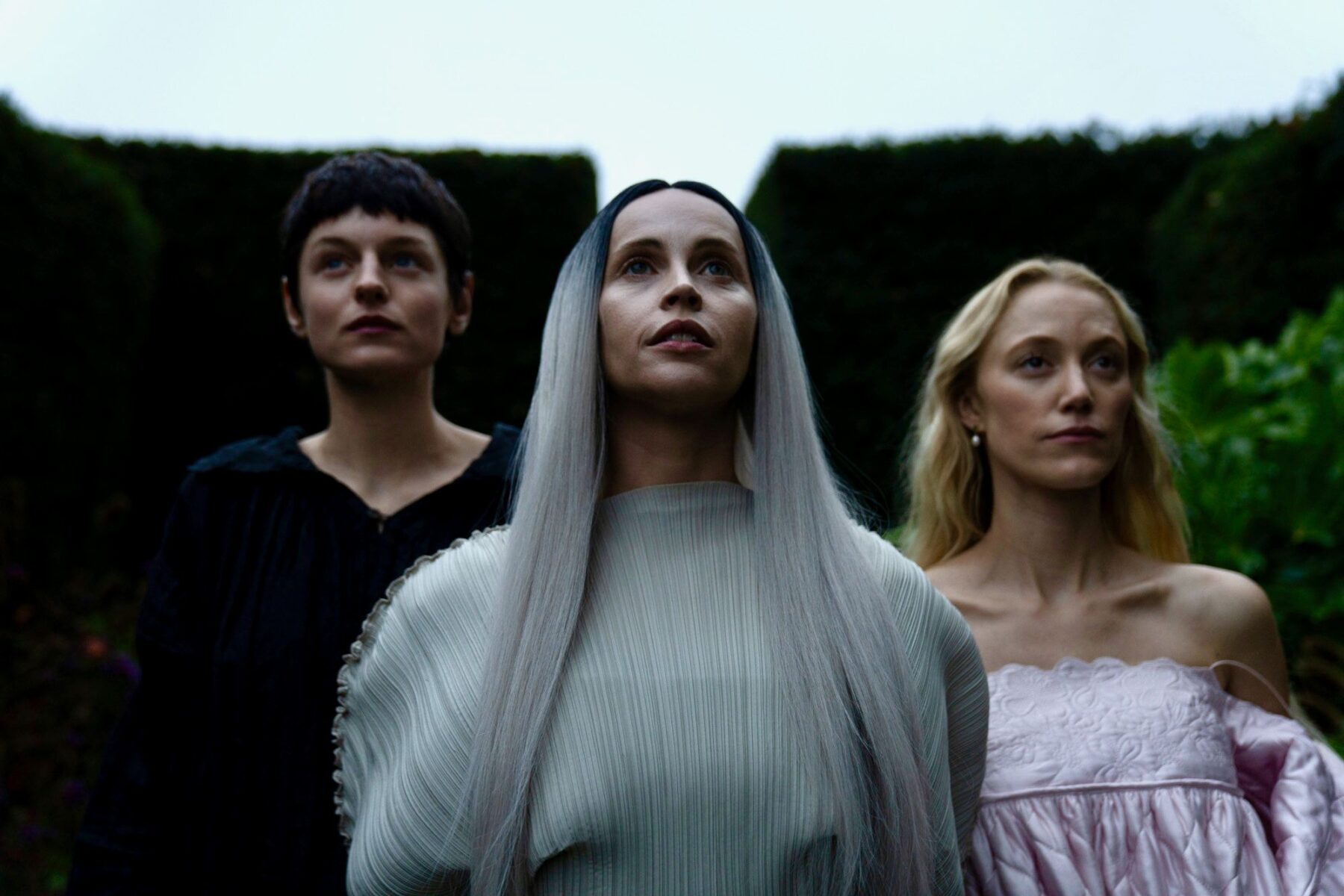
A queer feminist fairy tale and a screwball comedy of sorts, the film obtains plentiful tension. 100 Night of Hero is, indeed, a low-budget indie “romp”, as Jackman puts it. But rare originality, rich costume design, and the timely importance of a fable centred around defiance against oppression all make up for its modest stature. Not least in the star-studded supporting cast – Richard E. Grant and Felicity Jones make brief appearances, and if not for Jackman, we wouldn’t have gotten a first glimpse (of seemingly many) at Charli xcx on the silver screen.
Jackman’s love for the craft extends beyond the joys of filmmaking. She is one of six industry figures who led the Cinema for Gaza fundraiser in April 2024, raising over £230,000 through auctioning lots from Joaquin Phoenix, Jonathan Glazer, Paul Mescal and Susan Sarandon. “I would encourage those in the film community to be in service of Palestinians, in service of people on the ground, in service of people doing the crucial work,” says Jackman.
Smiling through the misery of cold medication, Julia Jackman has managed to regain enough energy for a one-to-one with Wonderland, engaging her new film, 100 Nights of Hero. I’m one of the first human beings she’s spoken to in the last 48 hours. Apologetic and as nice as pie, a cough here and there is not enough to extinguish her flame. Here, she opens up about the craftsmanship behind her folktale, balancing a tricky tone, and why the film ultimately serves as an affirming watch and an encouraging call to community.
What first drew you to Isabel Greenberg’s graphic novel? Bonus Track and 100 Nights of Hero share common themes, but one is far more fantastical than the other.
Bonus Track was this lovely surprise during lockdown, whereas 100 Nights of Hero was something that I had read in 2017, not that long after it came out. I had really only just started making shorts when I had pockets of spare time, trying to teach myself, learn by doing.
It was one of those ones that you can’t put down; it was a romp, it was just a bit absurd. I just thought that the sincerity of it, alongside the anger, alongside the unhinged sense of humour, created something that I thought was fun, but had a surprising amount of bite and heart in it. I came away thinking, ‘God, someone should make a film about this’, and it was clearly not going to be a first feature, but I didn’t go through a formal development process. I wrote a draft of it before lockdown. It was me approaching Isabel; it was just the two of us, initially. So it was something that was a long time coming, sitting on my desk, waiting for the right moment, wondering when that would possibly be.
In what ways did Maika Monroe’s and Emma Corrin’s horror backgrounds influence their casting, to realise the more serious, sinister conversations of Cherry’s and Hero’s world?
I knew that the tone was tricky, each character in this film is living a really different story, almost. Manfred is in this romp where he’s going to charm this woman. He’s one of these people who doesn’t necessarily read the room; he just enters a room and expects the energy to sort of mould around him. But Cherry in particular is living it like a thriller, and a lot of the women in this world are. Basically, where the smallest misstep can lead to their ruin or their death, and there’s danger lurking around every corner. This idea that he’s living in a bit of a zany She’s All That-esque romcom, and she’s living in a horror, appealed to me.
Maika’s horror background really appealed to me, as well as her dry sense of humour. I think everybody just needed to buy in and play it seriously, or play it as though they believed it. There are so many things that are absurd about the world we live in now, but, obviously, ridiculous things can also be scary. People can also be terrifying, like you’re laughing at someone, and then suddenly you realise they’re able to do an insane amount of damage. I think that tone was hopefully captured by our lovely cast, but yes, they are doing a lot of gnarly horror. I think that there’s a lot of comedy in horror as well, they live very close together, comedy and horror. That’s what I felt in Isabel’s graphic novel as well.
I feel like we’re seeing more and more examples of folk art centered around the persecution of women throughout history, within the context of polite society, witch trials, et cetera. What makes 100 Nights of Hero essential viewing for the present day?
I mean, a part of me just wants to be like, ‘it’s not, guys, don’t worry’. I hope that it would be affirming viewing, at least where people can sort of see themselves in it. I think that it’s not a men versus women type of story. Hopefully, it would show that the patriarchy is a trap for everyone. Even our more villainous characters, they’re not having a good time, they’re not happy. They’ve been warped by these impossible expectations. Everybody’s just kind of feeling pretty shitty together, even though it’s obviously rigged and much more unfair towards some than towards others.
I guess what I do think could make it viewing for the times is that it has a tone of hopeful anger. There’s rage and anger in it, but there’s also a lot of hope, which I do feel we could use more of, I definitely could use a lot more of it right now. The feeling that things are a mess, but they can, above all, shift when we keep talking to each other, and we don’t allow ourselves to become isolated.
Charli xcx’s character Rosa faces a similar persecution à la Joan of Arc, or Thelma & Louise, arm in arm with her two sisters on a clifftop. When did you first come into contact with Charli?
It was a lovely agent that put us together, basically, this amazing woman called Ruby Kay. I was an absolutely huge fan of Charli’s music, but word hadn’t reached me yet that she was feeling more inspired by film these days, and I was, of course, delighted when I found that out. We met in a hotel, before she went and played Glastonbury. I was just completely delighted that she’d liked the script, and we were both just keen to see what came out of that meeting. Meeting her, speaking about films. Seeing that she was this incredible cinephile, seeing her thoughtfulness, her sense of humour. I think we both came away feeling that Rosa was a really good fit.

What is it about Rosa that connected with Charli the most, do you think?
I think Rosa is a character that people project a lot onto. She’s someone that this man just completely worships. He assigns her this personality, he’s mesmerised by her beauty, and he thinks he knows everything about who she is. But she contains multitudes and is more rebellious than she seems, even though she’s a good deal more demure than Charli’s music career would suggest, you know, Charli xcx you see on stage. I had complete faith in her range, and after speaking to her, complete faith in her finding Rosa as an actor. I absolutely loved working with her; she was incredible to work with as an actor. Just very focused, but laid back, which seems like an impossible combination, but there you have it. She was wonderful.
Were there elements from the original source material that you deliberately changed or expanded upon for the film?
The graphic novel was, of course, a huge inspiration. There were certain touchstones of the story that were really important. For instance, the ending. I’m not going to say it or spoil anything, but it did feel that, whatever changes were made throughout, there was this quite inevitable ending in Isabel’s graphic novel. That’s the part that I kept the most intact, or the endings, I guess, because it’s these stories within stories, I didn’t really want to mess with those.
Visually speaking, what were some of the artistic references that guided your aesthetic decisions?
In terms of the look, definitely the primary inspiration from Isabel’s novel was the three moons and the otherworldliness. But I definitely wanted to run with a slightly more Gothic feel and slightly period, but we can’t quite pinpoint the period. The parallel universe of it all gave me freedom to not try to stay too true to medieval. She had her characters wearing a lot of ridiculous hats, which felt just very part of what she was saying about these fixed, ridiculous roles. The fact that, often, their gender was the silly performance. It’s like, ‘I wear this hat, and you wear this hat, and this is what we wear when we go to dinner,’ and there was a flamboyance to that that I loved. I definitely kept the ridiculous hat theme and then looked at spaces. A sort of parallel universe, Orlando was what I took a lot of inspiration from, or a Portrait of a Lady on Fire feel.
All of those brilliantly strange, spiky structure hats definitely stick with you long after a first watch.
Thank you, and that was the amazing Susie Coulthard, who was our costume designer. Clinton [Lotter] and the entire team went so hard with the costumes. They honestly custom-made the vast majority of them, even though it is a very small indie production. She went above and beyond, and the hats were her masterpieces. Our lovely Natasha [Lawes], our makeup designer, also designed and made the masks. We had an incredible team of people who were ready to dive in, and an incredible amount of craftsmanship that went into that, so shout out to the amazing crew.

How do you see the film speaking to modern audiences about power, voice and agency, especially from a queer feminist lens?
I will say, I don’t think that there are that many films sitting in this space right now of anger and humour and hope. You know that darkness with hope. I think that’s something that, as a member of the queer community and as a woman, I can relate to. I find myself feeling pretty devastated by lots of the news that’s coming out and quite tired, especially with regards to all the trans people that I love. It’s a time where safety and connection feel in really short supply, queer spaces are being closed the world over, and there’s this feeling of being driven back into private spaces. I do hope that in cinemas, wherever people decide to watch this, it can be a coming together.
That’s really what the film is about, people refusing to be confined to secrecy, beaten back into private spaces, isolation. People refusing to accept that information wasn’t meant for them, people talking to each other, spreading things they’re told not to spread, saying things they’re told not to say. Hopefully, it can be an encouraging call to the community, basically, for the queer community, for women. A reminder that we have more power than we think, when we gather, when we stay collective.
As Cinema for Gaza expands its efforts, in the face of the ongoing crisis, what steps should individuals in the film industry be taking to translate their platforms and influence into meaningful action?
Look at Pal Humanity, get involved with The Sameer Project. Look at, here in the UK, the amazing folks Zara and Noor at Medical Aid for Palestinians, people who are devoting their lives to helping to right this injustice that can never really be righted. The situation is so beyond harrowing and beyond awful. But our role is to support and listen to what is needed. Use our voices, absolutely use our voices, but then translate that into meaningful action. The best way is to respond to the many, many calls for help from the people on the ground who know what is needed. Boycott, Divestment and Sanctions, engage with those spaces. We can’t just barrel in being like ‘we’ll fix it’, because that’s not the most helpful. But taking our lead from that, and then continuing to use our voices loudly, telling people not to look away, telling them to keep their eyes on what’s happening.
It’s hard when something is consistently harrowing; people can shrink away or shut down. We need to remain in touch with our humanity and, once again, keep communicating. Get in touch with those amazing organisations, ask what you can do, they’re always in need of volunteers. They’re always in need of your voice.
I read somewhere that you’re working on a genre film for your next project. Is this true?
I’m developing something that is in the genre space, yes. There’s a short story by this amazing writer, called Julia Armfield that I’m developing. This mysterious girl band that crops up seemingly out of nowhere has exclusively teenage girl fans, and so they’re completely dismissed. As this tour sweeps through the UK, the feral power of their teenage fans starts to basically create a bit of a massacre. I’m describing this really badly, and I don’t actually even know if I’m meant to be talking about it, but it is a body horror kind of coming-of-age sort of thing.
100 Nights of Hero is in UK cinemas from Friday 6th February.
Words – Douglas Jardim


