Over coffee in West London, the wonderfully wispy folk singer-songwriter discusses fate, reaching a new phase of life, and embracing a softer kind of love on her radiant sophomore album, Kismet.

A few minutes into our conversation, Matilda Mann is trying to remember how she made her own album. “I wrote down all the dates,” she says, consulting a list in her Notes app across the table of a West London coffee shop. Kismet came together so quickly that, once it was finished, even its creator had lost track of what happened when.
“Imagine That Now” came first; the final song arrived in March of this year. Almost everything in between was written in a day. “That’s just how my best songs are written,” the 26-year-old shrugs. “Like the saying goes: if you have to force it, it’s probably shit.”
It’s an unexpectedly blunt thesis for such a tender record. Mann is affable and softly spoken, regularly wandering halfway into an answer before checking what the original question was, but she has little desire to romanticise the writing process itself. Her second album did not have to be painfully excavated from some hidden part of her. This time, the songs came easily. More importantly, so did the love and happiness they illustrate.
Initially, Mann and her longtime collaborator Jonah Summerfield tried to pull something darker from her. Following the melancholy of her debut album, Roxwell, they experimented with songs that felt more angsty, rockier and rougher around the edges, but nothing stuck. The spanner in the works was a rather sweet one: Mann just wasn’t mad anymore. An inconvenient development for anyone attempting to make angry music. She was content, settled and, as she puts it, “quite in love”.
“I was like, ‘Oh, I’m actually just really happy and in love. So we can’t write about that.’” She pauses. “But then we did.”
There’s a belief that happiness is artistically suspicious; that pain possesses a passion and depth which peaceful contentment simply cannot muster as convincingly. Bad news for several centuries of tortured artists: Kismet proves otherwise. Across 11 songs filled with warm strings, horns, loose piano and the subtle glow of the ’70s soul that inspired it, Mann navigates the unfamiliar ease of a relationship that doesn’t ask her to suffer in order to prove its significance. Whilst Roxwell caught her in the mess of changing homes and early-twenties instability, Kismet is what comes once the dust has settled.
“I used to be in relationships that weren’t healthy, and I didn’t realise it was meant to feel like this,” she says. “I thought you had to put a lot of work into relationships, which of course you still do, but the day-to-day of it should be nice. You have arguments like you would with your best friends, and then…” She trails off, the conclusion almost too obvious to require one. Forget the sceptics: love, it turns out, can actually make your life better.
“Inventing” became the turning point, supplying the record’s emotional direction as well as the word that eventually named it. ‘Kismet’ means fate or destiny: an invisible power quietly steering us towards what’s meant to be. Mann doesn’t consider herself religious, but she’s equally uninterested in flatly dismissing the possibility of a greater power. “I think it’s important to have something you can put your faith in,” she says. “Something to believe in.”
The song has since travelled far beyond the relationship that inspired it. Its central idea, that “love” may just be too weak a word for the feeling itself, began with a joke shared by Mann’s best friend and her partner. Mann interpreted it through her own life, then watched as strangers interpreted it through theirs. “Inventing” garnered more than a million streams in a matter of weeks and became the soundtrack to hundreds of thousands of TikTok videos capturing love in its smaller moments.
“That’s always my dream for any of my songs: for people to take it their own way,” she says. “You meet strangers every day, but everyone has a childhood and parents and teenage years and something crazy that happened to them. Music links strangers, and you get to show a snippet of your life.”
She reaches for the word ‘sonder’: the knowledge that every passing person is living a life as intricate as your own. Somewhere, millions of people are moving through those private worlds with the same song playing in their headphones.
Writing a love album did, however, present an obvious problem. Love has famously not gone unmentioned in popular music. Mann wondered what she could meaningfully add to a subject covered by more or less every songwriter who came before her. Much of Kismet looks back to those artists for its answer. She pulls out her phone and scrolls through the album’s reference playlist: Bill Withers, Al Green, Carole King, Joni Mitchell, The Carpenters. Withers could make a declaration as simple as wanting to spend his life with somebody feeling complete, whilst Green could sing “I love you” without layering it underneath layers of complexity. Mann wanted her own lyrics to hold up in the same way: to sound beautiful even if just spoken aloud.
“I think a really good love isn’t that deep,” she says, before immediately reconsidering the phrasing. What she means is that the feeling doesn’t always require elaborate decoding. Sometimes love is profound precisely because it is so simple in its nature: here is somebody I like being around, and life beside them feels good.
That directness sits alongside Mann’s longstanding love of Brit Award-winning folk singer-songwriter Laura Marling, who was her comfort artist growing up. It’s partly because her writing leaves enough unsaid for listeners to find their own lives within it. Mann is similarly drawn to strange words and poetic metaphors: she gives you the stars, but leaves you to draw the constellation.
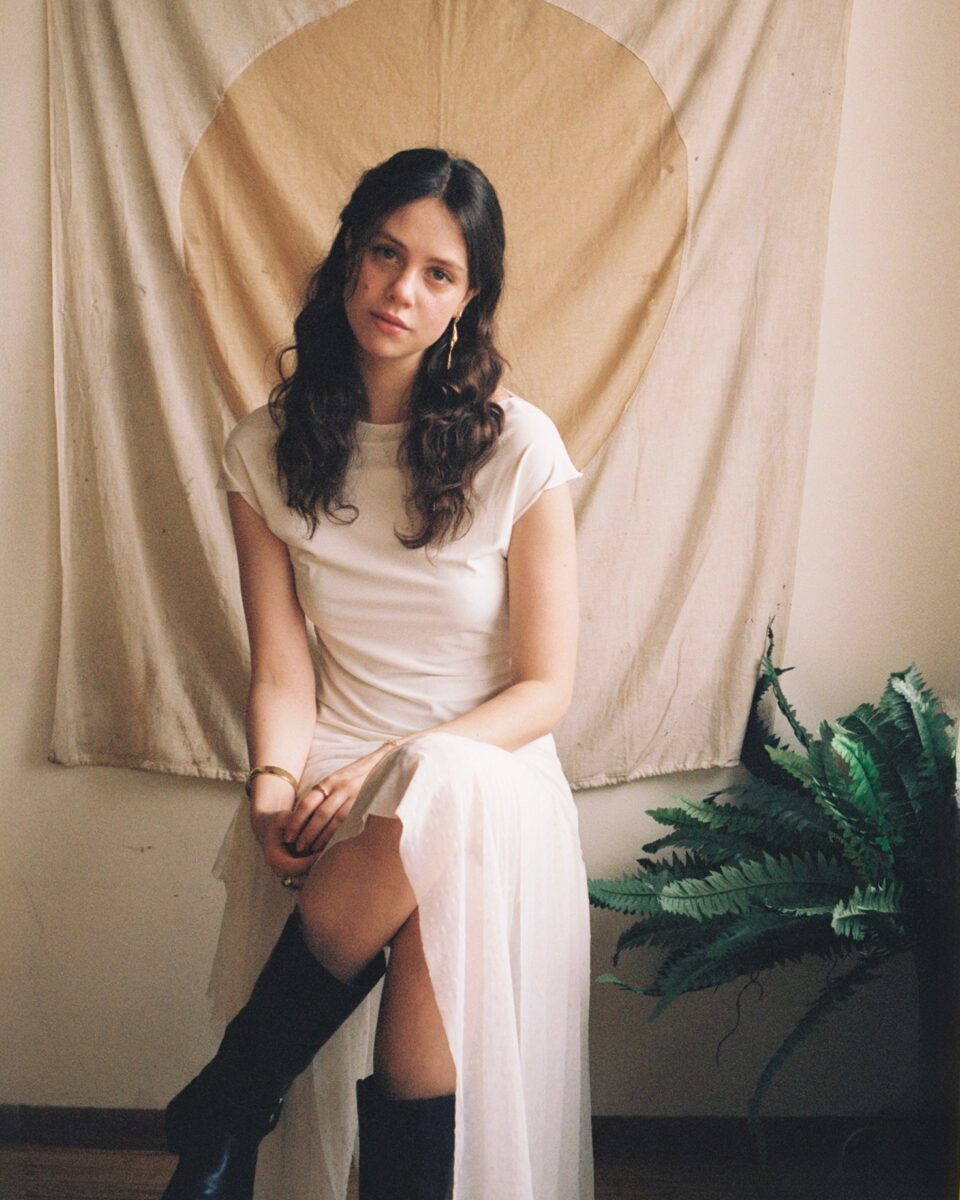
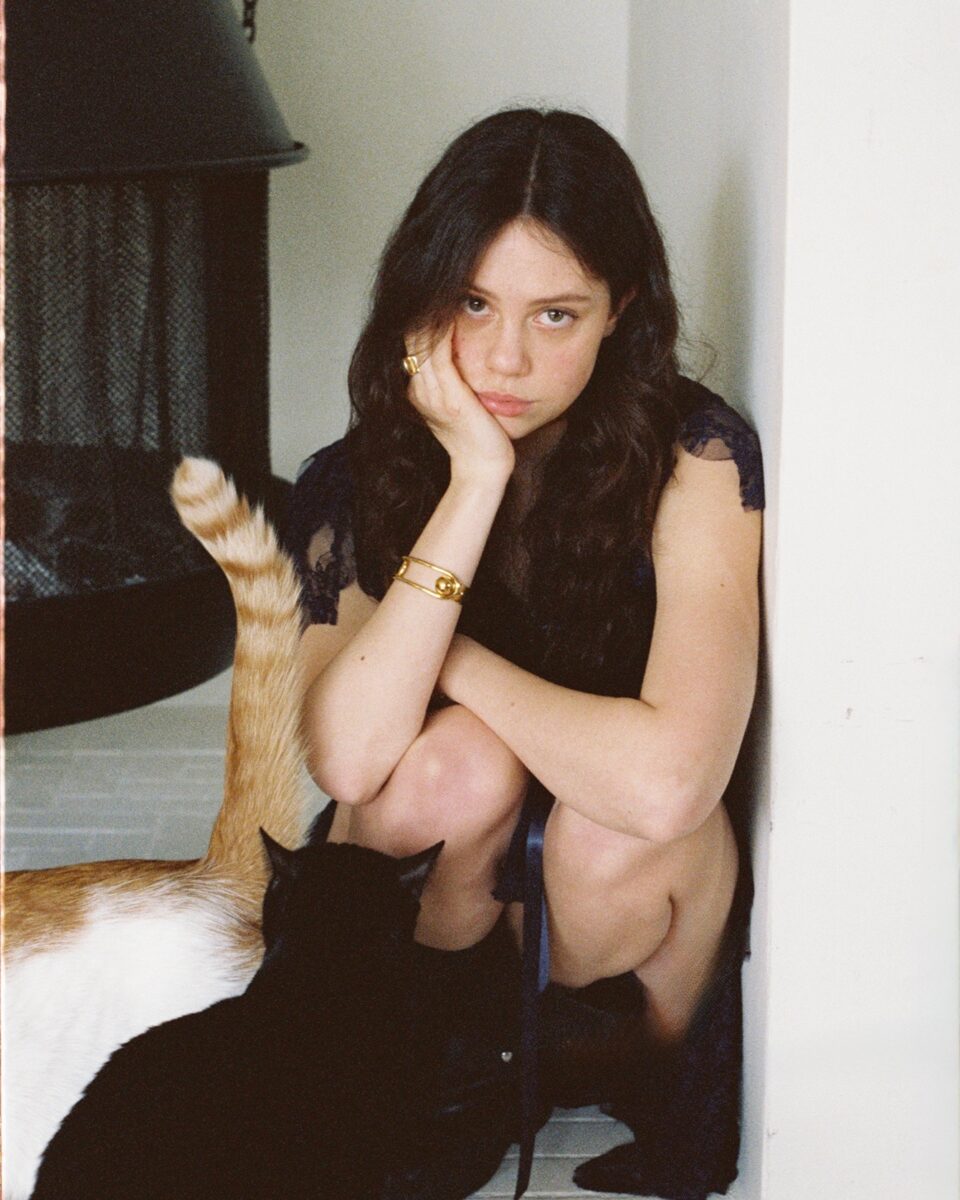
On Kismet, one of those stars belongs to Sylvia Plath. In “The Fig Tree”, Mann revisits Plath’s famous image of a life branching into countless incompatible futures. Choose one fruit and watch the rest rot. No pressure. Mann returned to the metaphor whilst trying to reassure one of her closest friends, whose decision to move out and pursue comedy was abruptly interrupted by the pandemic. In her early twenties, the knowledge that she could do anything had become more terrifying than liberating. Every choice seemed capable of swallowing the rest.
Mann’s reading is gentler: a decision made now doesn’t have to condemn every other possible future. “When you’re young, you think everything has to be decided now, and it’s just not true,” she says. “My mum went to university at 60. I might do another job when I’m older…I really think I will.”
“The world feels a bit like a black hole at the moment,” she says. “Maybe this can be an escape, something people listen to and know they deserve good things that feel like this.”
When the world becomes too loud, Mann is comfortable retreating into herself. An only child, she grew up accustomed to her own company and still needs time alone to properly return to herself. “I find myself the biggest comfort,” she says, then immediately worries that the admission sounds lame. It doesn’t.
Summerfield is the person she has admitted into that otherwise solitary creative space. The pair met when Mann was 19, and their compatibility has only become clearer with time. Mann comes from what she calls a “folk-chord world”; Summerfield hears the brighter, stranger turns that her hands would not naturally find. On Kismet, he pushed the songs towards funkier rhythms, key changes and fuller arrangements, remaining willing to tell her when a lyric feels boring or makes no sense.
“I don’t really like being told everything I do is great, because I know it’s not,” she says. “I need people to be honest with me.” Summerfield is very good at honesty. His studio at the end of a North London garden has, consequently, become the only place she can imagine making records.
Now these songs are asking Mann to become a different kind of performer. The fuller, more playful sound of Kismet makes the prospect of playing live more exciting, but it also requires her to loosen her grip on the guitar she has carried since her earliest gigs. For her Shepherd’s Bush headline, she’s planning a grander affair of strings and horns. This creates certain practical problems. Mainly: hands.
“It’s kind of my emotional support,” she says of the guitar. “What do you even do with your hands? Do I walk around the stage? Where do I go?”
She’s always found being watched more daunting than the process of making music itself. There is, she points out, nothing in her natural disposition that particularly wants to be perceived at scale. She looks to artists such as Olivia Dean (who attended the BRIT School a year above Mann) with admiration for the way they have learnt to inhabit that attention whilst remaining authentically themselves.
Dean is also proof that such a scale of success can be possible for someone who once felt close enough to touch. Mann is careful, however, not to turn this into a romantic story about talent effortlessly overcoming circumstance. “There’s a lot of nepotism and wealth that goes into being an artist, which I don’t think we can deny,” she says. Nor does she exempt herself from that conversation. “I’m from a middle-class family. It’s not like I’ve made it completely by myself; I’ve definitely been encouraged.” Seeing another London girl she once shared school corridors with go on to play enormous stages doesn’t erase those inequalities, but it makes the distance between here and there feel marginally smaller.
Before we leave, I ask Mann what would surround us if Kismet were a physical place. She deliberates over the geography. Perhaps a Scandinavian beach, although she is momentarily uncertain whether Scandinavia has beaches (They do). Maybe a French seaside town instead, or Paris in the morning. The specifics keep shifting, but a few things remain certain: almost everything is blue, though it isn’t baking hot; there are friends playing games and getting ready to go for a drink; and enough life hums at the edges that solitude never tips into loneliness.
For an album preoccupied with fate and destiny, Kismet imagines contentment in rather ordinary circumstances. It isn’t heaven, exactly – Mann isn’t sure she believes in that anyway. It’s a beautiful day with people she loves within reach, and no immediate desire to be anywhere else. After years of thinking love had to be difficult to mean something, Mann has finally arrived somewhere she does not need to, or want to, escape.
Words – Hannah Breen


