Part philosophy and part spiritual exercise, Alewya’s debut album ZERO embraces the unknown and finds endless possibility in nothingness.

Speaking to Alewya, questions about music quickly become conversations about philosophy and spirituality. Describing herself as “a painter who makes music”, the Ethiopian-Egyptian artist approaches creativity as a spiritual tool of discovery, trusting intuition and following it wherever it may lead her.
Growing up in West London after spending parts of her childhood in Saudi Arabia and Sudan, early fascinations with Islamic geometric patterns and Ethiopian iconography eventually gave way to Dada, Surrealism and the Young British Artists, movements that fascinated her not only for their artistic output, but for the ways they perceived life. “I love people who are seekers,” she says, citing artists as varied as M.I.A., Nicolas Jaar and Little Simz as driving forces of inspiration. She returns to the idea of ‘seeking’ continuously, a commitment to following curiosity, no matter how strange or uncertain its destination.
Alewya has steadily carved out one of the UK’s most singular creative worlds, blending Ethiopian rhythms, underground club production and striking visual storytelling into something wholly unique. Collaborations with Moses Boyd, a standout COLORS performance, a Glastonbury set, and touring alongside Little Simz have only expanded her reach, and yet she insists that she remains “in a place of discovery”, resisting the idea of having arrived at a definitive sonic location. Her debut album, ZERO, comes after several years of personal uncertainty and artistic evolution. Inspired by a renewed fascination with mathematics and the philosophical implications of zero, the record takes its name from what Alewya describes as “infinity’s twin”.
The result is a project that acts like an invitation into an ever-expanding universe of possibility. Or, in Alewya’s words, a world that feels “unknown, but like home too”. Below, she talks culture, craft, and creativity.
Listen to ZERO…
Read the interview…
You’ve described yourself as “a painter who makes music”. Did visual art always feel like your first creative language?
That was my first creative language, where I realised I even had a sense of creativity. That was before music became my primary outlet.
What were the first visuals or experiences that made you want to create?
Islamic art was the first thing. Going into mosques and seeing Islamic geometric patterns really stayed with me. Ethiopian iconography was also something I grew up around.
Then, when I got older, I started discovering different artistic movements – the Young British Artists, the Situationists, Dadaism, Surrealism. I became interested not only in their art, but in the ways they lived and perceived life.
At the time, I never imagined I’d be painting or making music myself, but there was something about the way those artists sought meaning that resonated with me.
Growing up between different cultures and musical traditions, what were the sounds around you?
Mostly devotional music – Ethiopian religious music and a lot of Arabic music. Then, growing up in London, I was taking in whatever was on Top of the Pops or MTV Base.
My older brother was more experimental, so I’d hear whatever he was listening to from his bedroom and just soak it in – electronic music, ambient artists, punk, scores.
With the way that you approach music being so visual, do songs tend to begin with an image, a feeling, or something else?
Sometimes I start with doodling something, just to get out of my head and do something intuitive. More often, it’s just what speaks to me.
Music is always there, it’s here right now. It’s something that we’re always tuned to.
If someone could step into the visual world of ZERO, what would they find there?
It would feel unknown, but it would feel like home too.
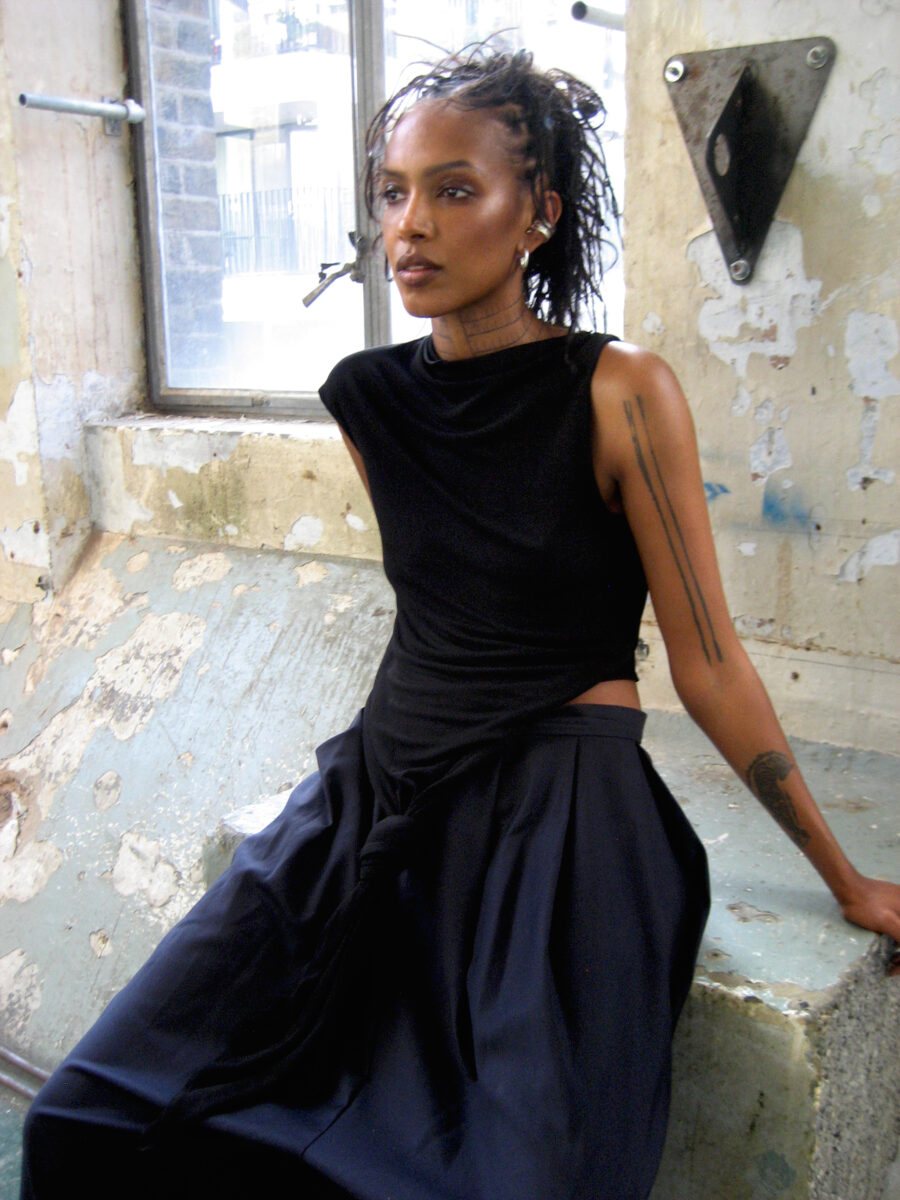
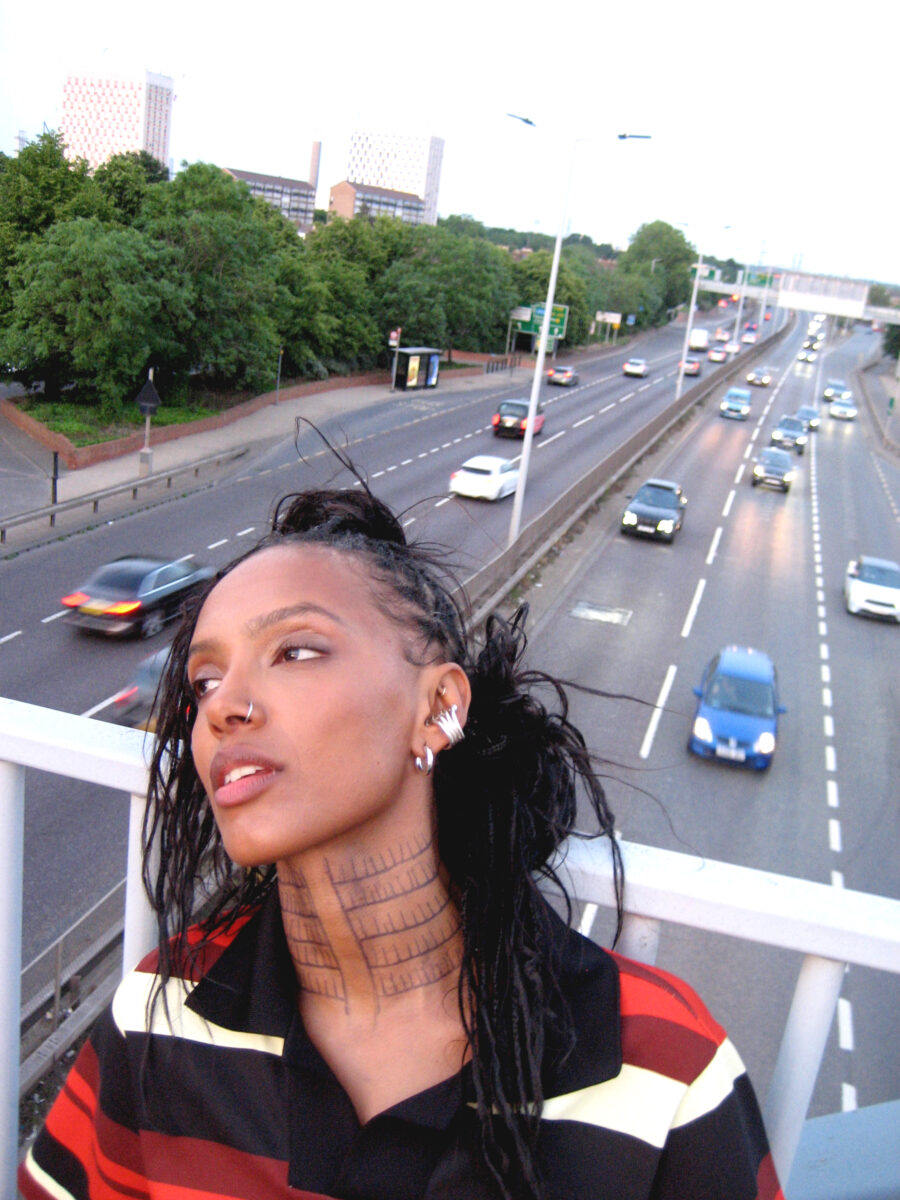
I made a creative bible around ZERO when I was in Japan, trying to figure out its visual language. I broke it down into five DNA strands: roots, instinct, space, deconstruction and feminine assertion.
ZERO has been taking shape over several years. What kind of period of your life was this record born out of?
A lot. Between my personal life and the state of the world, all of that existed alongside making the album. I was in a very uncertain place, so I would say it was chaos.
You’ve worked closely with people like Shy FX on this record, who was executive producer. What did collaboration allow you to explore that you might not have reached on your own?
Shy FX is one of the most important people in my musical journey. He can see what I’m meant to do on a soul level. He could see that yearning before I could even see it myself. It’s like having an elder, I feel blessed that God brought that to me.
Then with Craig Dodds and Dean Barrett, I’ve worked with them from the beginning. They’re so patient and trusting of my vision, but they also have this attitude of, “Let’s do whatever the fuck we want to do.”
Having that freedom, with no outside limitations, is so important.
Your music has already taken you all over the world. What have those experiences given back to the work?
Seeing the music consistently spread, even when making the album. It’s taken me to Japan, to Kenya, to Ethiopia – it’s taken me far. I really love picking up things from other countries and other people and then feeding that back into the work.
Your music draws from so many different creative outlets and influences. Who or what has been inspiring you recently?
I love people who are seekers.
Those people are honestly pretty controversial characters, not gonna lie. But I think there’s a cap in this world to where you’re allowed to ask questions, and I love people who keep asking them. Those people would be Ye, M.I.A., Little Simz, Shy FX, Breakage. Then there are people rooted in tradition that I really love – Gigi, Tinariwen. I love Nicolas Jaar as well. I consider him a seeker. He’s an active seeker.
I’m drawn to whoever has this spirit and commitment to following it, no matter what. Those are the people I respect and adore, and slightly fear as well, because it gets dangerous.
Following your spirit…it’s not all roses, is it?
On some of those deeper themes, you’ve described ZERO as “the beginning, middle and end” and “infinity’s twin”. How did a mathematical concept become the philosophical centre of this record?
I was watching a conversation between the mathematician Robert Grant and 19 Keys, and they were talking about numbers in a way that sparked an interest I’d kind of forgotten about – the philosophy of maths and numbers.
I remembered that I’d bought a book called Zero when I was around 19. I found it, took it with me to the studio and started reading it again. It talks about how the concept of zero started in India and moved to the Middle East before reaching the West, where people just couldn’t wrap their heads around putting a value in nothing. That really resonated with me. Zero is quite a solid number. It just is what it is.
It made me look at zero as something both malleable and entirely its own thing. It’s a very giving concept.
Many of the songs on the record feel deeply spiritual and devotional without feeling tethered to a specific tradition or practice. What role does spirituality play in your creative process?
I think if you’re in the world of art, everything you do is spiritual. You can’t turn that off. You’re in a world of organised chaos – endless ways of perceiving things, different angles, feelings and emotions. That’s just what we do as artists.
I come from two parents who are extremely devotional. Most of our greatest singers come from the church – the Whitney Houstons, the Mariahs, the Frank Oceans. There’s a reason for that. When your first instinct is to sing for something greater than yourself, a different channel opens up. And you never forget that.
When I first started singing, it was pure. If I sing something that’s void of that devotion, it hurts.
Throughout the record there seems to be this fascination with ideas of rebirth and transformation. What part of yourself did you have to let go of in order to make this album?
The idea that I had to be anything.
I didn’t have to try to make my first album. I just had to allow it, block out the noise and have the audacity to take it where it was being called to go.
I love that idea of audacity, it’s the most important thing an artist can have.
Now that ZERO is finally about to belong to other people and to the world, what do you hope listeners carry away from it?
I don’t have control over that, so I’m not losing sleep if people don’t feel it. But I hope it opens up a space for something else to exist within the space they’re already in.
More than anything, I hope it’s felt.
Words – Hannah Breen


