Writer Laura O’Connor takes a look inside the undocumented and unadulterated world of London squat parties.

Last month in Central London, hundreds of people crammed into a disused commercial building for a squat party. Cracked just days before, the space was covered in spray-painted odes to Palestine and No Borders, with hand-written signs pointing to makeshift rest-zones and toilets. Within a few days, the building was vacant – it had served its purpose. But for many — if not most — of the attendees, it was a break from life in other squatted buildings across East and South London, forming a large underground housing network sheltering thousands across the city. And like any home, recreation is pivotal to squats, and squat parties are where the fun happens.
The parties are an act of mutual aid: new buildings are cracked (a squatting term for entering into a building for the first time) for party venues, food is often prepared together, safeguarding (including harm reduction) is viewed as a necessary collective effort, music is performed by fellow squatters, and there’s an understanding that no matter what happens, no police will be contacted. Fundraisers are often incorporated into the parties, raising funds for direct support to squatters in immediate need. Residents who have lived on London’s streets for months (or sometimes years) under the surveillance of the law and distrustful neighbours are safe to dance, not be sober (and admit it out loud), and speak frankly about capitalism’s failures.
Squats offer housing for those unwelcome — or excluded — by the welfare system: those using substances, those who are undocumented, and anyone who’s lost faith in state intervention. But squats are more than shelter: they offer an underground community. The UK, despite increasing housing insecurity, has surprisingly lax squatting laws: while squatting constitutes criminal trespassing in several other countries like Canada and Denmark, it’s merely the ‘breaking in’ of the building that’s a criminal offence in England, while just living in a squatted commercial building isn’t. In London, squatting residential buildings is a no-go, and squats often occupy council-owned buildings that have been abandoned or out of use for at least several months — if not years. Squat parties might be interrupted by cops wanting to shut down the event, but just as squatting itself isn’t illegal, neither are squat parties.
O is a student-activist that has squatted on-and-off over the past decade. Throughout the years, they’ve made community with people who have squatted because of financial insecurities, but also because of the lifestyle and subculture that London’s squat scene provides and creates. They’re also a harm reduction educator and advocate within London’s squat scene, regularly providing workshops on Narcan and drug testing, alongside harm reduction support at parties and community events. This includes everything from teaching folks to cook (or clarify) ketamine, encouraging them to not mix alcohol and cocaine, test their drugs, and add filters to their smokes. “The more stressful our lives become, the more rigid they become — the more we need spaces for expression. Parties allow you to move in ways you can’t in your daily life, in ways you couldn’t elsewhere,” says O. “For squatters that are more stable, it’s a way to express yourself and advertise for your projects/organising and connect with people in a similar mindset. For others — squatting in London is stressful, parties give space for people to not worry about it, to just have a good time, and to build capacity for when things get hard again,” they explain.
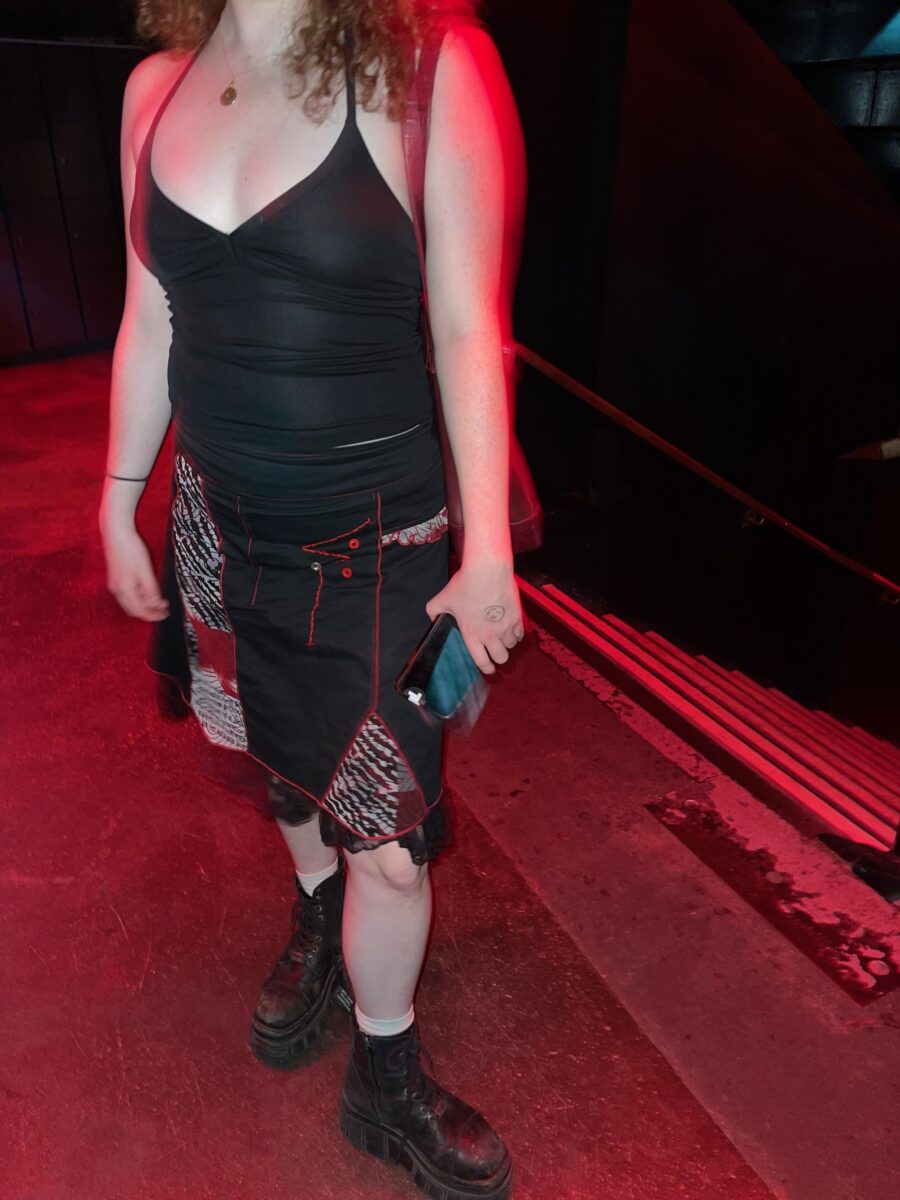

Recreational drug use is commonplace at parties throughout England — one trip to the loo in a Dalston nightclub or a day in Glastonbury can confirm this. But in mainstream nightlife, recreational drug use while rough sleeping or struggling with other substance dependencies often becomes a moral offence. Squat parties serve as a rebellion to the classist sentiment that poverty or rough sleeping should prevent fun or recreation, creating radical care networks throughout London’s squatting subculture.
I knew O through volunteering at a squat and spoke to them following one of their harm reduction workshops. They had gone through Bethnal Green and picked up various plastic bags with unknown white substances and, as a group of about ten attendees, we tested the powders together, learning how to safely ID recreational drugs. The workshop was held on the heels of mourning: just a few months prior, a squatter in London had overdosed on opioids and passed away after a squat rave. In speaking with me, O repeatedly underscores that not all parties are the same – like all subcultures, there are gaps, and harm reduction isn’t always as readily enforced or promoted as it should be. ‘Squat parties offer more freedom, but it’s varying degrees, hence the promise of freedom and not always the execution,’ they explain. Talia echoed some of O’s thoughts: while squat parties are built on the premise of community care, there’s a subsequent heightened burden placed on attendees and hosts to look out for one another, that isn’t always fulfilled. “My perfect party is when people are safe and looking out for each other,’ she says. ‘It’s a collective mentality beyond ‘how do I have fun,’ to, ‘how do I help facilitate fun for everyone else too.’ A good party has to be actively created by everyone in it,’ she explains.
Unlike O, Talia is not a squatter — she’s attended several squat parties as an organiser in London’s anarchist scene and is a bit of an outsider-insider in the squat scene. “I’m not personally a squatter, but there’s something so important about having political organising not just being high-intensity action without fun or joy,” she offers. “What is living without fun, and what is organising without the pursuit of a better life?”
Talia isn’t a rarity – while most people at squat parties are, understandably, squatters, friends and anarchist organisers are commonplace at the parties, too, reeled in by the freedom of squat parties over ‘normie’ parties. “The main difference [between squat parties and non-squat parties] is the control people have – not being confined by legislation. People can party longer (if it doesn’t get shut down), they’re not targeted for drug use, and harm reduction methods that might be illegal at other parties can be used at squat parties,” O explains. The ‘illegal’ methods they’re referring to are convoluted in the UK: some recreational drug testing kits are seen as evidence of intending to use narcotics or controlled substances and often aren’t permitted in mainstream venues. Some drug testing kits also use chemicals that are flagged as unsafe for amateur use, making buying these kits a precarious endeavour that mainstream venues can’t (or won’t) realistically do.
“If you’re [intoxicated] at a club, you’re just going to get kicked out by the bouncer,” Talia says, “whereas at squat parties with good harm reduction, there are spaces where you go and chill a bit,’ Talia analyses. The ‘spaces’ both O and Talia talk about are usually quieter areas in buildings that offer space to sit, drink water, and decompress. Ideally these spaces are manned, and/or have someone with training in Narcan. Spaces like these are also increasingly popular in techno clubs and raves where drug consumption is a given, regardless of state laws or regulations.
But there’s also an energetic angle: the mood of squat parties is viscerally rebellious and accepting. “You’re doing some radical in and of itself by taking these buildings that are, for all intents and purposes, going unused, and creating a space for radical joy and leftist action,”Talia explains. The political and recreational are completely overlapping, and squat parties appear to have a strong sense of purpose – whether it be to create a sense of togetherness against housing insecurity and bigotry, or a more focussed fundraiser.
Squat parties are diverse, and many are flawed – both O and Talia echo this – but as we lament the loss of ‘third places’ and witness sharp rises in housing insecurity across the UK, London’s underground squat party scene is only growing: in intensity, turnout, and political purpose. They might seem chaotic or fringe from the outside, but within them lies a carefully crafted ecology of mutual aid, harm reduction, and shared refusal to accept that fun and safety are privileges reserved for the land-owning elite.
dddd
Words – Laura O’Connor


