GALA, the largest independent festival in London, celebrates its 10th edition this coming weekend. Wonderland speak to co-founder Jonathan Edwards about its long and winding road to this apex, and find out who is one to watch at this year’s event.

It’s that time again. The sun shines down and the final Bank Holiday of May draws closer, which means one thing if you’re in London… festivals. This weekend (23rd-25th May), frequently referred to as the start of festival season, is always filled with expectation, excitement and celebration, and this time around there’s a special celebration happening in Peckham Rye Park, and that’s for GALA Festival who embark on their monumental 10th journey around the sun. Now that’s no mean feat. According to the Association of Independent festivals, in 2024 alone, 72 UK festivals were cancelled or postponed, doubling the figures from the previous year. With the industry struggling due to rising costs, and consumer purses being pinched left, right and centre, to even get past a first year in business is a success. But 10 years? That’s something that we should all really revel in, as it’s a win for counterculture and of course, music.
Founded by Jonathan Edwards and Giles Napier in 2015, GALA has gone from strength-to-strength over the course of a decade, which has seen it transcend from humble beginnings with a 3,000-person two-stage show in Brockwell Park, to making a renowned home for itself at the 30,000-cap Peckham Rye Park. As somebody who frequents southeast London every year, to hear the best performers across the landscape of electronic music, there’s clearly a magic formula that has enabled this to become a reliable safe haven for anybody who is a fan of the scene and has earned its title of London’s largest independent festival.
This year, the festival has pulled out all the stops to bring together one of the best lineups of the London summer, shining light on historic legends like Caribou, Moodymann, Ben UFO, Floorplan, Theo Parrish, Floating Points and movers and shakers in scene from across the globe like Avalon Emerson, Hunee & Antal, and many more. It’s important to highlight the impact that GALA has on the emerging scene. It’s always given its platform to talented, often local, DJs who are yet to find the popularity of legends, but soon show why they were chosen to perform alongside stalwarts of the culture.
My top picks for the weekend, alongside the inevitable names would lie in the safe hands of Alex Kassian, Carista, Coast 2 Coast, Sweely (live), DJ Fart in the Club, Paula Tape and HiTech –the list could go on, as it’s a seriously stacked lineup.
Ahead of the weekend of 10-year celebrations, Wonderland caught up with GALA co-founder Jonathan Edwards to unpick just how they constantly deliver a weekend of programming that leaves consumers wanting more by the end of the Sunday night. Read on to learn more.
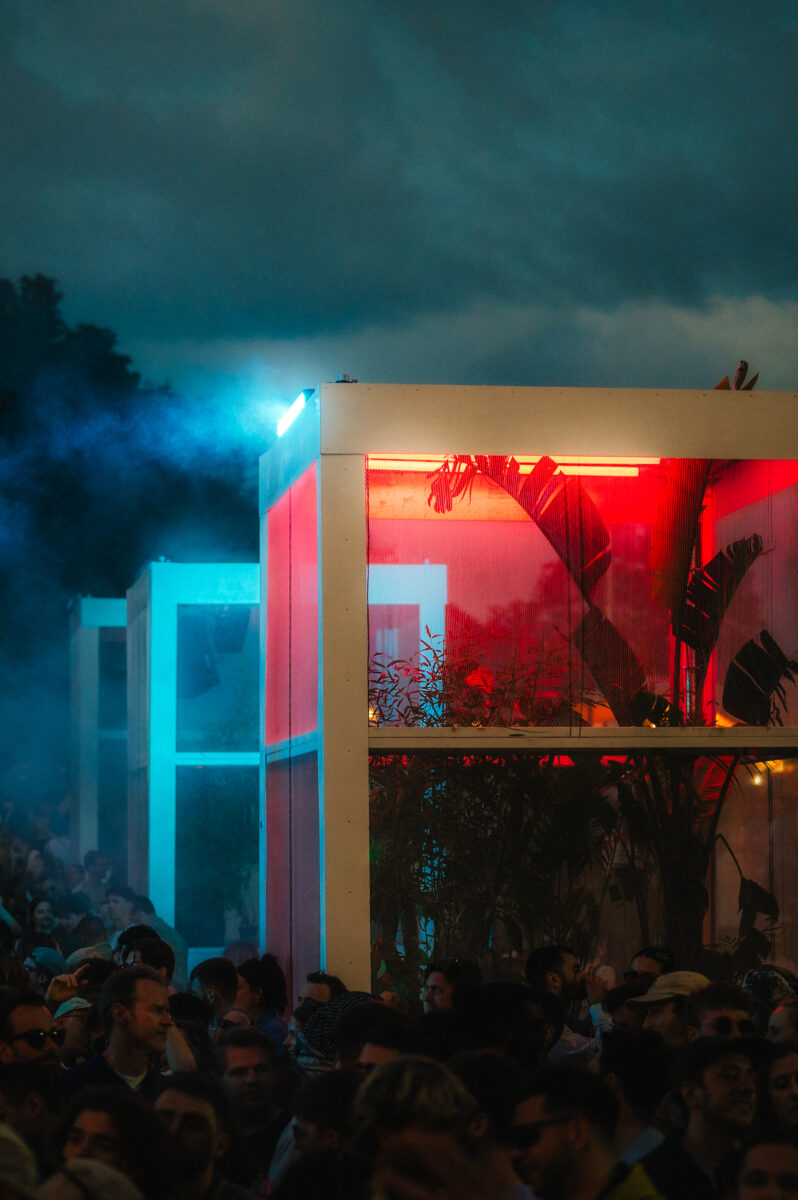
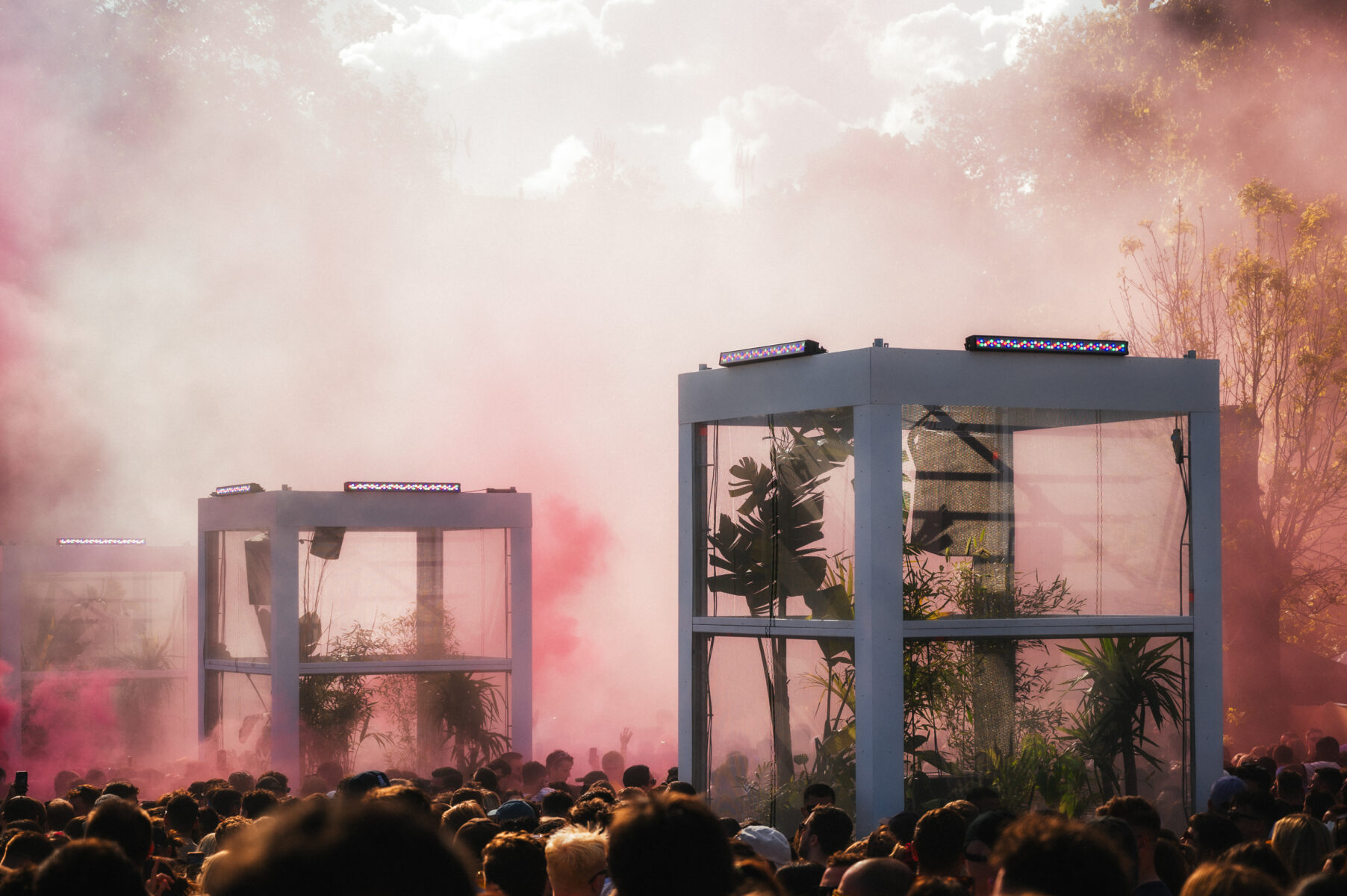
10 years of Gala festival, what’s been the secret to creating arguably London’s most important festival?
Oh, the secret. We have a consistent team here. I think that’s important. It’s been me and Giles since the start, and it’s still me and Giles today. We love our job. It’s a difficult job being a promoter and it has massive ups and downs, but we work with a fantastic team that really buy into what we’re about, and I think having that consistency across all the different elements of this festival: production, lineup, curation, delivery, health and safety and the way that we deal with our customers is key. What we are about is delivering a truly authentic experience from the heart, that we really care about and that feels like it has integrity, and that we’re doing this for the right reasons, which is creating a great party that’s trying to pay homage to the scene and the rich landscape that it comes from. If I’m trying to summarise an answer, it’s just having a fantastic team and keeping consistency across all those bits. I think you see the growth of that slowly over time in there.
Talk to me about the moment you both decided to start GALA Festival ten years ago?
We were both promoting in Newcastle, we were running this night called ‘ZAP’, which is a student electronic night. There are some parallels in that. We weren’t booking superstar DJs — it was all student DJs. All the DJs got paid the same amount, and it was £5 in for everyone. I think we created something special there in Newcastle – it was a busy night. We came to London. I came in 2015. Giles was already there. I went to a couple of shows. I was new in London, but I wanted to keep doing what I was doing, and I wanted to have a bigger cultural impact than maybe I had the chance of doing in Newcastle. I remember watching a documentary called Maestro, which everyone should check out, it basically covering the Paradise Garage story, but more the years after it closed and the impact it had on people’s lives. After that I just felt so compelled to do something that I felt was culturally important, which I hope I’m achieving. A good party, good experience, where people have met, friends have met, lovers have met, housemates have met – that’s what we wanted to do. After moving to London, I felt we could do something. I reached out to Giles, someone I worked with and really enjoyed working with, and we had a pint in a pub in South London, in Stockwell, and I said, “let’s do a festival”. We were very green and inexperienced. It was crystallised in 2015, and we went out there into the world with the honest intentions of trying to create something special.
Electronic music has deep community roots. Do you feel a responsibility to honour that in how you run the festival?
100%. I think if you look at those early GALA years, we booked Paradise Garage DJs such as Joey Llanos as well as Nicky Siano, people who were involved in that New York scene in the 80’s, which was pure escapism for marginalised communities. The queer community in New York was going through such huge issues at that time, but that club, which has been a huge inspiration to us and our sound, felt like more of a home to them than anywhere else they had probably experienced. `We really feel a sense of honour and privilege to be able to do this here. But it’s important now because this scene is changing rapidly, and we want to pay tribute to that.
I think that that comes across very clear from all the bookings, and even how the stages are curated and the fact you give power to those individual promoters for stages to do it authentically and give them free licence to do it properly…
We’re in counterculture, this is counterculture. It’s always been that. When you lose sight of that, it starts to feel a bit muddied and it starts to feel a bit confused as to what this thing is, which is ultimately self-expression and self-expression at its greatest is this soulful cry. The origins of this scene were born in queer club community, queer club culture in New York and in Chicago and various other places in the US at that time, but we’re very much inspired by that early sound and it’s deeply in what we do today.
Beyond the music, there’s so much care in the details at GALA. How do you approach crafting the full experience?
For eight years it was mine and Giles’ only focus, so had more time and space for curation, for production, for curation of food traders, for the curation of our bar, menu, for who we work with. It comes back to the original point of consistency in that passion across all those verticals. I don’t programme the festival now, James and Giles do it and it’s a painstaking 12-month process that has already begun for next year. I used to produce the festival myself, and I remember when I was building the site map, I must have done twenty or thirty site visits myself, on my own. I would walk around that field and try to imagine what the stage will look like, where the sun is setting, what that might look like and how that might feel at 18:00 or 19:00. Then the question was, which direction would everyone face in, and which way should they be facing for maximum sound?. Even on the booking side, it’s about slow decisions that are made with good taste, but it’s all in the details, isn’t it, you know?
So much of GALA feels rooted in joy, in celebration. In a time when things feel heavy, what role do you think a festival like this plays in lifting people up?
It’s a really important role. I’m a little bit confused about the world and its sentiment right now. Not mentioning any names, but there are huge conglomerates, essentially banks, buying into this space. At the start of this conversation, we’ve identified and noted that this is counterculture, that was born out of a soulful cry for minorities, and it doesn’t feel right that dance music should be now dominated by this rhetoric. I see our responsibility to stay still in terms of what we’re doing already and just consistently work with artists that share our values, and we share their values. We want to create a good vibe, and I think we do that by doing all the stuff that we have talked about. Our aim is that everyone feels good coming to site, and it feels like a positive experience. There’s also a massive divide amongst people in the UK, so we just focus on providing some level of unity whilst we’re on-site and it also allows everyone to express themselves truly.
How do you navigate keeping the intimate vibe whilst growing in popularity year-on-year?
Part of the DNA has always been to create stages like venues, they’re essentially all mini nightclubs and when they’re working their best, they’re behaving in that way. The patio feels like an Ibiza terrace circa early 2000s, with the sun washing it. The Pleasure Dome can feel like one of those late 80s New York clubs. It feels intense. When we had ‘Do You!’, it felt like a house party, and I’m excited to see what goes down at the Sunflower Sound System with Floating Points, because I think it will feel the same. We try to create stages that are tied together by artists, by space, by sound and putting all that together into this like melting pot to hopefully create something that feels more important than just a big stage with big names on it. I think the only stage where we found that hard is the main stage. Overmono was someone that played the festival in 2021, straight out of the pandemic and played in the Dome, obviously that after that you know, those two went on to huge things to the point where they headlined the main stage in 2023. That’s the only place where we can have a moment where there’s like 10,000 people stood together in this euphoric mass-moment. Each stage hopefully serves its purpose. There’s no exact science to it.
I know Giles’ mentioned previously that one of the standout memories was Horse Meat Disco closing with “You Can Call Me Al” in 2017, but what’s your other standout memory from over the years?
I have to come back to Overmono. GALA came back in 2021, was like the first day festival to come back in London. We were massively oversubscribed, and we added an additional day, which was Friday, and this is where we started to add this kind of London Bass sound. I’d been listening to Overmono during the build, and I walked into that tent when they were playing that year and they played “So U Kno” and everyone knew what was coming as it drops hard, and it was just a massive moment to me, because it felt like we’re back in that very second. That was a huge moment. I also have last year with Job Jobse when he dropped Sonique’s “It Feels So Good” (Conductor and the Cowboy Amnesia Mix). It felt like he was just playing fun tunes, and he’d probably hate this if he read this, but like TikTok bangers. I was 11 when that song came out, but he played it, and the hairs on my arm stood up and then all our crew started throwing the balls into the audience. I don’t think I’ve ever seen the main stage just be in absolute pandemonium like that. So that was also another massive moment to me, he’s got like 9,000 revellers dancing and was like, “let’s have fun”. I think that might have been my favourite ever set in the history of the festival.
This year’s lineup has a beautiful balance of legends and heavy hitters, like Floating Points and Moodymann – Theo Parrish – the list goes on and I’m very excited by it, but who are the acts you’re tipping to create a monumental tenth year memory?
We can easily start talking about Moodymann, Theo Parrish and Caribou as huge headliners. Giles and I have wanted to book Moodymann to play the festival for almost eight years, and we have been on WhatsApp with his manager over the years just trying to make it happen. For us to make that happen this year, that’s a big thing for us. My picks for this year… I’m really excited to see Sweely,I think it’ll be a fantastic set. I think he’s an amazing producer and DJ, and I think that will be one of the things that stands out. I also think for the same reasons KiNKLive will be equally big, both will bring the party.
How do you want people to feel when they leave GALA at the end of the weekend?
We always want people to leave wanting a bit more, and we just want people to walk out with a smile.
10 years. A gigantic milestone. Have you thought ahead for the next 10 years of GALA?
I think it comes back to that first answer again. We are seeing our popularity rise, and we’ve done a series across the world. We’ve thrown an amazing party in Tokyo with Rainbow Disco Club, one in Sao Paolo with Gop Tun (to come) and we’re working with the Crown Ruler in Melbourne. We’re working with amazing partners where it’s a bit of a pinch yourself moment that these guys want to work with us. I think they do that because it’s still the same DNA that was here on day one. We will keep doing what we’re doing and keep working with passionate people across the board, but the DNA of the festival will stay the same. We will slowly keep pushing but nothing too dramatic. And when you look at the space of 10 years, we’ve gone from 3,000 people in Brockwell Park to 30,000 people in Peckham. Who knows where we’ll go, but we’ll go where it feels appropriate to go.
Are you going to allow yourself to celebrate over the weekend or will you be just as involved as you have always been over the years?
I honestly do like 40,000 steps a day just walking up and down the stages. Normally I let my hair down a little bit towards the end of the day. will definitely of course, but that probably will come on the Sunday evening this year. If any promoter tells you that they’re just like partying the whole way through the event, I don’t know, it’s hard to do that.
Photography – Jake Davis, Angelina Nikolayeva
Words – Josh Clubbe


