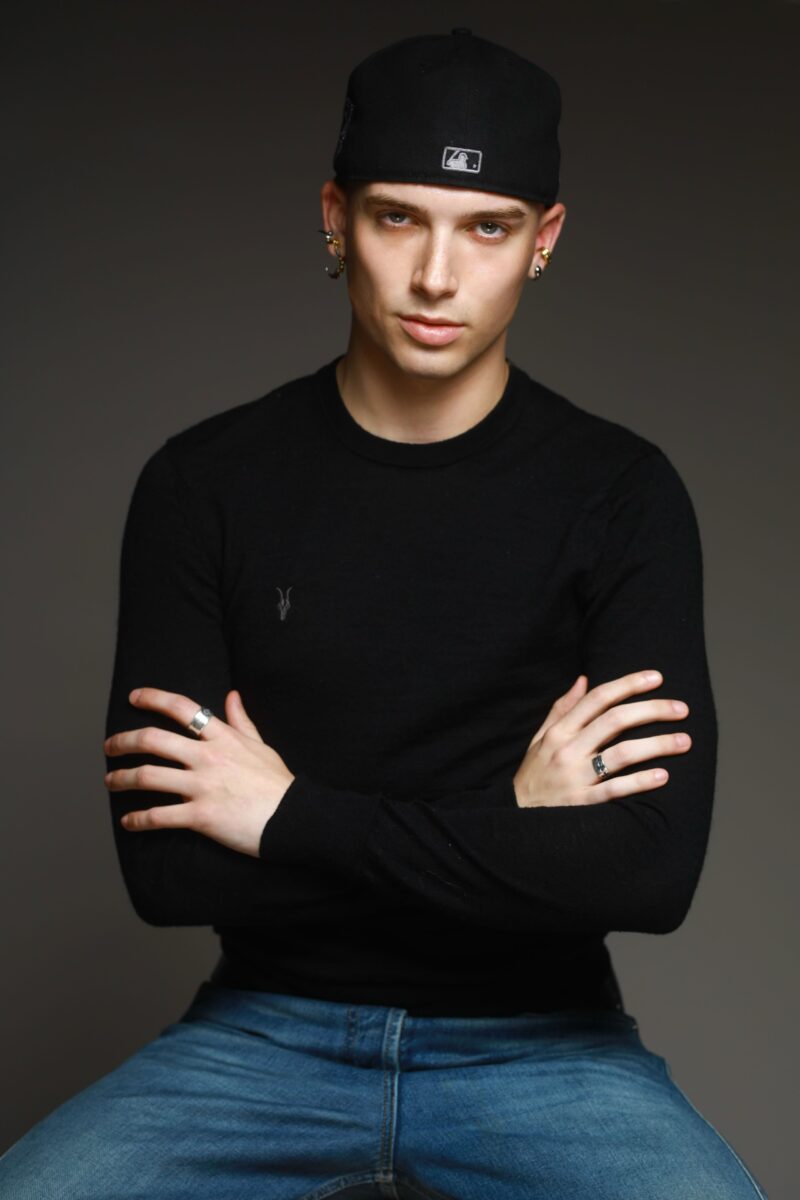
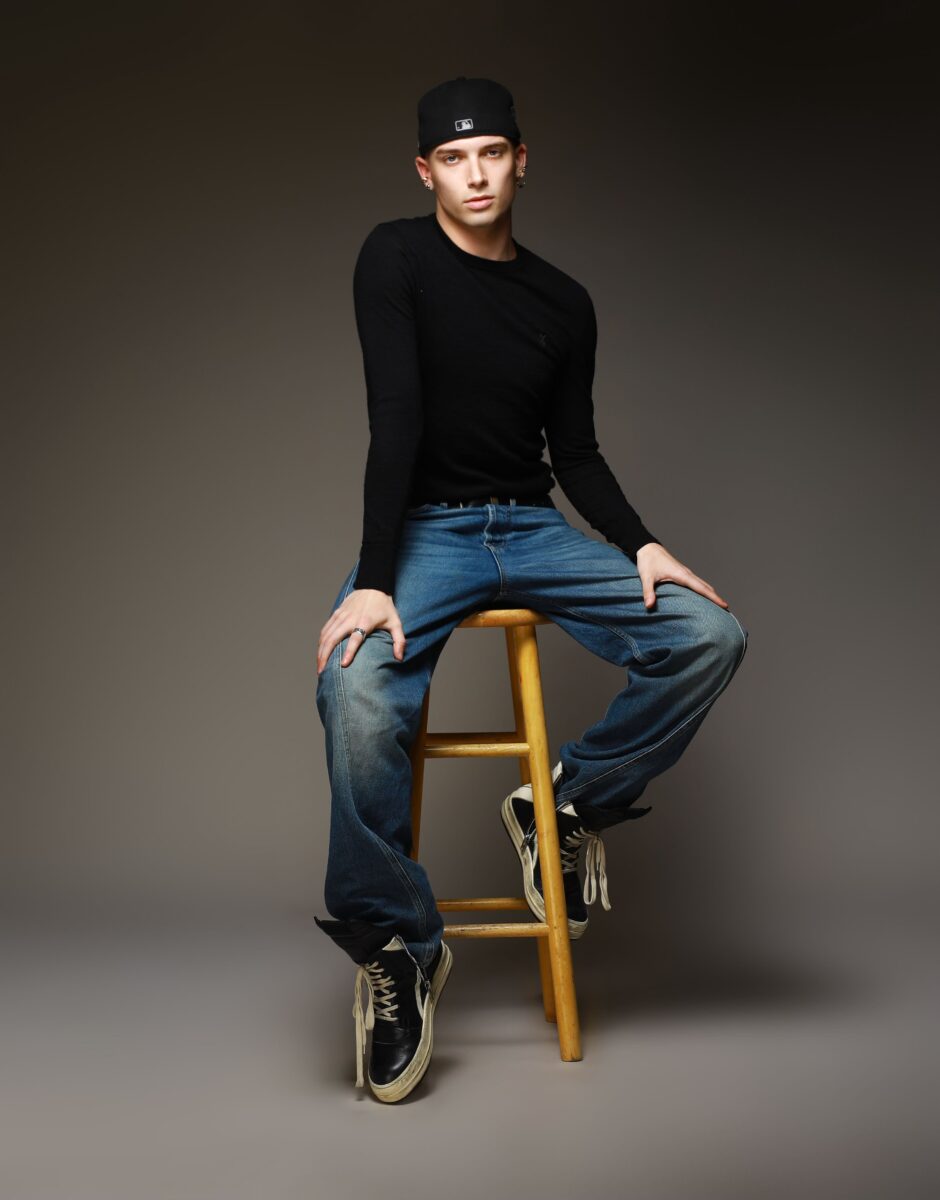
The Ohio-born dance choreographer has collaborated with everybody from Lady Gaga to Doechii – and was the brains behind that viral Katseye Gap ad. Oh, and he’s only 26.

When your favourite celebrity is going on tour and wants a choreographer, who do they call? Chances are, it’s Robbie Blue.
The Ohio-born dancer-turned-director superstar is certainly having a moment. He was the brains behind Katseye’s viral Gap dance video. When we chat, he’s just come off the back of a tour with Slovakian pop star Adéla, as well as choreographing the music video for Lady Gaga and Doechii’s The Devil Wears Prada 2 track Runway.
If they’re young, buzzy, and in the business of making hits, chances are they’re working with Blue. In person, though, he’s warm and approachable, chatting from his LA home as the sunshine streams through the window behind him.
There’s a lot to discuss: over the course of his career, Blue started out as a backing dancer, working with Doja Cat and Charli xcx among others, before quitting and going to rehab. Barely four years later, he won an Emmy for his work on (now longtime collaborator) Doechii’s Grammys performance of “Denial Is A River”.
All that, and he’s not even 30 yet – in fact, his 26th birthday was in June. Wonderland caught up with him about fame, addiction, and the bucket list of people he’d still love to work with – spoilers: Gaga has already been ticked off.
Read the interview…
How are you finding your insane workload?
It depends on the day. It’s one or the other every day. I think some days I’m like, ‘Fuck me, I’m exhausted.’ Then some days I love the pressure and the quickness of it.
When did you first realise that dance was something you were interested in?
I started dancing and performing when I was nine, but I didn’t really understand it could be a career until I was probably 16 or 17. Where I grew up [in Lebanon, Ohio] is very small-town, with not a lot of performing arts. There’s nothing, really. I stumbled upon this dance studio when I was around 11, that’s run by two gay women.
They had been running it since 2001 and I started dancing there. They became like parents to me. Honestly I think [growing up there] would have been a lot harder if I didn’t have dance and I didn’t have them guiding me through that, because they were the only gay people I knew.
I really had a safe space there; they showed me Lady Gaga and created all of those life lines for me to be comfortable in who I was. Outside of those walls – school, that was like hell on Earth. But I managed to get through it.
What makes a dance move classically ‘Robbie’?
I’ve honestly been trying to crack that question for a while. I think it always derives from a theatrical place: so it’s all about storytelling, even just in the smallest movements.
We’re referencing Fosse a lot, we’re referencing burlesque, musical theatre, [the musical] Chicago. The movement and the story lines I create always lead back to really strong female characters and really strong female energy, mixed with a little bit of absurdity and ugliness and then on top of that is a high level of confidence.
It’s like a drunk dad. When he’s at a wedding reception and he’s dancing horribly but you’re like, ‘Why is that person attractive?’ It’s because they’re so confident. That’s been so inspiring to me.
How did you become a tour dancer?
I mean, it really started with confidence. Even if you don’t think you’re the best, you’ve got to believe it or fake it to just even get in the room to audition for something like that.
Touring for me was like… when I was touring, I saw dancers that just thrive off going from city to city and performing for thousands of people. For me it was difficult. I hated touring. I’ll never do it again. I love being home. I like my space.
You’ve mentioned your struggles with addiction before. Did it happen around then?
I guess I’m in my mid-20s now. So in my early 20s I was definitely struggling with alcoholism, struggling with addiction. I was really lost in those years; it took me a long time to figure out, ‘Okay, this is actually an issue.’
By that point I was already going from artist to artist and touring and doing all these things when I finally just realized, ‘Oh, I have a problem.’ But things were going really well in my career, I didn’t want to just go figure myself out.
I was rehearsing for Doja Cat, for her Scarlet tour and I did all of the rehearsals. Things were getting really bad with me behind the scenes; I was not doing well. We ended up getting to the first show and right before we walked on stage for the first show I flew home and went to rehab.
It’s a crazy thing, but I think that I realized that if I went on stage, I wouldn’t leave. I would stay the rest of the tour and I didn’t know if honestly I would survive that tour. I think it was the best decision I ever made for myself.
How did you make the pivot to choreo?
During the pandemic, when I was really bored, I just started experimenting. I didn’t have anything to do, no shows, no nothing. So I was like, if I’m going to dance, I need to make up something, and dance to it.
I started creating just tiny little blips of things. And then I started posting it online and that’s when I started to see that people wanted to also do it. It blew up, then I made my first [dance] film.
It was right around the time I went to rehab: I put out this film and then I left for a year. And it’s so interesting because that film ended up being what booked me my first job as a choreographer, which was the Doechii Grammys performance.

Yes – she DM’ed you, right?
She was like, ‘Hey, do you want to choreograph my Grammys performance?’ And I was like, ‘Yes.’ I was on a call in five minutes. That was wild.
What are you proudest of?
I’ve made two of my own projects so far and those projects stick out to me the most as like the most fun I’ve ever had, the stuff that I love. When it comes to artists, I’m still really proud of the Anxiety music video.
It was really tough and my team and I pushed so hard to make that great. I was really proud of Do because she learned that [choreo] literally on set while we were shooting it.
What was that like?
The director had this idea – he set up, ‘Oh she’s going to go through this house and then she’s going to go outside to the street and there’s going to be a big dance scene.’
From there, we were like, [what] if you’re in this panic attack, fever dream of dance. It’s going to be twerking, into tap dance, into ballet… this nightmare dream of dance where everything’s colliding. Each shot was one take and we moved on because we didn’t have any more time. I was surprised at how well it came out because we probably shot that thing in one hour.
Talk to me about the Katseye ad. Did you expect that to blow up as much as it did?
I still feel like I haven’t been able to process that. I did not think that would be massive. I loved it and I loved making it, but none of us were gunning for a viral moment.
We weren’t like, ‘Oh, this needs to be viral. And how do we make this viral?’ I think the song just hit so many generations of people and Katseye was so fresh and so new: it was just a collision of everything. We did not expect that to go so crazy.
Going into the Gap store, [seeing it] blasting on the TVs and honestly just opening my phone during that time and constantly seeing people doing the dance: that was wild. Just people I don’t know and it would be on my ‘For You’ page.
What’s still on your bucket list?
That’s a good question. What’s crazy is that Gaga was on my bucket list. I was like, ‘I haven’t made it until I danced with Gaga,’ and I eventually was like, ‘It’s never going to happen. I have to let it go. I’m going to become a choreographer.’ And then I got the call for Gaga.
Madonna’s on the bucket list. I think that Charli xcx has become a bucket list person. What’s interesting is, I always loved Doechii, but I never thought that we would work together in any capacity. I was like, ‘I don’t think I’m ever going to work for a rapper,’ and then working with her opened up a whole new realm.
So I love when somebody comes to me and I’m nervous and I’m like, ‘this doesn’t make sense.’ So I’ve kind of let go of the bucket list idea and I’ve been trying to take things that make me nervous.
But if Madonna came knocking it, it would be a yes. I would drop everything.
Words – Vicky Jessop


