Ghana’s sharpest lyricist claims his seats at the Afrobeats roundtable with his excellent sophomore album, IRON BOY. He tells Wonderland about his process, progress, and inspiring the next generation.

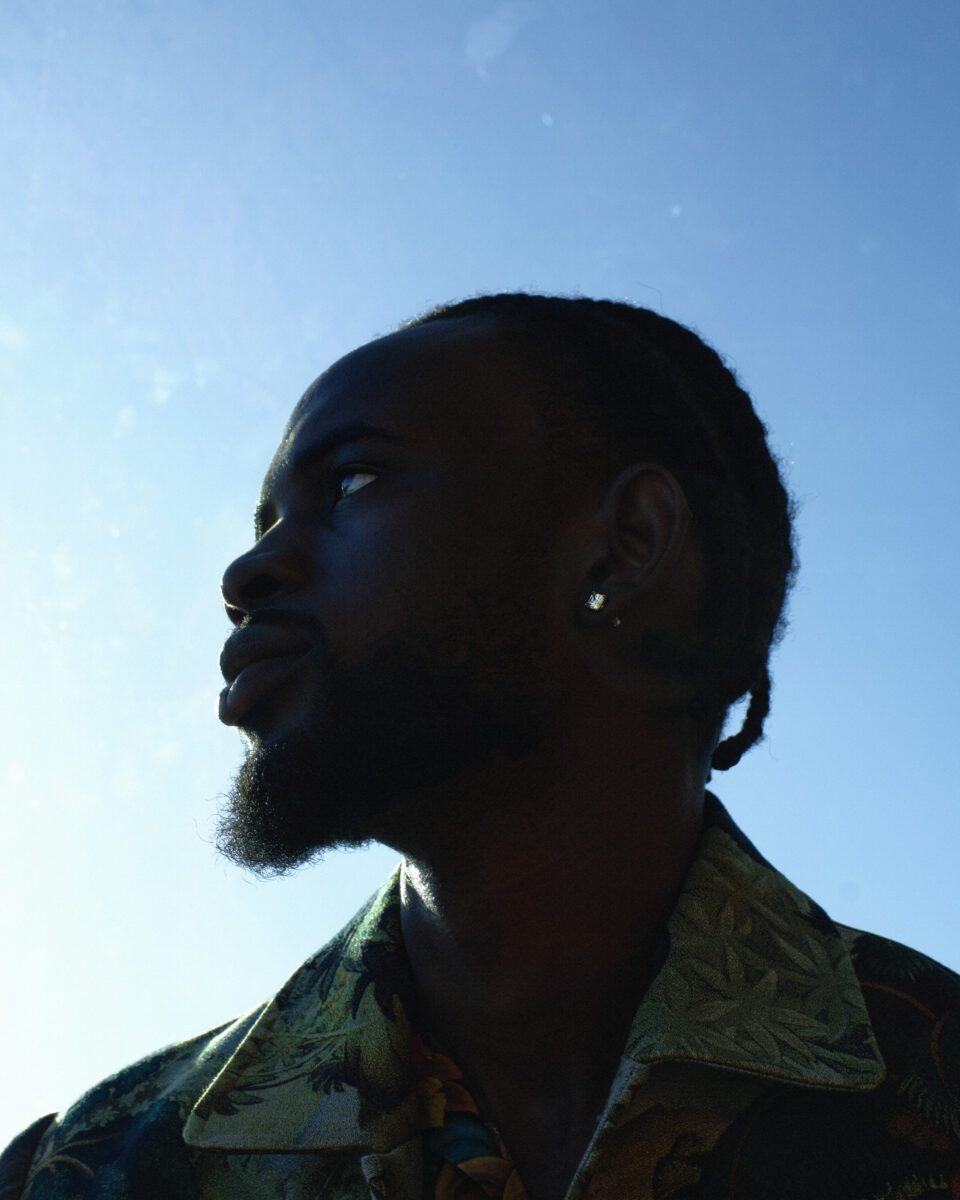
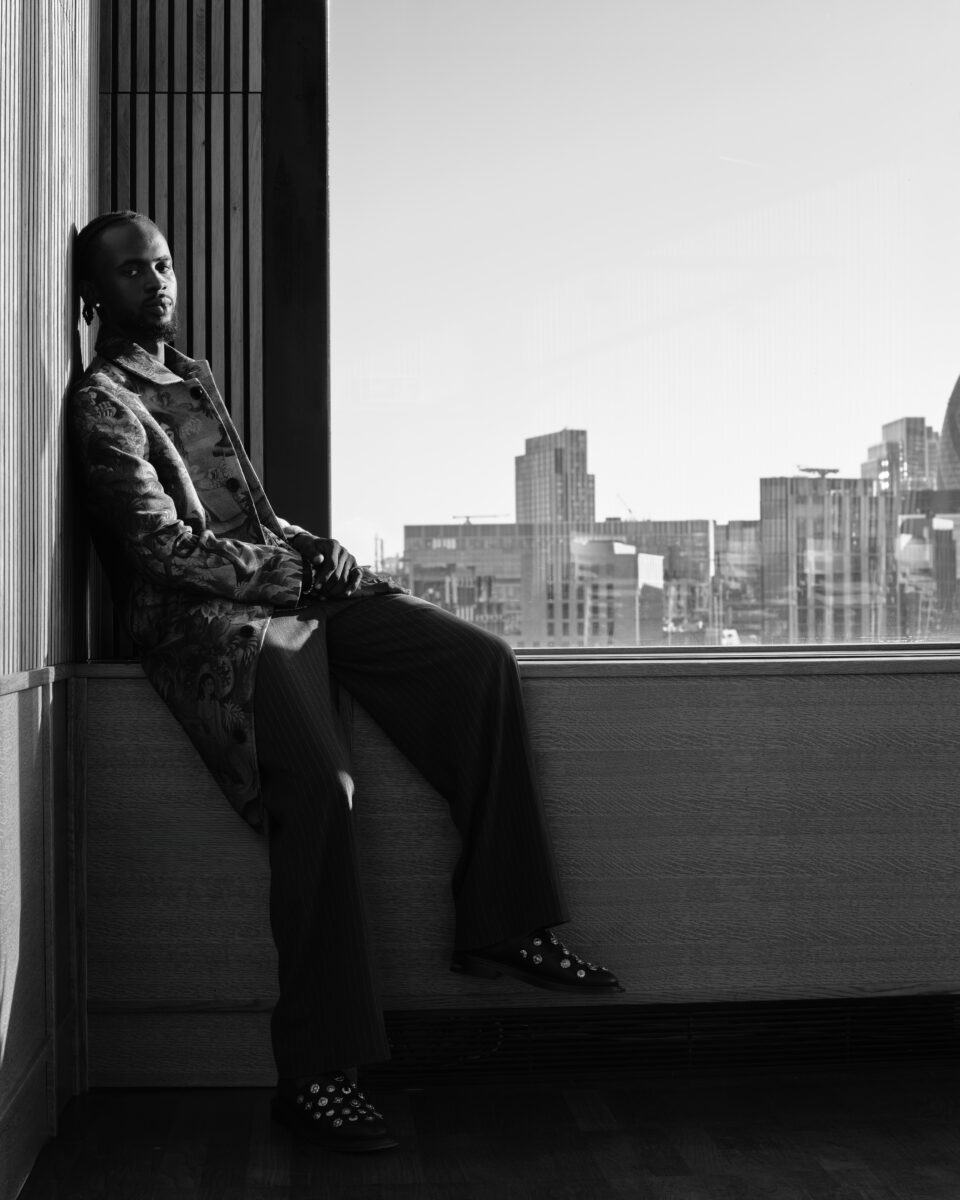
Ghanaian musician Black Sherif, known for his distinctive voice and vulnerable candour, returned with his sophomore album IRON BOY today (3rd April). The 23-year old artist’s dedicated global following have been compelled time and time again by his modern blend of Highlife, Afrobeats, and Hip-Hop, accompanied by electrifying performances and sincere lyricism.
Hailing from Konongo, Ghana, Sherif has continued to push musical boundaries, becoming one of the frontrunners in the genre of Afrobeats as well as an inspiration for the youth of Ghana. His sensational hit “Kwaku the Traveller” claimed the title of the most Shazamed track worldwide, and has gone on to collaborate with a star studded list of artists, such as Burna Boy, Vic Mensa, Projexx, Juls and Darkoo.
Black Sherif’s second album captures his evolution into becoming globally recognised. Paying homage to Amakye Dede, the Highlife legend from his hometown, IRON BOY is a rich collection of 15 tracks upon which Sherif outpours both pain and triumph, narrating his stories of ambition, evolution, and love with fearless exploration.
Sherif is building on the foundation he had already established with his debut album Villain I Never Was, which dealt with adversity, pressure, resilience and tribulations, whilst IRON BOY sees Sherif partake in sweeter themes like victory, strength, and inspiration. With his second record sure to raise his acclaim further, IRON BOY is a testament to the rare strength that has categorised Sherif’s short yet impactful career thus far. He spoke to Wonderland about his process, progress, and the new album.
Listen to the album…
Read the interview…
IRON BOY is a title of power. Why is this the name of the album?
The reasonings behind why I named the tape IRON BOY are pretty layered. One is because of the feelings that were surrounding me while making the album. It was a total wave, a journey of a feeling. An unending feeling that has grown with time and evolved with time, so I chopped it up into pieces and put it together. That’s the feeling part. The second layer is because I was inspired by do you know this artist Amakye Dede – he’s an OG Ghanaian highlife pioneer – he’s from my to, and he has an album called Iron Boy, so I was also paying homage there. If I had to describe the feeling of IRON BOY in three words, I’d summarise it with resilience, toughness and freedom.
With IRON BOY as the title to this record that promotes strength, were there any moments of spontaneity that changed the trajectory or process of making this record?
Yes. The reason why “One” is the first song on the album is because of something that happened that changed the trajectory of where the album was headed. “One” was inspired by a life changing event that happened to my dad and had an effect on the whole family, nuclear and extended, as well as his friends. That’s something that changed the feeling of the album that I wasn’t expecting as a whole for sure.
You’ve said that in the beginning of your career people’s ears wouldn’t open to accept you. When it comes to not being able to communicate big dreams to small minded people, where do you take your dreams where they can exist to their full magnitude?
Fashion is an outlet for me. I try my best to not put limits on myself. I think people have a lot of limits for themselves that they project onto others, onto people that don’t want to have limits, like myself. I never want to have limits as to how big I can dream. I have to keep dreaming big, because my growth is at the core of my being. If I don’t keep growing, I’ll get depressed. It’s something that’s been in me since I was a kid – I’ll know when I’m growing and I also know when I’m stuck or stagnant.
That isn’t measured against the metrics of my environment or the people surrounding me – I have my own metrics that I measure myself against. There are times that I’ve been stuck, and I have certain things that I’ll do to rectify those problems and get myself back on track. Everything that’s in my head, can be expressed, because I don’t have limits. But I love fashion so bad – my mum is a seamstress.
You grew up in Konongo, a small mining town in the Ashanti region of Ghana – but always knew there was a bigger world outside. Being labelled as the voice of ‘Ghana’s youth’, how does it feel to be someone who can also change the next generation’s mindset surrounding the world around them?
I feel like I do that (inspire the youth) by just being myself – following a dream and passion and dedicating hours upon hours to it. One of the most memorable things that inspired me so hard was the first time I went to Tema to see the house my cousin was building.
I remember thinking, ‘This is the most beautiful house I’ve ever seen in my life’. I thought ‘I can do this too, if he’s out here doing what he’s also dreamt of doing.’ This is why I get so passionate when I’m talking about limits – there have to be no limits for me. I feel like anyone can do anything. As kids, we are so interested in so many things, and we do them with a lot of love and freedom, without thinking twice. If you try to replicate even fifty percent of the attention and love you had for something as a kid and apply it to an interest you have as an adult, I believe you’d break the limits, and that’s what I try to tell the kids. Farouk, my creative director and photographer, and I used to dream about this as kids, and now we are literally living it – living the dream and the kids that also grew up with us in the hood with us have seen us grow to this point.
It’s not something that’s like a Basquiat story. They were in Konongo with us, they know my nieces, my cousins, Grandpa, they know what I did and what I was interested in. I talked about putting hours into things I’m passionate about, and that’s what it’s all about, the smallest things. When we’re kids and we see people on TV and we think ‘Wow, the things they’ve done, I could never,’ – It really all comes from the consistency in the smallest hours you put in. That’s what I hope the kids learn from me.
Sonically, a lot of these songs fuse strings with Afro-infused beats. Like “January 9th”, talk to me about how it was matching the relevant production to the right tracks. Do lyrics or melodies come first?
Sometimes I hear melodies and they trigger lyrics. Sometimes my emotions are heavy – heavier than the studio that I’m in. So, no matter what melody is playing, whatever I feel is coming out. You could play the sweetest melody, and I could still sing the saddest song I’ve made in my life.
On “So it Goes” you unite with Fireboy DML, what was it like to share the track with an artist who has had similar experiences?
It makes the music more meaningful. It’s like placing two different pairs of eyes on the same thing. Fireboy is one of my favourite composers. Worldwide, not just in the Afrobeats genre. I trusted him with his perspective, and I wanted to hear directly from him what he thought about the song, sonically. The song was also a greetings from abroad type of thing. Moving from place to place, plane to plane, and trying to be better. It was an organic collaboration, I had been wanting to work with him for a while. I think I tried in 2021 and couldn’t, but I knew the time would come. So this time around it worked.
You speak about ‘taking time out to be happy’ on the title track “Iron Boy”. Are there pockets of moments when you have to take breaks from music?
I take breaks from feeling like a professional musician. Even as a normal Sherif, I write music. So there are times I take breaks from being Black Sherif and just be Sherif, but I never stop creating music.
Your last album, The Villain I Never Was, was a project that made sense of some of the tribulations and trials that you had to go through whilst your name as an artist started to get bigger. Now, on Iron Boy, you’re a man who can’t be broken. There’s a visible and sudden evolution between these titles. How would you describe the evolution of sound between these two bodies of work?
Soundwise, maybe this has become the first layer of my sound as Black Sherif. Villain I Never Was was the first layer, the bedrock, and almost the foundation of something bigger. The sounds of Villain I Never Was are the grounds, and then the sounds of IRON BOY – the character, and rhythms of this album build upon my previous album, making the sound taller, almost like a skyscraper. Some of the flows are very new, a lot of them are fresh. I’m singing a lot on the album. With evolution, it’s similar to a toffee which’s name translates to ‘The beginning of life’. When you put this toffee in your mouth, it’s so sweet, but when it gets to the core, it’s a bit sour. So similar to how that toffee has sweeter layers that cover the bitter centre, I’d say that Villain I Never Was is the sour part and the first sweeter coating is IRON BOY.
The album closes on a triumphant note, with the track being named after your birthday. You sing about how ‘everything is under control’ and that you’re going to be ‘alright.’ What was the journey to get here as an artist?
With the ‘Two hands on my shoulders’ – lyric – sometimes I can be a little dramatic. There have been times where I felt overstimulated, and I thought things through too much. That was the feeling that inspired that lyric, and it’s something I couldn’t lie about. On my birthdays, I love to sit and reflect on things I have previously wanted to do, how those things are going, and reflect on some personal problems I have, reflect on my family. A lot of my strength came from my parents, but it’s been 13 years since I lived with them, so sometimes I do feel and become more aware of those empty parts in me that came from that age when I stopped living with my parents. There are parts I feel should have developed before I lived by myself. Even when I get emotional, I still always sing about victory.
Seeing the bigger picture through my journey growing up is often where some of my anxieties come from, so those are things I deal with, while I try to chase my victory. ‘Everything is under control’ – I can sing that even when it’s not true, because of the confidence I have. I believe I have a lot of skill, sonic wise, in fashion, and in writing – the smallest things that I’m interested in and I believe I’m good at, I believe they can feed me for the rest of my life. That’s my mentality. Even when my emotions aren’t balanced, I know my potential, and the places it can get me. I try to stay present, and when I’m settled I use my brain again. I’m not going to get blinded by my emotions. I just create space for emotions to exist, and after that, I start operating.
What would the younger Black Sheriff think of himself today? What would he think about the album? If he walks in and sits down here, what would that be like?
He’d be anxious, so anxious. Sometimes my dreams scare me, but as a kid, I knew that I had to be bigger, I had to be something. I couldn’t put my finger on it, but I knew that something from inside of me had to shine and had to come up. I’d see things even on Youtube as a kid and think ‘This is me’ – I always knew. If I could tell Sherif something, I’d tell him to keep going, and not to stop all the thoughts going through his head. The only problem I ever had with those thoughts is creating space for them, so maybe I’d tell him to create new spaces for those thoughts, remind him that they can still exist. But to keep going, and not let them go.
Words – Mapesho Kyakilika


