London-based multi-disciplinarian BODUR will be taking over the V&A East Storehouse this week for a unique live creation exhibition, SECOND LANGUAGE. She tells Wonderland all about it.

The act of making music is indisputably an art. In left-field artist BODUR’s case, it’s good enough to put in a museum. From today (Wednesday 10) until Friday 12 December from 10 am until 6 pm, at the V&A East Storehouse, the alt-electronic Londoner will be running a unique live installation based around creation, called SECOND LANGUAGE.
Across the three days, accompanied by five of her core collaborators in Malte Henning, James Hazel, Will Heaton, Jono Pamplin and Gabriel Gifford, BODUR will be transforming Gallery 2 into a working recording studio. There, she will compose, write, produce, and edit new original music, which she will then work on and release in January.
10th – writing day 10am to 6pm
11th – writing day 10am to 10pm
12th- writing day 10am to 6pm
Saturday 13th- 6pm live show
It’s a distinctive and visceral idea that blends live performance and off-the-cuff creation, blurring the lines of audience and artist refreshingly and positively. Fresh from sharing MAQAM, her acclaimed debut album earlier this year, BODUR shows herself to be one of the most individual and interesting artists in London’s sonic undergrowth.
Below, she speaks exclusively to Wonderland about the thought behind the correlation between her album and her exhibition, the concept behind SECOND LANGUAGE, and what’s to come in 2026.
Listen to BODUR’s debut album…
Read the interview…
Your debut album MAQAM landed just this year; how did the act of finishing that project transform your thinking as you approached SECOND LANGUAGE?
I felt so fulfilled during the completion and release of that project, more than I ever had before, that I knew I wanted to continue down a more conceptual music path and to continue pushing my own boundaries creatively. After your debut album, it can be hard to think of what to do next – I think by making the ‘creative process’ of SECOND LANGUAGE the main event in a way, I took the pressure off myself for what will actually become the music project itself. It took the pressure off the songs that follow MAQAM, because whatever we make, I’ll be proud of because of the circumstances we made them in and the experience we created in bringing the audience into their creation.
Did anything you learned during the album-making process about sound, mood, structure, or vulnerability inform the sonic and/or design of SECOND LANGUAGE?
I learned that working within limitations can actually maximise your creativity. On MAQAM, working within the guidelines of the Arabic Maqam system allowed us to ebb and flow through genres with ease, whilst still maintaining consistency across the project. That inspired me to design the Second Language setup this way, with the constraint of having only a limited amount of equipment, time, and people involved in the process. I’m hoping those strict limitations will allow our creativity to flourish once more.
Many debut albums carry a sense of urgency or self-definition, does SECOND LANGUAGE carry some of that same “first-statement” energy, or is it a response, maybe a counterpart to the album?
It definitely does, yeah. I’m still introducing myself as an artist to people, and I want to be known as someone who’s in their own lane and not following any guidebook. Making my next project in front of a live audience and the largest Picasso in the world is my way of saying, ‘Hi, I’m BODUR, this is what I’m on, you should be paying attention’
Given MAQAM is still under a year old, was there ever a moment where you felt the album’s momentum pushed you toward immediate follow-up projects such as SECOND LANGUAGE, or was this always part of a longer-term vision?
The idea for SECOND LANGUAGE kind of came out of nowhere, to be honest, and not in relation to or motivated by anything else. It’s actually quite a surprise I’m conducting this project now because I prefer to take things slowly, and the album is still fresh. But I was watching a musician friend of mine a few months back, who struggles with their speech, improvising on their instrument so fluently, to a virtuoso degree, and said to my friend in awe, “it’s as if music is their first language”, and that’s when the idea was born. To capture musicians in their rawest form, in their element. I DM’d one of the curators at V&A East, and suddenly an insane idea became a reality.
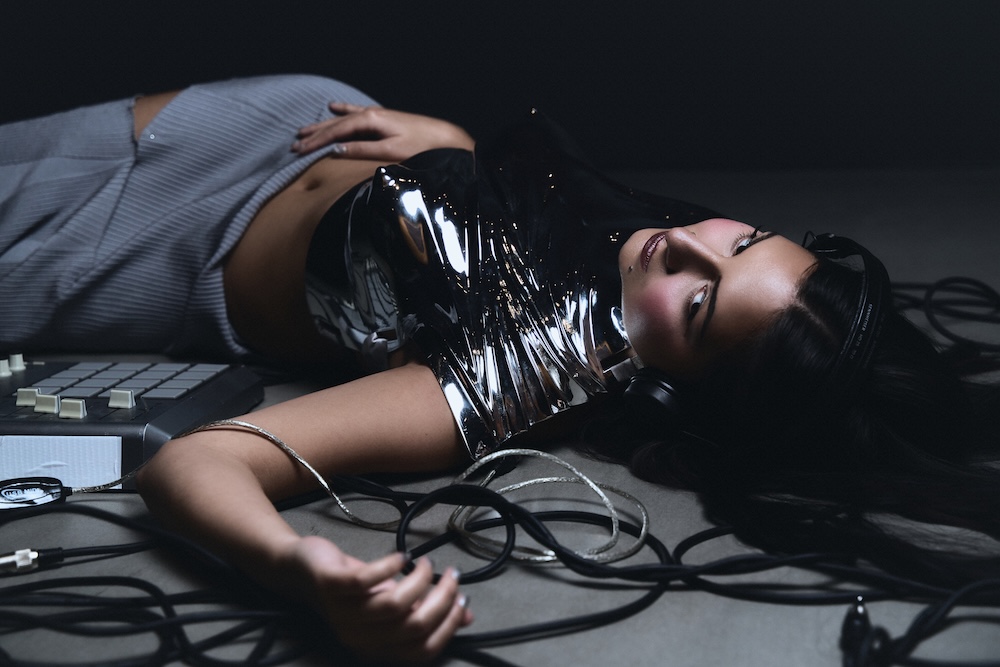
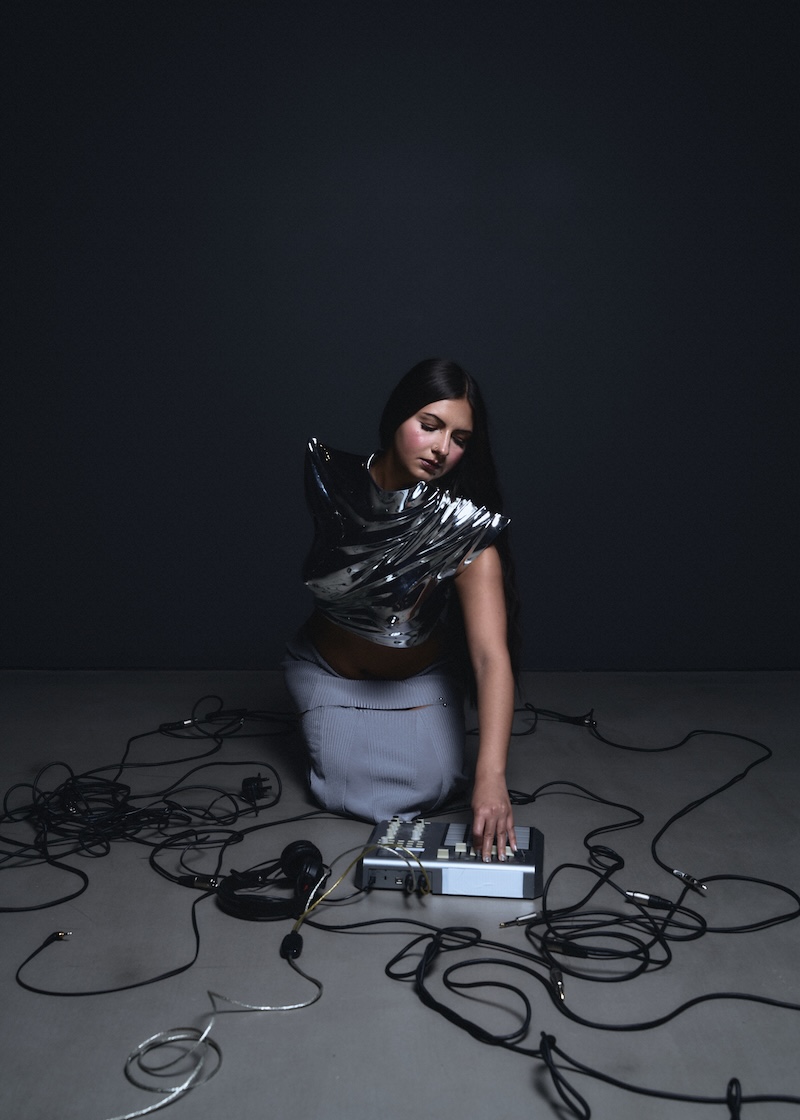
Does SECOND LANGUAGE have a narrative arc, or is it meant to be encountered as a kind of atmospheric field the audience drifts through?
I see it as a durational performance art piece and a test of endurance. The audience and the choices they make in the space will inform our choices, which will then inform the outcome of what SECOND LANGUAGE will become. We might walk away with three great songs. I might totally crumble under the pressure, break down and humiliate myself. Whatever happens will be the correct answer to what this installation asks of us.
Were there influences outside of music (architecture, dance, cinema, literature, fashion) that shaped SECOND LANGUAGE’s aesthetic or emotional tone?
The V&A East Storehouse itself was an inspiration for the project, and why I wanted to host it there. I liked the ‘access all areas’ presentation of a museum’s archive, seeing the parts of an institution that we don’t usually get to see. It encouraged me to do the same, to not only show the final project but also to show all of the parts of the process that are usually hidden. The mistakes, the trial and error, the changes in direction. I’ve also been inspired by performance artist Marina Abramovic’s work for many years, not only her aesthetic, but also how she consistently pushes her limits of endurance. I want to be the Marina Abramovic of music.
Do you see SECOND LANGUAGE as the start of a new dimension in your work, or as a one-off experiment that allowed you to think differently about sound and space?
Like MAQAM, it’s a framework that can be repeated and eternally evolved into different versions of itself. So I could make MAQAM II, MAQAM III, etc. The same applies to SECOND LANGUAGE – it’s a method for creation that I want to exercise again and again, in different art institutions around the world, with other special guest musicians from that country. To further prove that there is no language barrier in the conversation of music, that music is everyone’s first language, and everything else comes secondary. To highlight what unites us rather than divides us.
What can we expect from BODUR in 2026?
The music we write this week at the V&A will be titled SECOND LANGUAGE and released in January. After that, expect two new musical eras, built from two projects I’ve already written. There is so much still to come, and it won’t be what anyone is expecting.
Photography – Morrigan Rawson


