An emblem of collaboration. A cornerstone of popular music. The apex of a live show. After a spell away from the forefront of the British sonic zeitgeist, bands are back – and louder than ever. There’s a palpable buzz as an electrifying wave of fresh talent stakes its claim on summer festival line‑ups and takes its first confident steps into the industry. So, who’s next to claim that coveted headline slot? Wonderland spotlights five rising acts primed for the biggest stages.
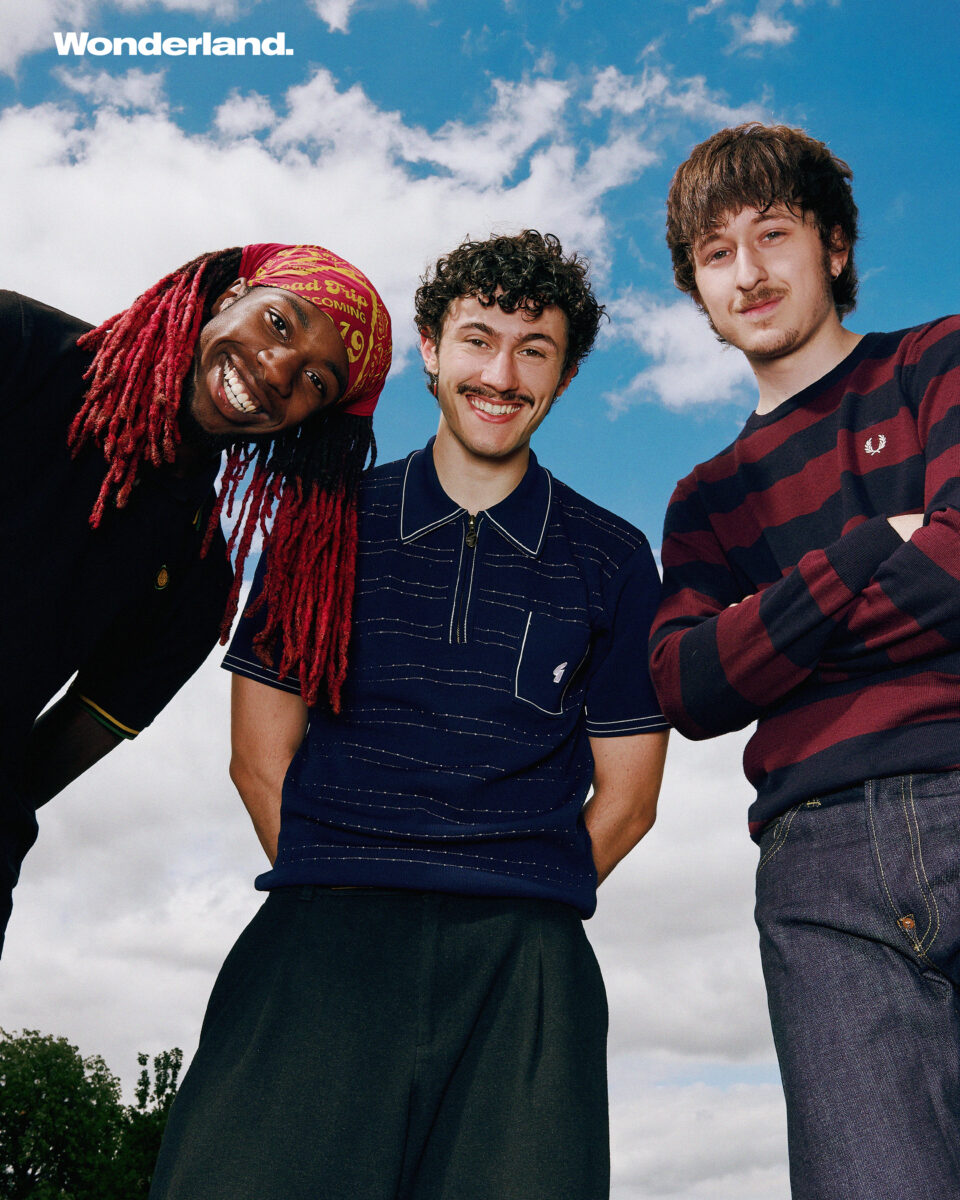
The metropolitan mavericks putting the cool in complexity.
Why are we always trying to box bands into one sound? One aesthetic? One genre? Talk about buzzworditis. oreglo, the stylistically fluid and musically adventurous trio spawned from South London youth clubs, have often been distinguished as a jazz act. But in reality, they are a wide-spanning collage of influence – impossible to pin down to a singular sonic jurisdiction.
Last year’s debut EP “Not Real People” put the then four-piece on the map, before an outfit trimming (because “all the best bands are trios”) and a tour with ex Black Midi frontman Geordie Greep gave Linus, Nicco and Teigan a fresh perspective on the possibilities of their sound. Incorporating math rock, post-punk, reggae, dub, and more into their ceiling-less approach – and with a sophomore EP on the way later this year to shake things up – these likely lads are young, hungry and barely getting started.
Your sound has changed a lot in a short period – what does that growth look like?
Nicco: As we’ve grown and our tastes have changed, we’ve explored new things. At the start, we were influenced by music that people would call UK jazz, artists like Yussef Dayes and Tom Misch, and there was also a big influence of reggae and dub. As we went on, we drifted away from that and more into rock and were influenced by The Beatles and Led Zeppelin as well as more modern alternative bands like Black Midi and shame.
What is exciting you about creating right now?
Nicco: Since we had the formation change, I feel a lot more inspired. Being the three of us, there’s a lot more space to explore different stuff. It’s easier to get close to each other in our playing and lock in. It feels like the sky is the limit – we’re on the cusp of something.
Linus: As long as we’re making cool music, man. We’re not trying to make lo-fi beats.
How do you feel about being in a band?
Teigan: It started from a brotherhood. We’ve never had any crazy, serious arguments, and I feel like the fact that it’s not strictly business definitely helps that. oreglo is a band, but it’s not like I’m going to work.
Nicco: We do it because we love it. There’s no world where we want to do anything else. Even playing with other bands doing session work, it’s just not the same. Being in your own band and being your own artist feels really special.
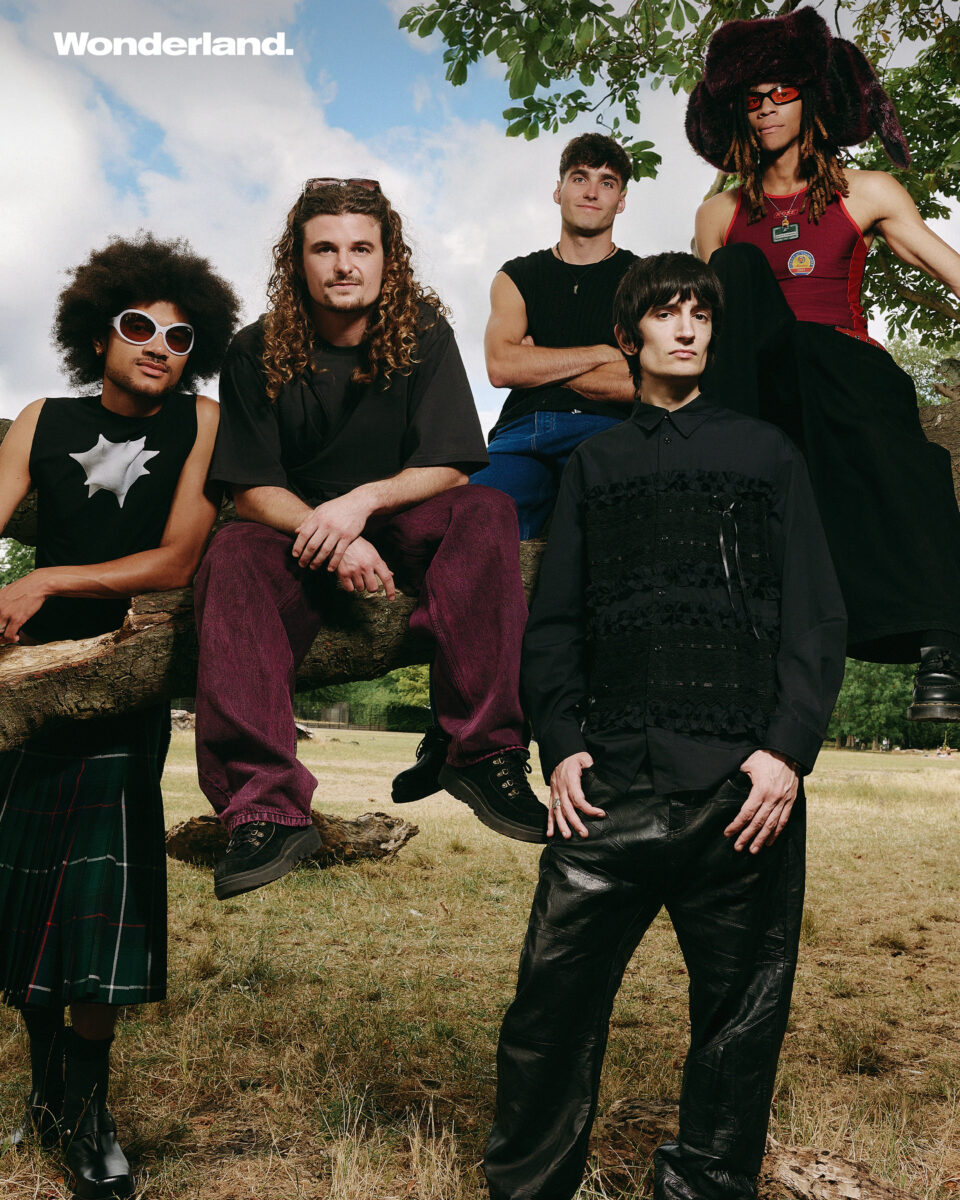
The community-driven quintet poised to be UK indie’s next big boy band.
bby, or “Boy Better Yearn” for the deeper feelers among us as their lead singer Benjiy jokes, have had a unique rise. Benjy, Jessy, Tommy, Deon and Tom met online, connecting via TikTok through mutual admiration of their respective musical endeavours. Taking their relationship from 0 to 100 like two long-lost social-first lovebirds, they took to co-renting a warehouse space in Shoreditch: a bby HQ. Here, they built more than a following – they fostered a community.
The five lads would host ‘hangs’. They’d jam, play impromptu gigs – everyone was welcome. What began as friends of friends grew into a London-wide movement, spread through word of mouth and the wonders of the internet, culminating in their electric debut album, 1. Organic in feel, authentic in nature, exhilarating to the ear and rough around the edges, it transfigured the band into quick-step cult favourites. A sad boi second coming awaits.
Your ‘HQ’ in Shoreditch is now legendary. What was the importance of that space?
Tommy: That place formed us as a band, and we developed our sound there. Everything we did for a whole year was there. [Debut album 1] really captures the energy, and it was a great part of our growth.
Benji: We originally met online, so we were gassed to do stuff in the real world and build a place where we could hang out and bring people together. It happened naturally; the same people started to come every time. And those people are such an important part of the journey. They come to everything now and will forever be part of the narrative.
Deon: These days, there’s so much focus on virality, but at the end of the day, what does a million streams mean if no one wants to come and watch you? Nothing beats bums in seats; you need that foundation of people who are always down to come and support. And it’s reciprocated – with these people that were coming to the hangs, it’s like an actual catch-up.
What is the key ingredient to a good live show?
Tommy: We jam a lot. We don’t have set lists to this day. We feel the vibe.
Jessy: We play to each other. We have a connection on stage, and that translates to the crowd.
Tom: If we’re having a good time, then everyone else is probably having a good time. The best gigs are when we’re actually just having a laugh.
How is this era different from the ‘classic’ age of bands?
Tommy: We’re nicer people and we do less drugs.
Deon: We’re hyper aware of compromise and having an understanding of who all of us are as musicians.
Jessy: In ‘90s bands, there were a lot of internal problems, and we’re just trying to avoid that by just listening to each other.
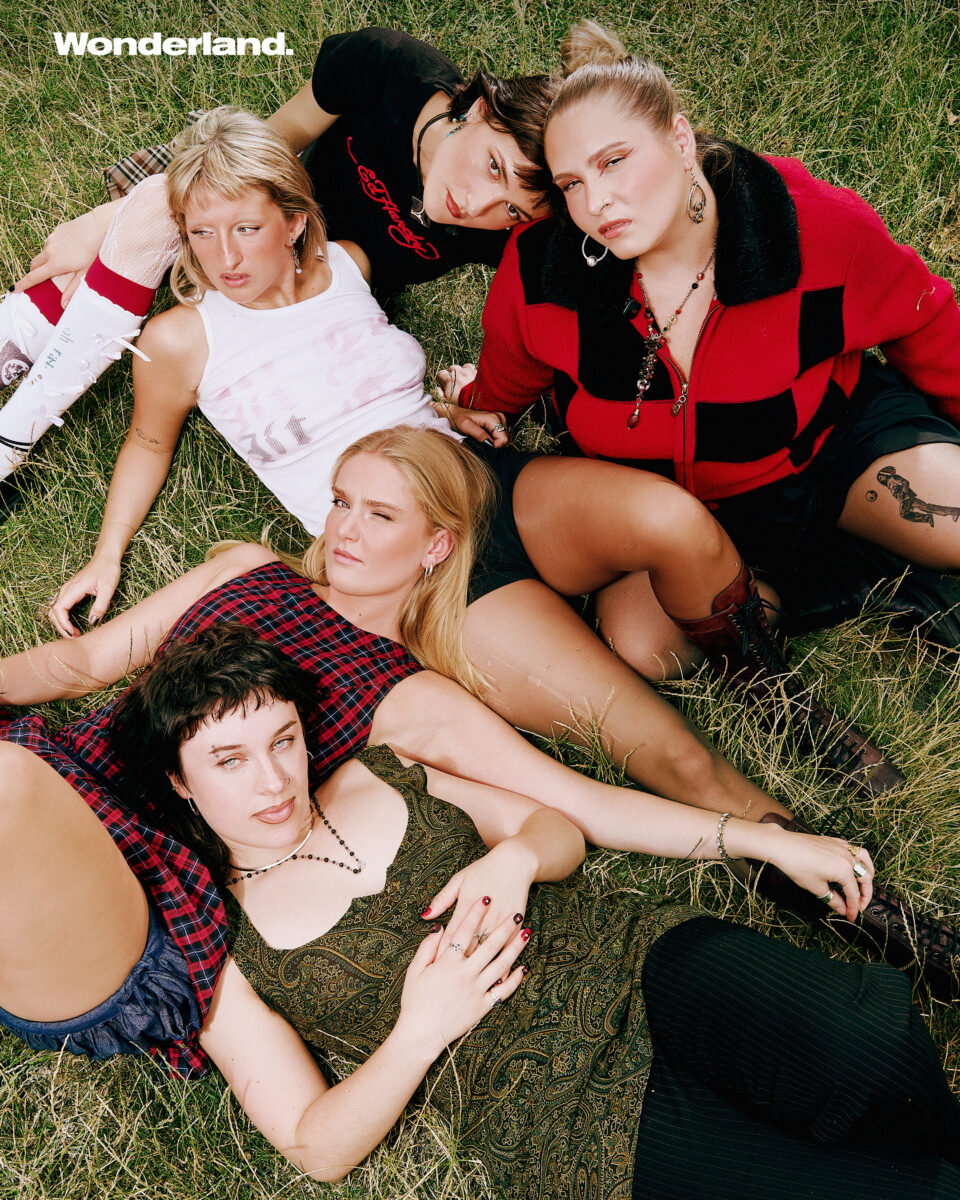
The Liverpool-based pop provocateurs challenging the male-dominated status quo.
How do four girls from Norway and one from East Yorkshire find each other, and discover a shared sonic connection? Liverpool (Institute for Performing Arts), of course! Birthed by a shared passion for feminism, uni friends Katya, Maria, Thea, Mia and Lil synergised to combat the boys club, rewriting the rules of what a girl group can be in the process. Hell, that’s even what they called themselves – a statement of pop-tinged egalitarian intent.
With their eclectic and effervescent June-released EP “Think They’re Looking, Let’s Perform” hinting at the quintet’s vision and vivacity, and their DIY parties across London and Liverpool cultivating a like-minded community, Girl Group are set to shift an antiquated narrative – and are having a fabulous time doing so.
Where did Girl Group originate?
Mia: At our university, there was a culture among the boys to hang out in the studio and work on each other’s songs. We didn’t feel that there was a community of women collaborating. So we said, ‘Why don’t we just book a studio, us women, and create something?’
Lil: It could have only really been that shared passion for feminism that would make us start a band, because we were doing our own solo projects and have completely different music tastes, so it was never really a thought for us to make music together. But when we did, we were a bit like, ‘Why haven’t we done this before?’
On the EP, you can hear a sonic smorgasbord of influence. How did it marry into one communal voice?
Thea: Even though we have very different music tastes, we all collectively love many of the same artists. Wet Leg and Charli xcx, for instance. Also, respecting each other so much as solo artists makes us intrigued to try out each other’s genres. Lil’s punk world, Maria’s singer-songwriter sound, Mia’s Nordic influence, Katya’s dark alternative pop, or my jazziness.
You portray your feminism in a vibrant way. Where does your aesthetic stem from?
Mia: It’s been important for us to point to the girl groups that came before us and paved the way. Because we’re named Girl Group, we’re trying to re-establish what that can mean and the connotations of it. It’s reclaiming femininity and showing that it can be cool. And also show that a girl group doesn’t have to have loads of men behind it.
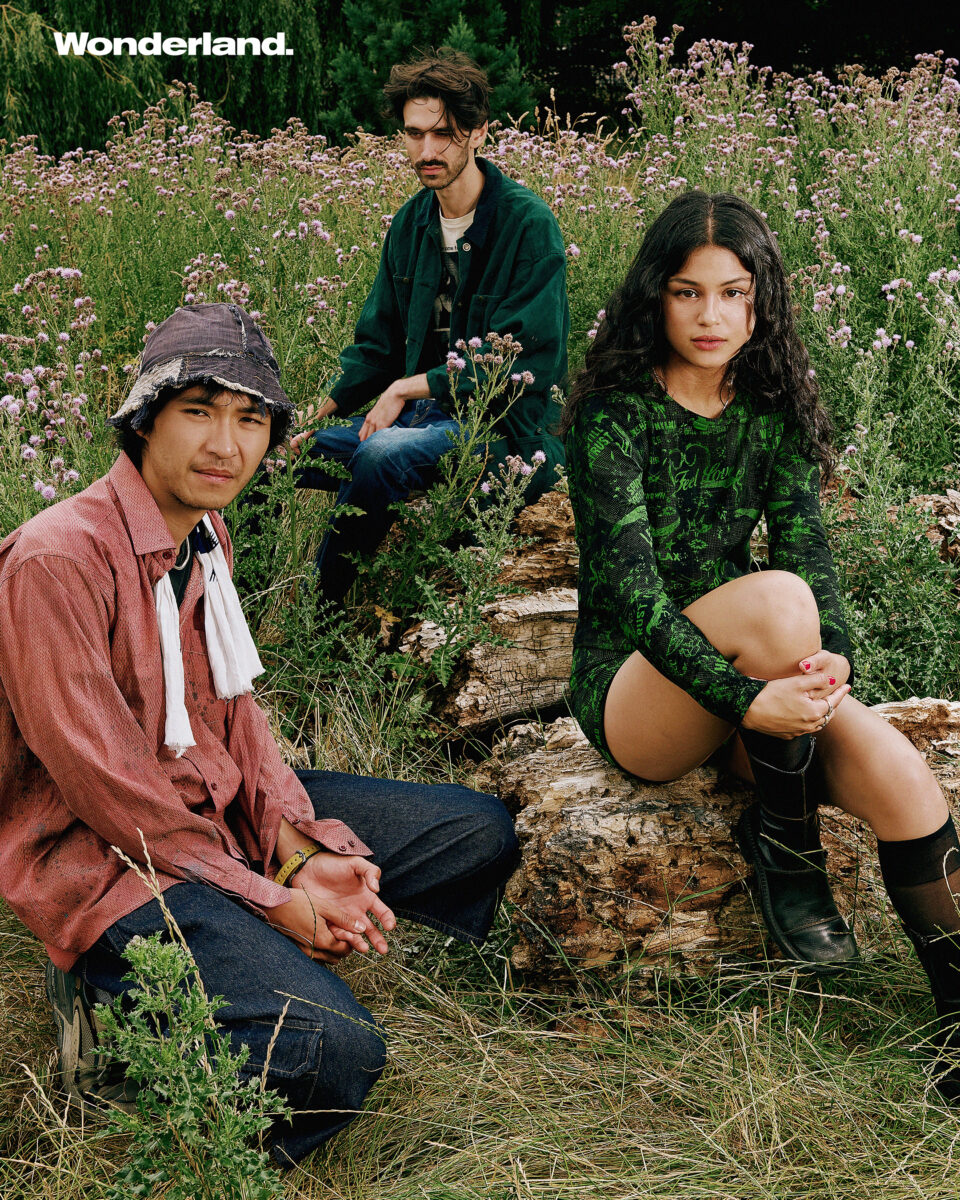
The bold and bohemian three-piece with an emotional depth to match their meticulous musicality.
It’s hard to imagine, given the effortless collective vision of their 2024 sophomore album Real Deal, that Honeyglaze formed by accident. It was a spontaneous conjunction of creative forces – a last gasp call out from singer Anouska in 2019 for instrumental backing for her gig at the Windmill in Brixton just three days later. Bassist Tim and drummer Yuri answered. The show proved a success, and before long, the trio became a staple of the famed south London venue. They signed for independent label Speedy Wunderground, and released their eponymous 2022 debut album. Honeyglaze – a new presence in the burgeoning post-punk revivalism – was born.
Real Deal came last year, and is – you guessed it – the real deal. While the first album showed flourishes of promise, the sophomore hits new heights, doubling down on mood and exploring the crevices of genre. Currently concocting their third full-length, if the band continues their current trajectory, they’ll be unstoppable before the sugary varnish dries.
What is the sound of Honeyglaze?
Anouska: Hive mind.
Tim: Intimacy and intensity. There’s some kind of contrast.
What is the progression from your self-titled debut to your sophomore album Real Deal?
Anouska: For the first album, we were naive but in a good way, where we were learning everything from scratch. I’d never been in a studio, I’d never recorded music properly, and we’d barely even played together. And then after the [debut] we toured and played together a lot, and wanted to use what we’d learnt and show people what we’d worked on since. It was nice making completely separate bodies of work; it feels like both albums encapsulate very specific moments in time.
Yuri: In that touring period after the first album, we started to understand ourselves more. We learned a lot about intentionality and knowing how to express things in the way we want to as a band. When we went into recording the second album, it was basically already completely arranged. So when we got there, it was just about getting the takes down, and then the last four or five days, honing in on the mood of the songs.
Modern bands are more challenging, interesting and individualistic than ever. Why?
Yuri: Accessibility and over-saturation. The gatekeeping now happens by the consumers; they really just pick what they want. So the ambition is to be as different as you can from the others around you, because otherwise you just merge into one big genre again.
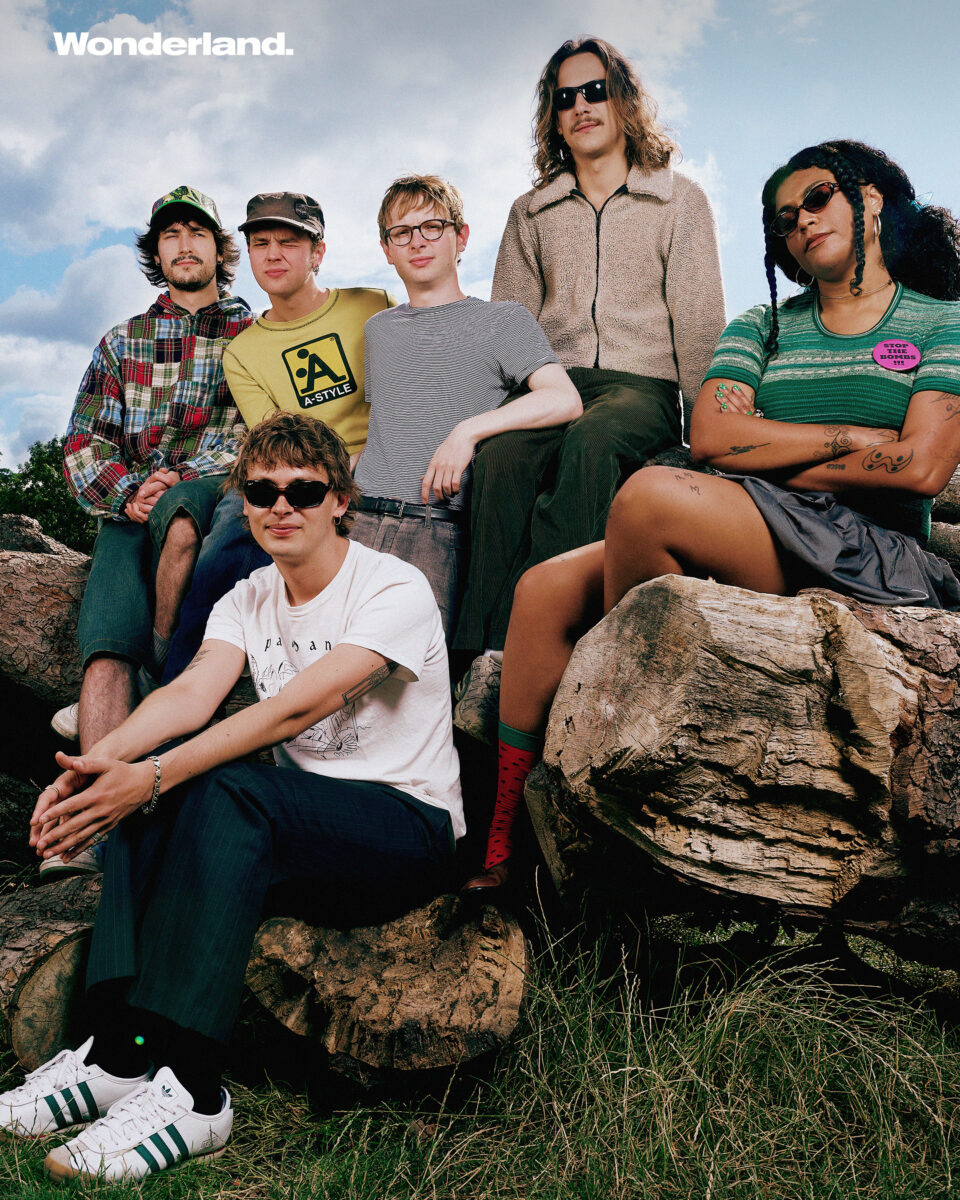
The sophisticated sextet masterfully architecting potently progressive pop music.
Ugly have never felt like they’ve fitted in – and that’s just how they like it. Instead, they pursue creativity’s outskirts – packaging complexity into crisp, calculated and affecting understated sonic gems. Nothing is ever set in stone for the Cambridge-born, London-based collective. What began a decade ago as a punky four-piece has metamorphosed into a sextet of Harrison, Harry, Sam, Jasmine, Tom, Theo – musically shapeshifting into a different beast altogether.
Their debut EP from last year, “Twice Around The Sun”, was a daringly disjointed potpourri of potential, a manifesto of the band’s range. But since then, the band’s ambition has sharpened. A debut album is currently in the works; ditching the sprawling seven-minute song structures for something far more difficult – convention.
What is the Ugly essence?
Jasmine: It’s eclectic and it’s eccentric. It’s a bit crazy. We’re always testing different things and pushing ourselves – we don’t want to just be any old band.
Tom: Now it has more of a poppy sound, but progressive. We had a term for it: micro-prog. Most of the tracks on the album will be around or under four minutes. They’re complex, but we wanted to go for something rounded – directness and simplicity.
How did last year’s debut EP, “Twice Around The Sun”, inform you as a band moving forward?
Harrison: It was more of a compilation of two years of work than a single project.
Harry: [Our process] is much more refined now. We’re thinking about how we could use it.
Sam: We’re working on an album. We went away to Wales recently for two weeks to record a lot of it. In the process of writing to recording, we’re very conscious about putting it in one world and how all the tracks work together – harmonically, lyrically and textually.
How do you feel about being in a band in the modern music industry?
Theo: In a broader sense, the explosion of culture, of “post-post-modernity” whatever you want to call it, means everything exists. You can’t be as much a part of a concrete sound as in the ‘90s or ‘00s. All six of us and our ideas make something none of us could make alone. You get this kind of Frankenstein that’s hopefully more individual.
riding the bandwagon riding the bandwagon riding the bandwagon riding the bandwagon riding the bandwagon riding the bandwagon riding the bandwagon riding the bandwagon riding the bandwagon
Photography by Saskia Kovandzich
Words by Ben Tibbits
Photography Assistants Alfie Bungay, Izzie Austin
bby Stylist – Zaza McDonald