With her debut album Who’s the Clown?, she stakes her claim as Gen-Z’s sharpest stand-up act.
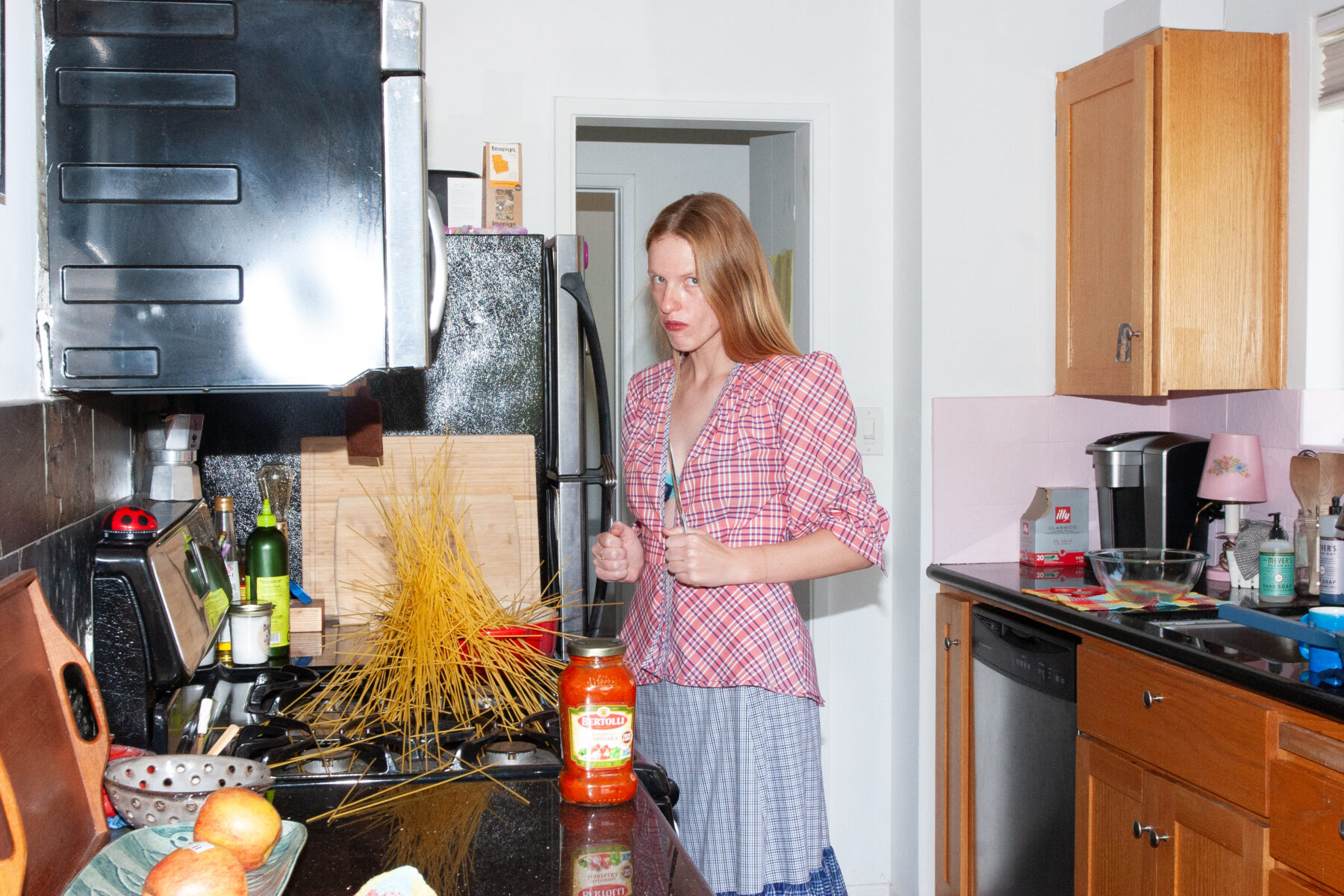
Audrey Hobert knows how to land a joke.
Her songs are sticky, serotonin-spiked bursts of bubblegum pop that lodge in your head and refuse to leave. You hum them in the shower. Mouth the lyrics on the tube. Scream them into a pint glass at 1:37am.
But when the punchlines hit – jagged, off-kilter, sharply funny – her kind of pop starts to feel like chart-topping stand-up: stitched together with self-deprecating one-liners you can shake a leg to.
“I just tell it like it is, and sometimes that gets me into a bit of trouble, doesn’t it luv?” she says, deadpan, peeking out from under a mop of strawberry-blonde hair. “But I also trust my filter – she’s as powerful as my way with words.”
It’s as if Sofia Coppola’s dreamy angst and Lena Dunham’s TMI candour had a lovechild who overshares for a living and writes a killer chorus. So even when she’s clowning around – cool in the way cool is supposed to be (i.e., just being yourself, as she tells you on “Chateau”) – she’s blunt, mischievous, and scarily introspective.
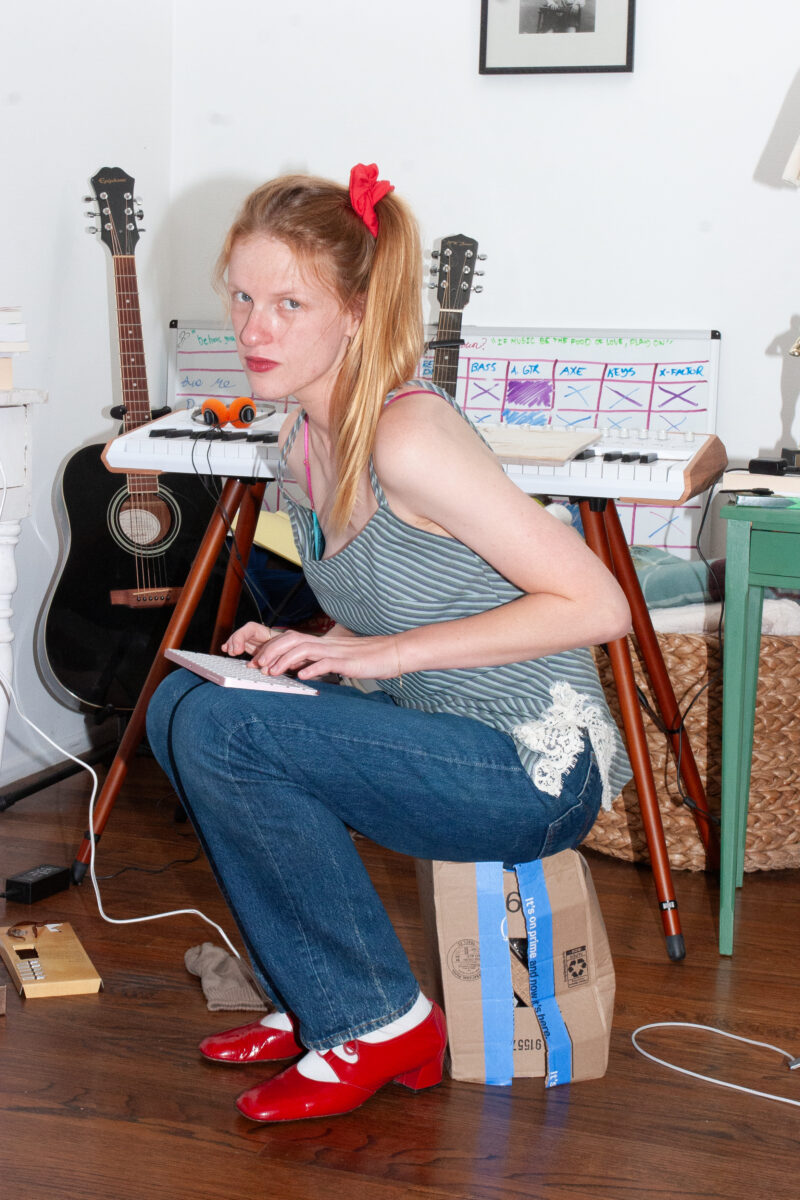
It’s a formula that’s already proven magnetic. Audrey’s breakout track – the viral, screw-you breakup ballad “Sue Me” (delivered with a self-directed video seen over 700,000 times), released in May – has racked up nearly 23 million streams on Spotify. Follow-ups “Bowling Alley” (declared song of the summer by Ethel Cain) and “Wet Hair” sit comfortably in the millions. Her instantly sold-out live shows across New York, Los Angeles and London – messy and joyous – are obsessively clipped and reposted by fans on TikTok. There’s a sense of real-time myth-making here, like watching a cult artist form in front of your eyes.
Before all this, there was pop powerhouse Gracie Abrams – Audrey’s childhood best friend, whom she met in a bathroom at their fifth-grade graduation. Audrey co-wrote several of Gracie’s best tracks (“That’s So True,” “I Love You I’m Sorry” – whose music videos she also self-directed – and “Risk”) before quitting her plans to conquer TV writing (she studied screenwriting at NYU’s Tisch School of the Arts and did a stint at Nickelodeon), instead going solo as an artist in 2024.
Now, Who’s the Clown? – out today via Columbia Records – becomes the first collection of songs she’s ever written for herself, a semi-fictional self-portrait across 12 tracks, casting her as one of pop’s most singular new storytellers. Made alongside producer Ricky Gourmet (“We discovered our undying work ethic through this,” she says), it’s a hook-laden, sugar-rush debut that’s as tender as it is ticklish. Highlights like “Sex and the City,” “Don’t Go Back to His Ass,” and “Phoebe” unravel like a looped VHS tape – grainy and poetic, full of yearning, vulnerability, and giddy flashes of self-awareness. There’s a cathartic honesty here that turns pain into punchlines, and private thoughts into shared mantras.
“I just hope people who have loved my first releases love everything else, and understand my never-ending depth,” she tells us of how she hopes the album is received. “My big dream is for people to feel seen by me and inspired to be themselves,” she continues. “Success to me is a rich personal life…and to always have fun.”
Wonderland grabs a hot minute with Audrey to talk stepping out solo, writing for herself, and why she’s only just started watching Friends.
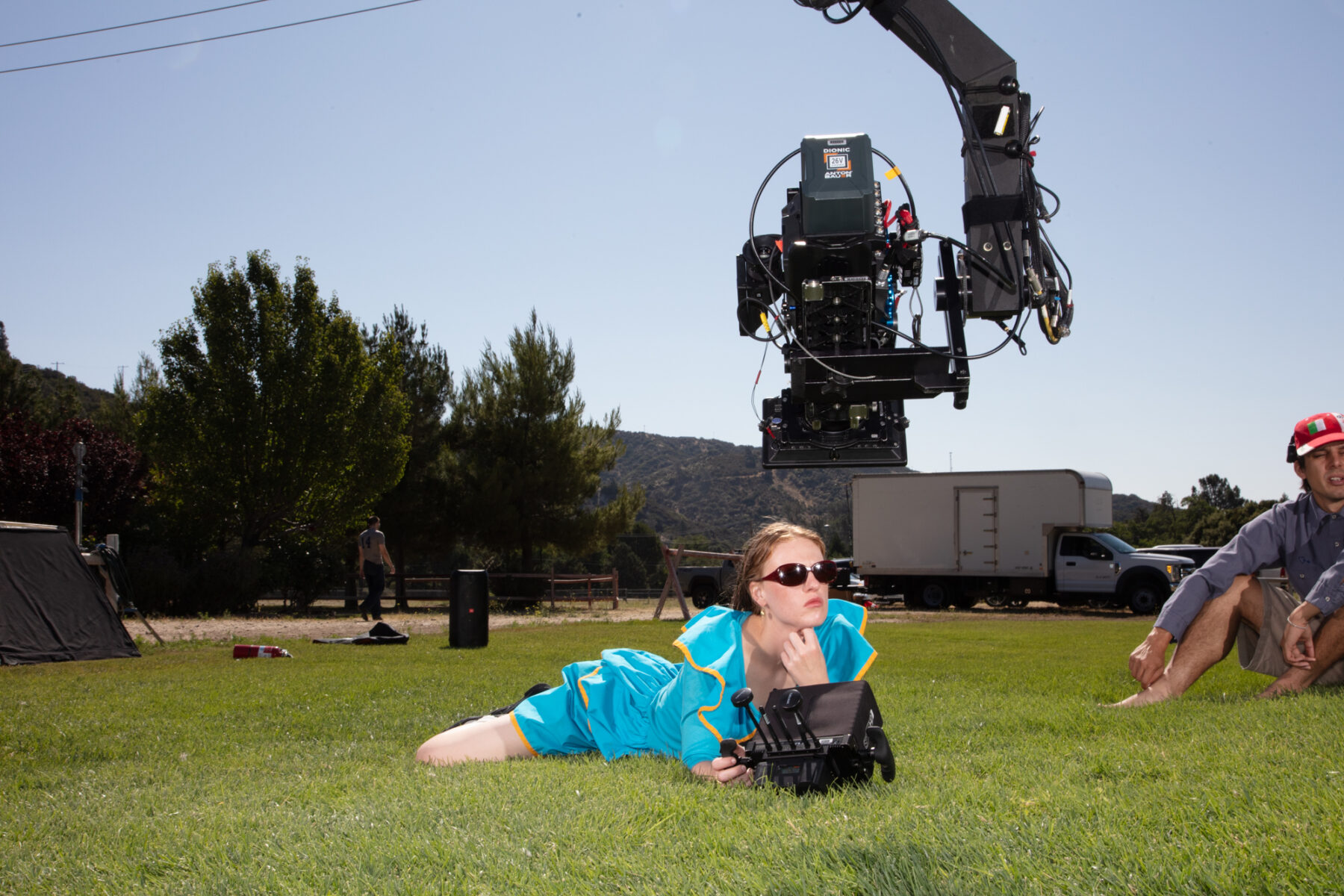
You’ve been building to this moment for years, how does it feel knowing your debut, Who’s the Clown?, will be the first time the world meets you at full scale?
AH: It feels like a triple back flip off the wing of a plane.
Your dad’s a screenwriter, and you studied screenwriting yourself – even writing for the Nickelodeon sitcom The Really Loud House. When did music emerge as the thing? Has creating stories with words always come naturally to you?
AH: I guess so, I’ve always felt like a writer first and I think it’s much cooler to be behind the scenes in general, the puppet master if you will. I have also been very interested in music – and pop music specifically – my whole life. I’ve got a rolodex of pop knowledge in my mind. I know what hospital Lady Gaga was born at…
Before you became Audrey Hobert the artist, you were Audrey Hobert the writer – shaping songs for Gracie Abrams. What’s something about being a musician and songwriting she’s taught you?
AH: She told me about “mouthfeel” pretty early on into our writing journey together and watching her be very kind and wonderful to everyone she works with always inspired me so much.
How does the songwriting process feel different when it’s you, your writing for?
AH: It’s easy to write for myself because my slant on life is iron clad. When I’m just writing by myself for myself I can take as long as I want to figure out one line, sometimes it’s hours.
Stepping out on your own, were you hesitant about how people would perceive you as a singer?
AH: Not at all. Perceive me all you want, try and box me in, give it a whirl. I know who I am and I like being me.
Did you anticipate Sue me’s success? How did your ex‑boyfriend react when he heard the song for the first time?
AH: I don’t know how my ex-boyfriend reacted. Hence, “ex.” I have listened to Sue me probably 2,000 times so I’m glad other people liked it as much as I do!
What’s one thing those early listeners understood about you right away?
AH: [I’m] authentic.
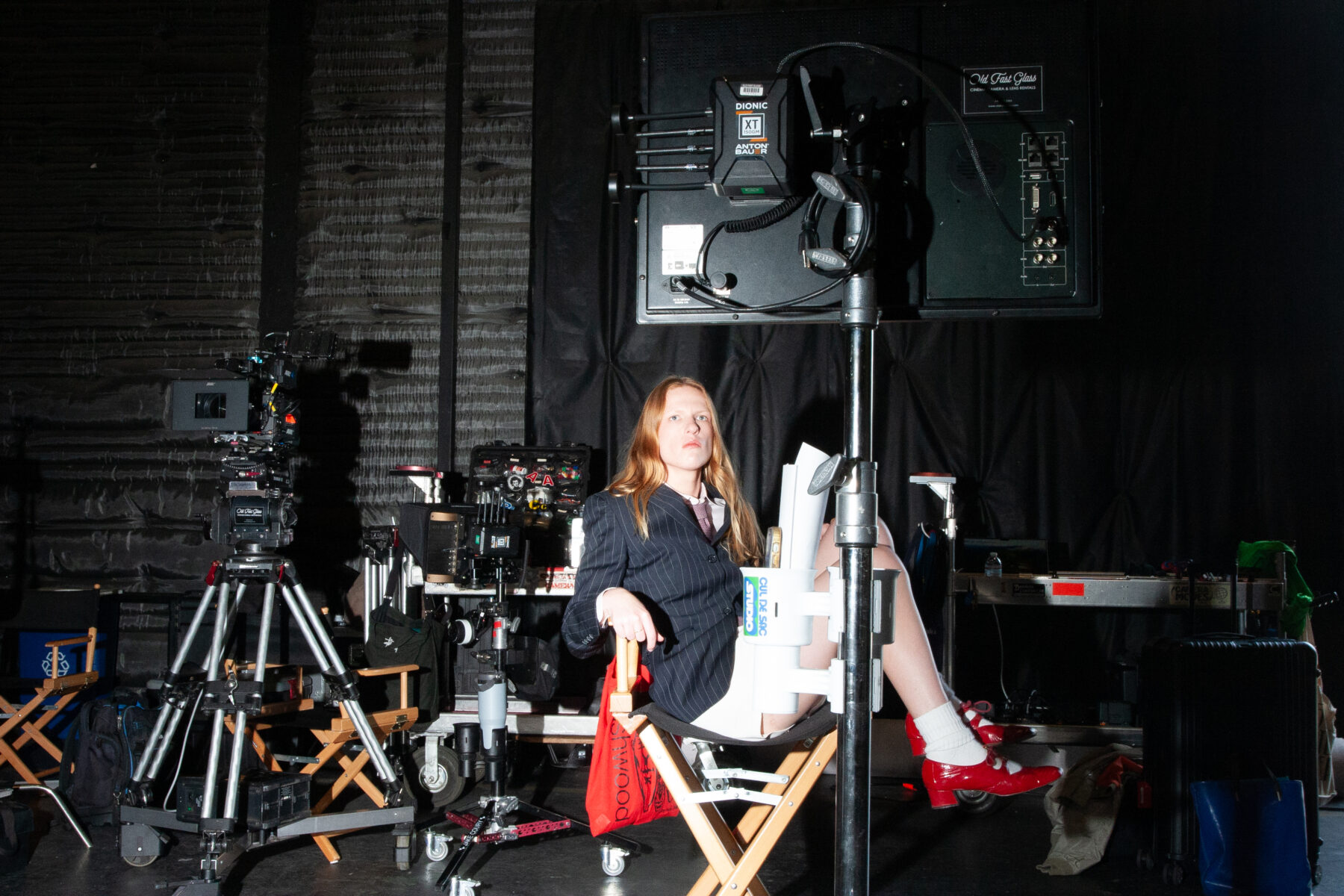
The title Who’s the Clown? feels loaded – who were you speaking to when you named it?
AH: I was thinking about how as a new artist I’d have to grab peoples attention and I thought a nice way to do that would be to have scary imagery on the album cover. My hope would be that someone might see the album cover out of context and go, ‘What does this music sound like?’ and then it’s pop. The album cover and title go together, I thought it was funny.
What was the first image or idea that unlocked the world of the album for you?
AH: The album cover came to me at 6am. I woke up with it in my head the night after I finished writing my song, “Sex and the city.”
Your lyrics appear so diaristic. How much of the album feels autobiographical versus imagined character study or broader commentary?
AH: I don’t feel like I’m transcribing my diary as much as I am crafting a story. A lot of it is genuinely fictitious but all based on feelings I’ve felt my whole life or in the 8 months I spent writing the album.
And in terms of honesty, have you always had the confidence to tell your truth? With this record, how do you walk the line between protecting your private self and giving people something raw enough to matter?
AH: The luxury of protecting my “private self” didn’t feel super prevalent as I am essentially a nobody. As for the confidence to tell my truth, yes I’ve always felt that. I am a secure person for the most part and trust that when I speak it comes from a kind and funny place, so I just speak. Sue me.
You’ve posted a picture of your notebooks with the early lyrics to Bowling Alley sprawled out in your handwriting. Can you tell us more about your songwriting process and how it works?
AH: I write all over the place. In coffee shops, on walks, in the car. When it’s time for me to hunker down and really write beyond ideas and lines, I’m at my desk and I handwrite pretty much everything, as I find it easier to see why I didn’t end up going with a previous line, etc. I will usually work on one song for multiple weeks. Many hours. It is all consuming and always fun and interesting. If something makes me laugh or drops my jaw, that’s the best feeling. I cannot explain melodic writing, that is the mysterious part of songwriting that keeps me coming back for more.
You’ve spoken about building a world visually for this album. How important is image to the way you tell stories in music?
AH: It’s soooo important. I am as passionate about the visual aspect of this album as I am about the writing of it. It is dreamy and so fun and something I’ve enjoyed sooooooo much, getting to direct and edit the music videos and conceptualise the covers and photoshoots and all that jazz.
I played “Phoebe” on repeat while listening to the album. What took you so long to watch Friends – and what other TV, film, or books inspired this record?
AH: Awww I love Phoebe thanks for saying that. I don’t know, Friends gets so much hate and that’s how you know it’s good, and a phenomenon. I don’t know what took me so long! I still haven’t watched all of it but it’s such tight comedy writing and the character of Phoebe gets my heart thumping all the time. As does Jennifer Anniston’s hair. Frances Ha inspired it, Annie Baker inspired it, Girls inspired it, Clare Barron inspired it, 8 ½ inspired it. I should make a real list of everything, but it was always plays and books and movies. I stopped listening to music while making this album.
What’s the risk you took on this record that you weren’t sure you could pull off?
AH: Saying profanities.
When you’re not working on music, what do you obsess over?
AH: Plays and books and movies and writing and people and clothes and all my belongings in my apartment.
Who are the girls you’re looking up to right now in the pop sphere?
AH: Gracie.
What does Who’s the Clown? say about who you are right now – and who you’re willing to become?
AH: Damn. I guess that I’m willing and wanting to be a role model to people who don’t personally know me.
Your famous lyric goes “sue me I want to be wanted.” What would we sue you for now?
AH: Sue me, I want an award.
Words – Ella Bardsley


