From Scorsese’s hidden gem After Hours to Reog’s gruesome Walkabout, Lorcan Finnegan talks inspirations behind his new Nicolas Cage-starring film, The Surfer.

Nicolas Cage on a surf board? Broody locals? A stinging tale of revenge? What the hell’s not to like? With his latest full length feature — following the critically backed mystery Vivarium (2019) and divisive horror Nocebo (2022) — Ireland’s idiosyncratic auteur Lorcan Finnegan has truly outdone himself.
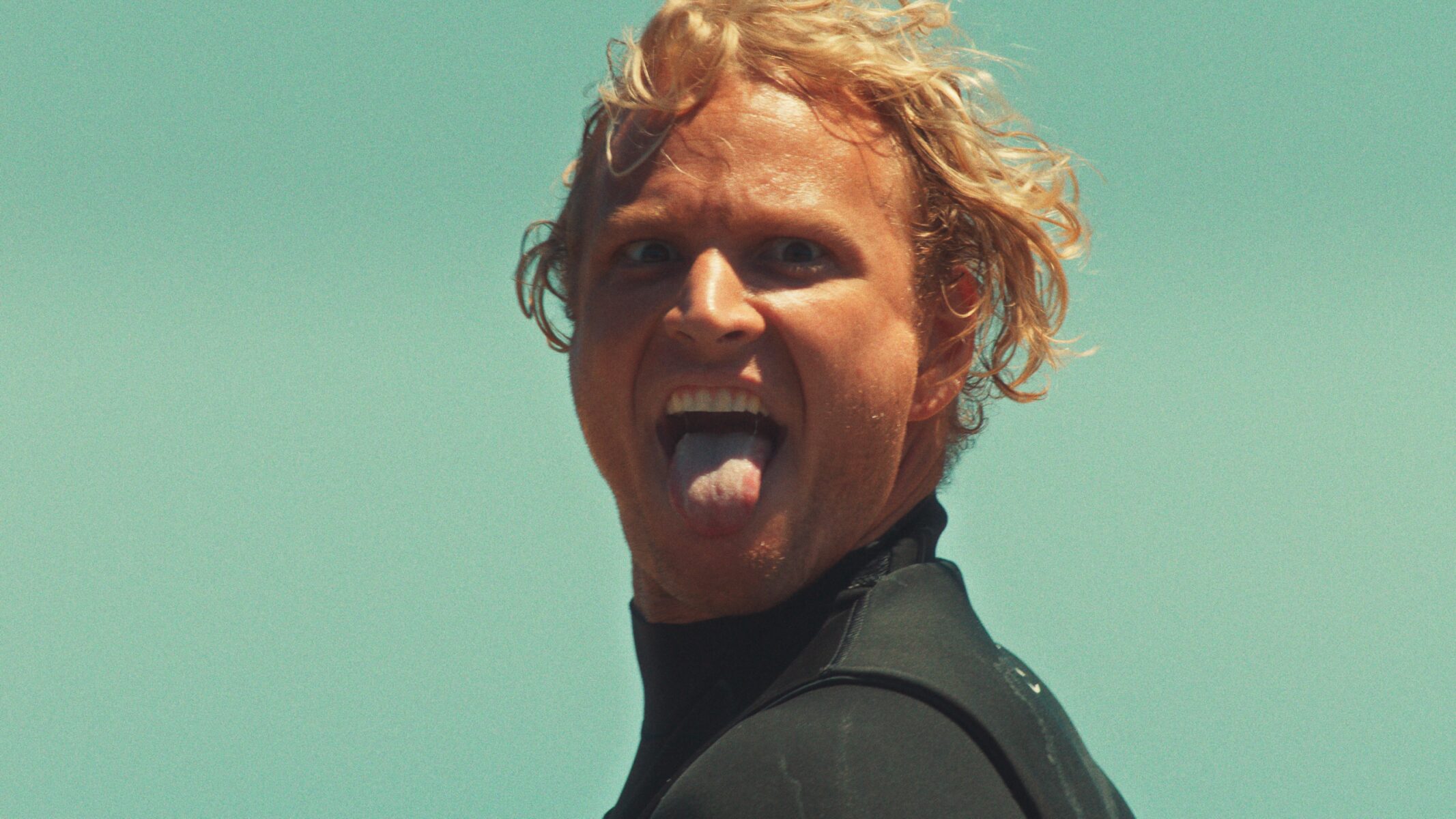
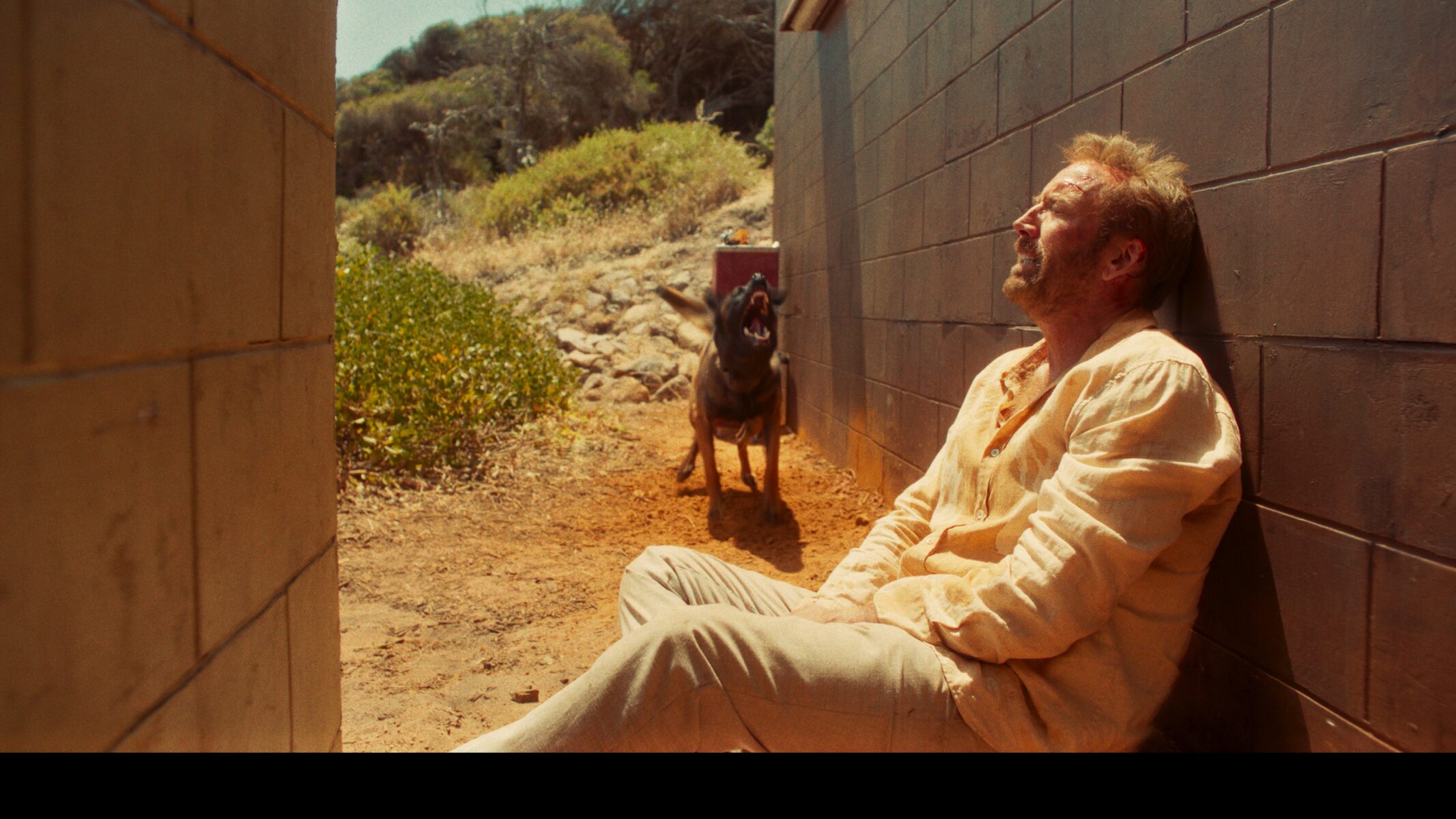
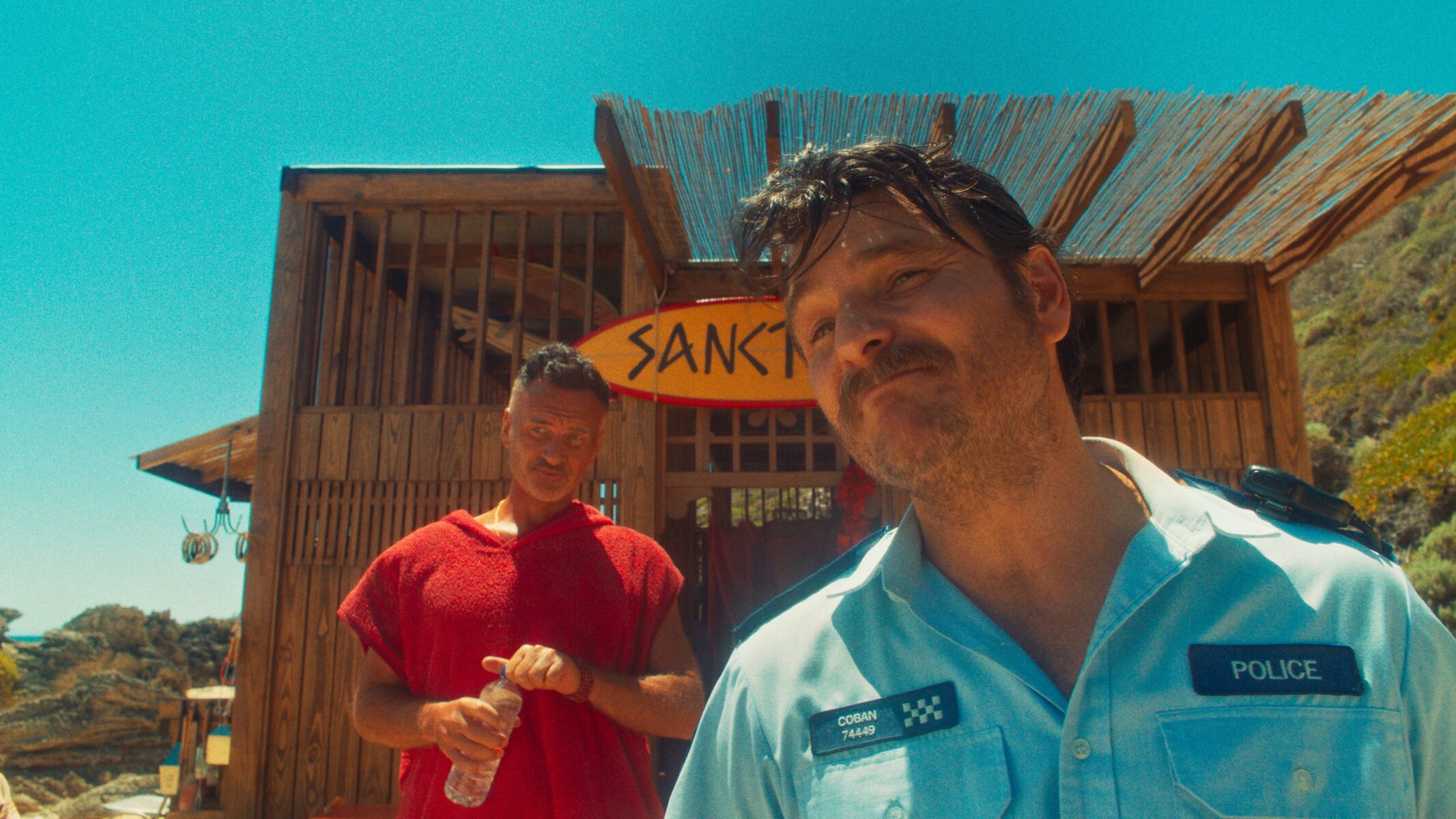
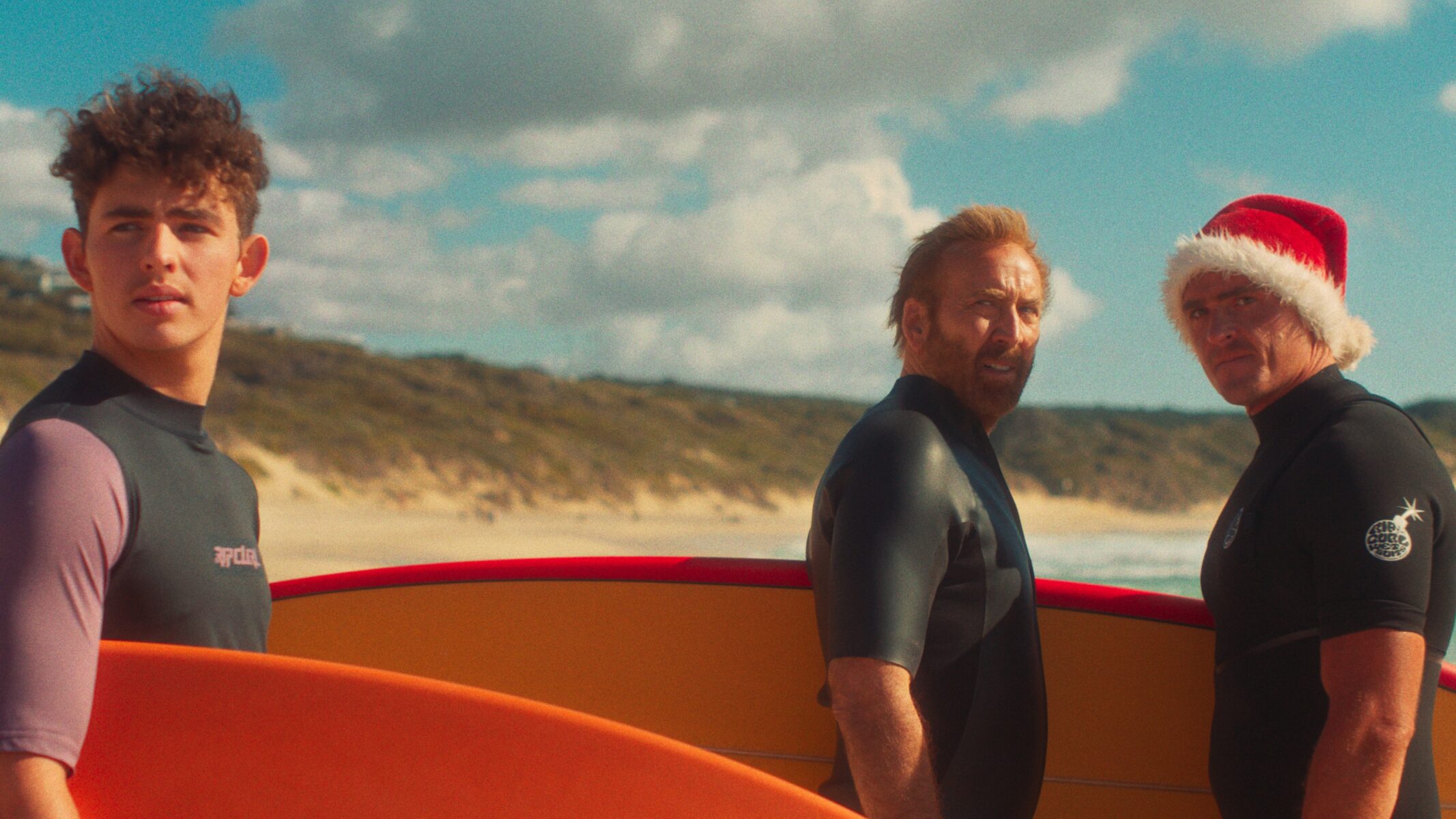
After thrilling audiences at 77th Cannes Film Festival, The Surfer is now finally available for us to take in. It’s a wild ride: Cage portrays the titular character, an anonymous surfer who takes his young son on a trip down memory lane to a beach he’d surf at when he was a child. But when the locals cause problems, Cage’s character hits the edge of his sanity, with the mercurial actor splashing the best of his eccentricity all over Thomas Martin’s script and Finnegan’s direction.
From the gaudy yet grainy cinematography to the darkly foreboding humour, The Surfer is a tasteful homage to the Ozploitation sub-style that proved popular in Australia in the 70s, and a circus ride of performance — no-barriers, pure unadulterated fun. Delving into his inspiration behind the flick, filmmaker Finnegan takes us behind the looking glass with ten classic picks.
Watch the trailer for The Surfer…
Check out Finnegan’s picks…
Walkabout (1971) by Nicolas Roeg
First up is Nicolas Roeg’s Australian New Wave masterpiece Walkabout. I love how Nic Roeg plays with time and the juxtaposition of shot size, nature, beauty, and violence. Also the music, the score by John Barry adds to the unique ingredients of this film. I first saw Walkabout in my early 20s and it really stuck with me. It’s haunting and dreamy, and the way Roeg captures the Australian landscape is incredible. This is the type of film that makes me want to make films. Walkabout is also ‘the outsider’s view’, a very Australian film made by a non-Australian, which was interesting for me going into The Surfer. We didn’t end up shooting day-for-night, but we were inspired by the very blue look Roeg used in his day-for-night scenes.
Long Weekend (1978) by Colin Eggleston
Another classic Ozploitation film in which nature seems to be attacking a young couple who spend a long weekend in the outback. Long Weekend was another film I lapped up when I was doing a deep dive into Australian New Wave films in my early 20s. The (mostly) single-location intensity, colour grading, depiction of nature, violence, and strangeness stayed with me from my first time watching it and resurfaced as I began making The Surfer and scouting for locations that were reminiscent of that vibe.
Wake in Fright (1971) by Ted Kotcheff
I saw this amazing film a few years after it was re-released in 2009. The film has a very interesting past, the only existing print was lost for about 25 years, and the editor of the film, Anthony Buckley, eventually tracked it down and rescued it from a container marked ‘for destruction’. It had a much more successful release in 2009 than it did in 1971. Like a fine wine, it took time to be truly appreciated.
Thomas Martin, the writer of The Surfer, and I were influenced by the punishingly hot Australian setting of Wake in Fright, the element of being trapped in a strange place surrounded by men, and how the film takes place over the Christmas holidays. The editing is very interesting and quite experimental. The sense of dread that comes from the setting and characters, and the overall atmosphere of Wake in Fright were very inspiring, not just for The Surfer but generally informed my taste in cinema. Ted Kotcheff, who also directed the Rambo movie First Blood, was a Canadian-Bulgarian director. Like Nic Roeg, he was making a very Australian film from an outsider’s perspective, which we were also embarking on with The Surfer.
Stranger by the Lake (2013) by Alain Guiraudie
Thomas Martin, who wrote The Surfer, and I were both fans of this excellent French homoerotic thriller. When we started collaborating on The Surfer, it was in our minds. One element we particularly loved was that all of the scenes were contained to the lakeside and the forest around the lake, a minimalist and claustrophobic structure that strengthened the suspense and dreamlike atmosphere. In an early draft, Nicolas Cage’s character ventures up to the house, and there was a scene with Scally (Julian McMahon) that took place at the gate of the house. We decided to remove that scene and, in the spirit of Stranger by the Lake, never leave the beach and car park.
Point Blank (1967) by John Boorman
Boorman’s Point Blank is such an interesting collaboration between John Boorman and Lee Marvin. The story goes that both Marvin and Boorman were not fans of the script but liked the central character, ‘Walker’. Marvin agreed to do it if he had script and cast approval, and then handed all of his approvals over to Boorman – including the final cut. So they set out to make a film on their own terms, and it has a weirdly dreamy tone and can be interpreted in many different ways. Luckily on The Surfer, Nicolas Cage loved the script. Similarly, we set out to make a film that would play with perception, memory, and time, and could be interpreted in a similar way to Point Blank. The colours, the editing style, the use of music, sound design, composition, and camera movement were all very inspiring going into The Surfer.
The Swimmer by Frank Perry (1968), with additional scenes directed by Sydney Pollack
The Swimmer is another classic and was a big inspiration to both Thomas’s script and my direction for The Surfer. The Technicolor separation in this film is amazing—the leathery tans, the colours, the use of long lenses, the strange tone and dreamy atmosphere—these were all very inspiring.
In some ways, Nicolas Cage feels like a contemporary version of Burt Lancaster, who plays the main character, ‘Ned Merrill’, in The Swimmer. I think Nick channeled some of Lancaster in The Surfer when he wistfully looks up to the house he wants to buy and says, “Right up there, on Cliff Top Drive.” We shot digitally on the Arri 35, mostly on Panavision P-Vintage lenses, but we were trying to achieve something like the Technicolor feel, so we approached makeup and wardrobe with that in mind. The actors were tanned every day, and the costumes and props were all chosen to create colour separation and a sense of heat.
After Hours (1985) by Martin Scorsese
This underseen film by Martin Scorsese is brilliant. The costume for Nicolas Cage in The Surfer and the general chaos and pace of After Hours, with everything going wrong for the central character, made their way into The Surfer in some way or another. Recommended watching!
Cul-de-Sac (1966) by Roman Polanski
I’ve always loved Polanski’s films. The way he weaves nightmarish scenarios with darkly comic moments and his use of composition, music, and editing have inspired most of my films. My cinematographer, Radek Ladczuk, is Polish and studied at Łódź, where Polanski also studied film. Radek and I did a ‘terror’ workshop for the students there, and I remember seeing framed pictures of Polanski on the walls. Radek and I were particularly drawn to Cul-de-Sac in relation to The Surfer, in the way that the camera moves, or doesn’t. The use of wide-angle and long lenses and the music were also an inspiration. I’m not sure now where it is evident in the film, but I know Radek and I both studied Cul-de-Sac during prep, and it ended up informing the shooting style. Polanski’s use of binocular POV shots from Chinatown and The Tenant also informed how I shot the binocular scenes in The Surfer.
Sorcerer (1977) by William Friedkin
Sorcerer is an amazing film on so many levels, but in relation to The Surfer I was really drawn to the way Friedkin depicted heat. The sweat and blood seem to have a greasiness and texture that gives you a sense of the oppressive humidity and heat of the jungle. The characters’ skin tones have an amazing texture. The costumes and how they are broken down were also references, as well as the use of zoom lenses and the lighting of night – particularly the scene where Jackie (Roy Scheider) drives through a canyon at night, hallucinating from exhaustion while his friend dies in the back of the truck loaded with explosives. The bluish-purple lighting and colour grade of this scene, as well as the editing of the sequence, inspired elements of The Surfer.
Woman in the Dunes (1964) by Hiroshi Teshigahara
Teshigahara’s film adaptation of Woman in the Dunes has probably inspired all of my films to some extent – particularly Vivarium and The Surfer, but in different ways. I love the atmosphere Teshigahara creates in this nightmarish psychological thriller, in which a man becomes trapped in a house with a widow, surrounded by sand that keeps sliding every time he tries to climb out.
The use of film dissolves, transitions, and close-ups to depict thirst and heat are amazing and were in the back of my mind while making The Surfer. When Nicolas Cage arrived in Australia and we were choosing his costume for the film, we spoke about Woman in the Dunes, a film which Nick also loves, and how The Surfer should have a suit that is the same colour as the sand, connecting him to the beach.
The Surfer is out on Blu-ray and DVD now, with digital download and rental available. More information is here.
Words – Ben Tibbits


